
Explora I
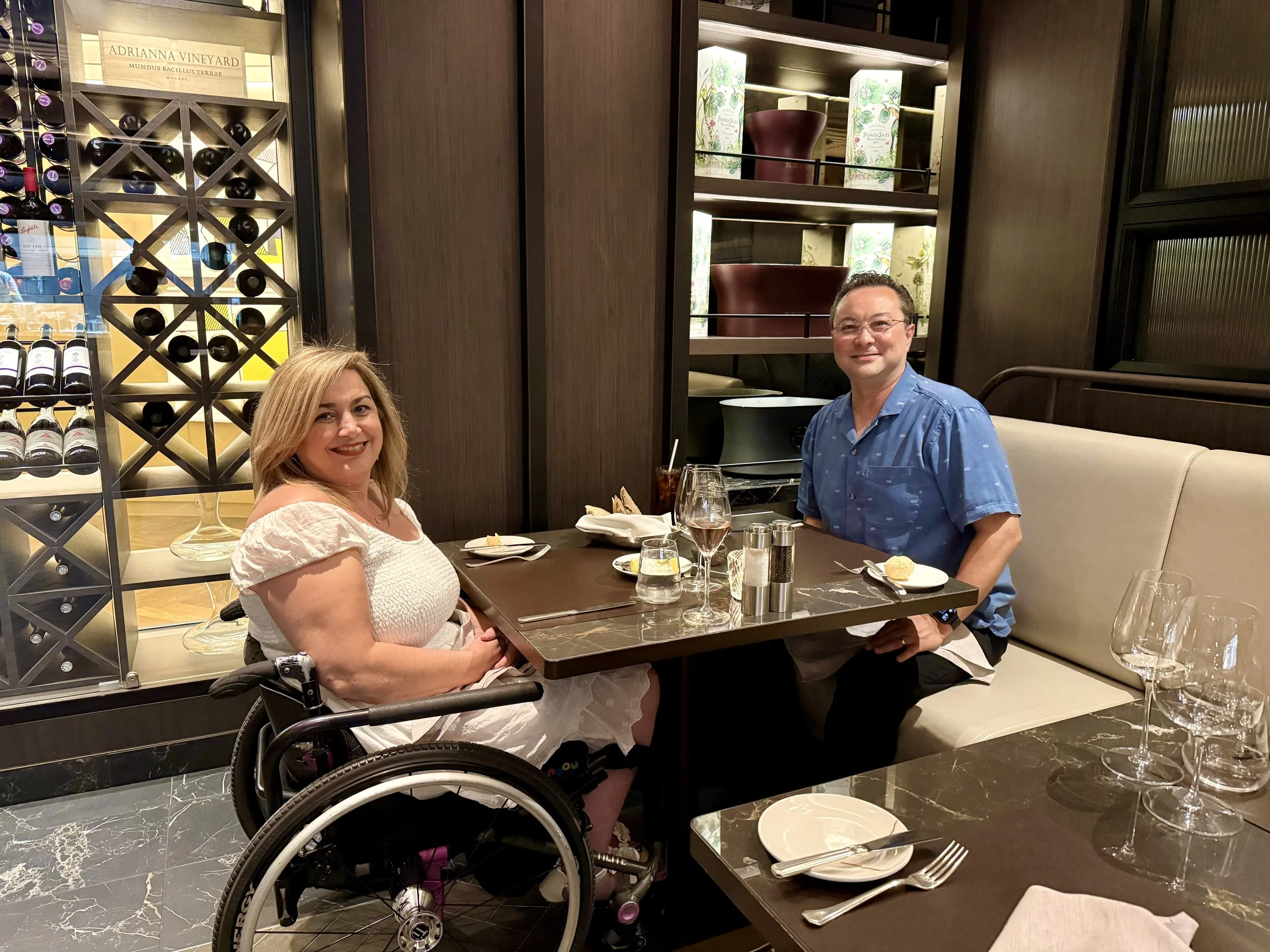
Steakhouse night on Explora I, and the kitchen showed up the way it always does.
The ship that Explora Journeys launched with Explora I does not slot easily into the categories the luxury cruise market has been using for decades. It is not a small expedition ship. It is not a mainstream line with a premium tier bolted on. At 922 guests in 461 all-ocean-front suites, it sits closer to a very large private yacht operating at a scale that makes the program sustainable: a full dining rotation, a serious wellness facility, and enough deck space that the ship never feels full even when it is. The test on a Caribbean sailing was whether that concept held up over a full week once the trade winds were behind us and the itinerary was underway.
It does.
The all-inclusive model at Explora I is the real version. Premium spirits, fine wines, high-speed Wi-Fi, gratuities, in-suite dining, and all included restaurants are in the fare without a package calculation anywhere in sight. You feel that within the first hour and stop thinking about it before the end of the first day. That absence, the complete absence of the running tab that colors almost every decision on a mainstream ship, is something that experienced cruisers recognize immediately as a different kind of freedom.
The Stateroom
The Ocean Terrace Suite, Explora I's entry-level accommodation, runs 375 square feet including a private terrace with a daybed and a dining area of a round table and two chairs. That terrace is where the morning starts and where the evening ends more often than not. Floor-to-ceiling sliding doors connect the interior to the outdoor space, and the suite is arranged around that relationship: a lounge area with a sofa, glass-top coffee table, and armchairs, and enough space to move through the room without negotiating around the furniture.
The bed is dressed in Frette linens. The robes are Frette. The refrigerated minibar is replenished daily to your preferences once you have stated them, which separates a property paying attention from one moving through motions. An espresso machine sits on the counter. The Dyson Supersonic hairdryer is in the bathroom, not in a drawer that takes ten minutes to find. These are not large details, but they accumulate into a suite that feels considered rather than simply appointed.
The bathroom is the one place the suite shows its entry-level standing. At 40 square feet it is well-finished but close quarters. Some Ocean Terrace Suites include a bathtub; others do not. If that distinction matters to you, confirm it at booking.
Request This: A suite on the higher decks with an unobstructed ocean view. At 922 guests, Explora I is intimate enough that the view from the terrace is fully private, and the higher the deck, the more of the water you have in every direction.
Don't Miss: The minibar conversation at embarkation. Stating your preferences upfront, specific wines, spirits, soft drinks, and snacks, means the suite refrigerator reflects what you actually want for the rest of the sailing. It is the kind of detail that sounds like a small thing and turns into a daily reminder that someone is paying attention.
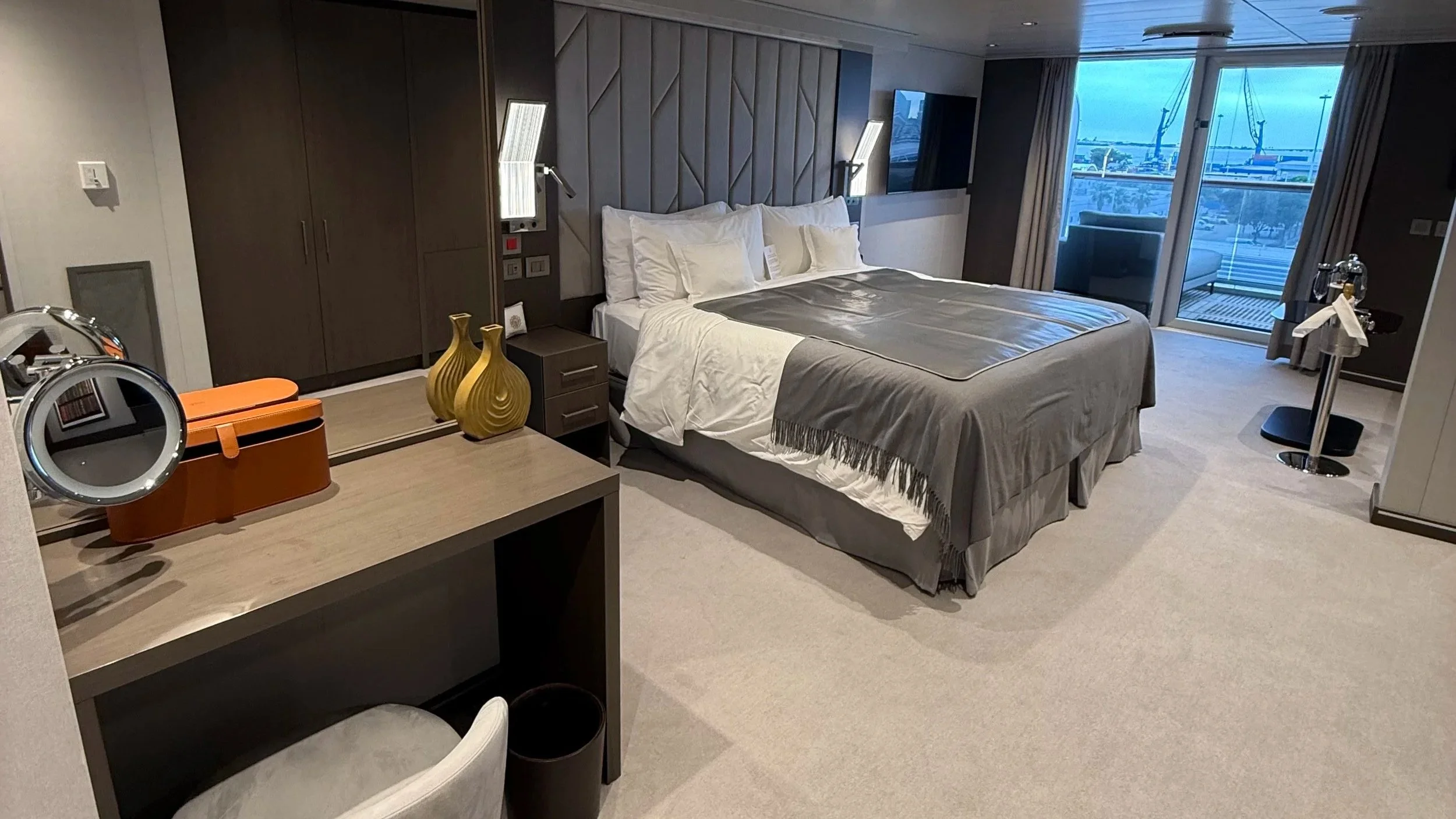
Our accessible cabin on Explora I, and the details make a difference. Calm, considered, well-finished, and the Dyson hair dryer was the moment Judy knew the ship was serious.
The Dining Scene
The philosophy across the dining program is all-inclusive with no asterisks on the included venues. Anthology carries a supplemental charge, and it is worth knowing about before you board. Everything else, six distinct restaurants plus in-suite dining, is included in the fare and runs at a level the premium category rarely sustains across a full week.
Fil Rouge: Fil Rouge and Med Yacht Club together serve as the primary dining anchors on Explora I, and between them they cover most of what you will want from the included program across a full week. Fil Rouge is the more formally structured of the two, with white tablecloths and a format that runs from breakfast through dinner. Breakfast here is one of the better reasons to leave the terrace in the morning: the eggs benedict are consistently well-executed, and the pastry program is serious in a way that most ships at any level cannot sustain past day two. At dinner, the kitchen moves into classical French territory: Burgundy escargot in a chicken consommé with lobster, veal Wellington, and a cheese and dessert trolley that operates as a rolling argument for extending the evening past the point where you had planned to stop.
Order This: The caramelized mille-feuille with Madagascan vanilla. It is the specific reason to stay at the table past the main course, and it is one of the best things we ate on the ship.
Don't Miss: The cheese trolley. Running a proper rotating cheese program on a ship requires a specific kind of effort. The staff know what is on it and can walk you through it, which is worth the extra ten minutes at the table.
Med Yacht Club: Between the two primary dining venues, Med Yacht Club is where the cooking we preferred lives. The menu draws from across the Mediterranean, from the South of France to the Italian Riviera to the Spanish coast, and the kitchen handles the range without losing focus. The Dover sole, finished tableside, is the dish that most clearly shows what this kitchen is doing. The room, with its easy light and unhurried pace, feels like a lunch that does not need to end.
Order This: The Dover sole, finished tableside. The tableside element is not theater for its own sake. It is the right way to finish this fish, and it is one of the more memorable moments at any restaurant on the ship.
Don't Miss: Booking Med Yacht Club for lunch at least once. The late morning light on the water, something cold in a glass, and that room working at its unhurried pace is the specific version of a Caribbean afternoon that the ship is built to provide.
Marble and Co. Grill: The steak and seafood format here draws natural comparisons to Cut by Wolfgang Puck, and it is not an unfair reference point. This is an evening-only venue with the precision and focus the format requires: correct cuts, cooked to temperature, with a wine program that takes the menu seriously. The room operates at a different register from the other included venues, darker and more deliberate, and the service matches it.
Order This: The filet mignon. It is the cut that shows the kitchen's sourcing most clearly, and it is the reason this room operates at the level it does.
Don't Miss: The seafood course before the main. The kitchen treats the fish program with the same care as the beef, and it is the section of the menu that surprises most guests the most.
Sakura: Of all the restaurants on Explora I, Sakura is the one we kept coming back to. We went for lunch and dinner multiple times across the sailing, not because the other venues disappointed us but because this kitchen kept giving us reasons to return. The decor is the best of any restaurant on the ship: warm wood tones, considered lighting, and a room that feels like it belongs to a serious dining destination rather than a cruise ship venue.
The pan-Asian menu covers sushi and sashimi, dim sum, Chinese preparations, and Thai dishes across a range that does not thin out as it expands. The seared salmon teriyaki sashimi and the lobster pad Thai both hold up against any comparison you want to make to land-based versions. The den miso roasted black cod is the dish to save for a night when you want the meal to mean something.
Order This: The den miso black cod. It is slow, precise cooking and the dish that stays with you longest after the sailing is over.
Don't Miss: The makrut lime pavlova with mango and passion fruit. Dessert at a pan-Asian concept on a ship is almost always an afterthought. This one is not, and it is the right way to end a meal that has built toward it.
Emporium Marketplace: The all-day venue does what a well-run marketplace concept should do and does not try to be anything it is not. The breakfast program covers eggs benedict, made-to-order omelettes, and fresh bakes alongside a pastry and fruit selection that holds its quality across the full sailing. Lunch and dinner run stations of fresh pasta, a sushi bar, a salad bar, meat and fish preparations, and a dessert bar worth a full circuit before you commit. We used Emporium primarily for breakfast and found it consistent throughout the week.
Order This: The sushi, made to order at the sushi bar while you watch. On a ship where Sakura is available for every meal, finding a sushi program at this level in the all-day venue is a surprise worth acting on.
Don't Miss: The dessert station at dinner. The quality here runs higher than an all-day venue has any obligation to deliver, and it is worth a full circuit before you commit.
Anthology: This is the only venue at Explora I that carries a supplemental charge, and it earns it in a specific way. The current format is a seven-course high-end Italian tasting menu, with Oscietra Royal caviar, lobster, black truffle, and Wagyu beef as the central ingredients. The kitchen does not use those components as decoration. This is a serious meal in a dedicated setting, and for guests who want a formal tasting menu as part of the sailing, the premium is worth the conversation. We recommend booking the first evening at sea, when the week ahead is still anticipation and the table has full room to breathe.
Order This: Let the menu run. Anthology is not the kind of place where you should be picking and choosing courses.
Don't Miss: The sommelier pairing. The wine program at Anthology operates at a separate level from what runs through the included venues, and on a composition like this, the right glass with the right course changes what the dishes do.
Advisor Note on Pricing: The all-inclusive model at Explora I covers premium spirits, fine wines, high-speed Wi-Fi, gratuities, in-suite dining, and all six included restaurants from the moment you board. There is no package to select, no tier to add, and no per-drink math to run before you order. The beverage program runs on actual premium spirits, not the well-liquor substitutions the mainstream lines use when they describe something as included.
The only supplement on the ship is Anthology, which carries a per-person charge for the seven-course tasting menu. Given what the rest of the dining program delivers and what is already in the fare, one evening's supplement is a straightforward decision for most guests who want a dedicated tasting menu format. Book it before you board. On popular Caribbean itineraries, Anthology fills before embarkation. Private cabanas and the most requested spa treatment windows go early as well. The earlier that conversation starts, the better the week looks. We can help with the timing.
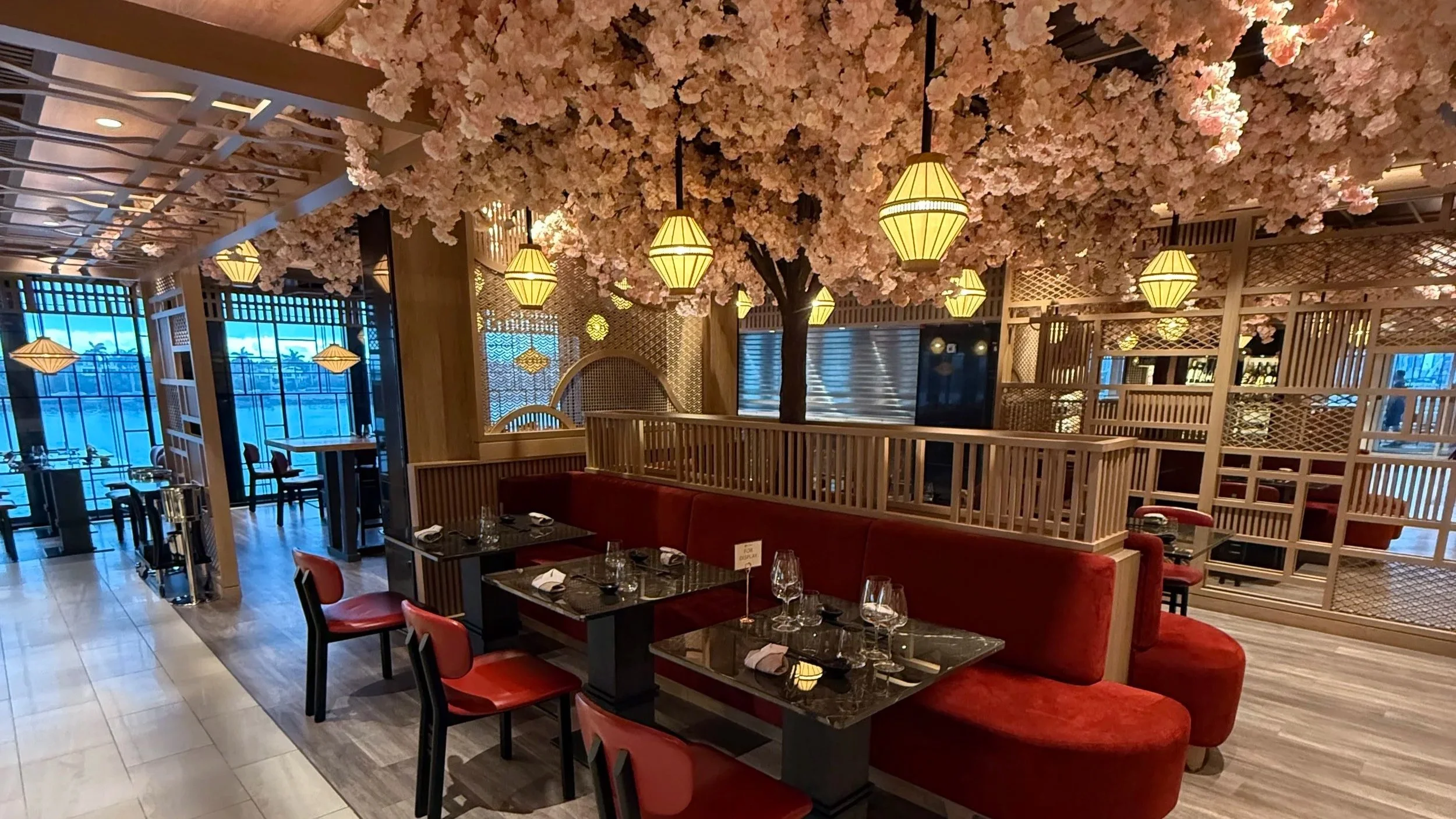
Sakura, before service started. The room sells itself before the menu shows up, and the kitchen makes good on the promise.
Life Onboard
The Pools: Explora I runs four pools: three outdoor heated pools including one adults-only, and one indoor heated pool with a retractable glass roof that makes it usable in any weather. The outdoor pool deck runs over 2,500 square meters, and 64 private cabanas are distributed across it. The adults-only pool area holds its pace throughout the day in the way that matters most on a Caribbean itinerary: it is the right temperature, the right energy, and the service out there does not make you feel managed.
The indoor Conservatory pool under the retractable glass panels is the option for overcast days at sea, and on those days the quality of the light through the roof makes it worth choosing even when the sun is out. The whirlpools are positioned across the open decks with panoramic water views, and the early morning before the pool population builds is when they are at their best.
Helios: This is the adults-only area on Deck 12, positioned at the forward-facing bow with its own pool and dedicated lounging space looking out over where the ship is heading. On a Caribbean itinerary, with sea and sky performing at the level they do in that part of the world, this is where a sea day belongs. The service here is attentive without being intrusive, and the forward orientation means the horizon is always ahead of you rather than behind.
The Conservatory: The Conservatory operates as a weather-protected poolside lounge by day, which makes it the right call when the sun is making more of an argument than an invitation. In the evening it converts to a silent cinema experience under the stars. Both versions of the space are worth using. The evening version is a specific and quietly excellent thing: a glass of something good, a film overhead, and the open water just outside the edges of the screen.
Ocean Wellness: The Spa: The spa program runs under the name Ocean Wellness and it is one of the more thoughtful approaches we have encountered in this context. The thalassotherapy pool, steam room, sauna, and heated relaxation loungers are all included without a treatment booking, which is the distinction that matters. Many ships use the thermal facilities as a separate revenue mechanism. Here, the spa amenities are part of the ship.
An open-air relaxation deck with ocean views sits beyond the enclosed treatment areas, and it is where you go after a session when the sea air is the right thing to come back to. The fitness center runs over 270 square meters, with a panoramic running track and a dedicated studio for group and private training.
Entertainment: This is the section where we are going to have to let you down a bit. The entertainment program on Explora I is the one area where the ship does not match the level it sets everywhere else. The production shows and live performances lean toward a Las Vegas lounge sensibility that felt dated relative to the design and dining program surrounding them. If you have sailed on many newer ships recently, you will notice the gap. The shows are fine. They are not a reason to be on this ship, and they are not what the ship is built around.
What Explora I offers in the evenings is better accessed through the bar program, a long dinner at one of the restaurants, or a quiet spot on the Conservatory deck with a glass of something good. The ship's identity at night is the same as it is during the day: food, sea, and the company of a small enough group of people that conversation is actually possible. If that is how you want the evening to go, the entertainment absence barely registers. If production shows are a meaningful part of what you want from a sailing, this is worth factoring in before you book.
The Bars Worth Knowing: Explora I operates 18 restaurants, bars, and lounges across the ship, and the bar program is all-inclusive throughout with premium spirits rather than the watered-down version of "included beverages" that the mainstream lines use to justify the phrase. The bar team has been given the latitude to make proper drinks, and it shows.
The Explora Lounge is where the evening begins for much of the ship's 922 guests, and the reason is obvious on the first night. It is a well-designed room that runs at the right pace and knows when to let a conversation breathe. The martini list is worth working through across the sailing. This is also the bar where you come to understand the scale of the all-inclusive model: everything you order is already paid for, and the absence of a running tab changes how you approach the evening in ways that are hard to articulate and easy to feel.
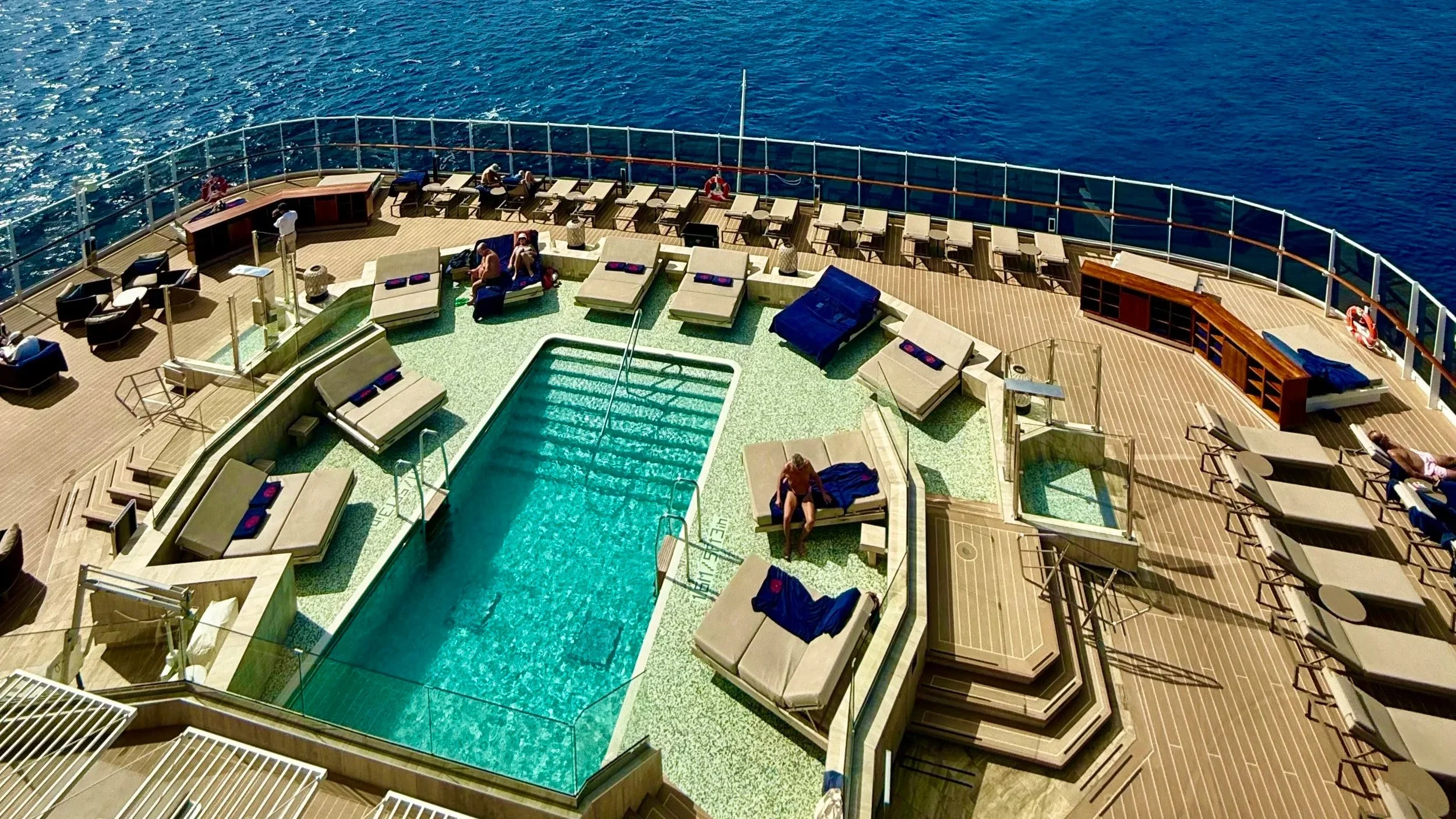
Most ships put their best pool deck up top. This one is at the back, and it might be the better seat in the house.
The Experience
Brand / Cruise Line: Explora Journeys is the luxury brand of MSC Group, launched with a clear intention: not to replicate Silversea or Seabourn in the established ultra-luxury tier, but to define something new between those lines and the premium mainstream. At 922 guests in 461 suites, the ship is intimate enough to feel private and large enough to carry a dining and amenity program that smaller ultra-luxury ships cannot support.
The result is a ship that sits in a real gap in the market. If you want the dining variety of a larger vessel, the all-inclusive model of the true luxury lines, and a European aesthetic with no apologies attached to it, Explora I is one of very few ships currently delivering all three at once.
Atmosphere / Ambiance: The design throughout is European in character: clean lines, warm materials, and public spaces that do not compete with the ocean outside them. The ship's common areas feel considered rather than decorated, which is the distinction that holds up across a full week of living inside them. The passenger count means the ship never feels busy even when it is sailing full, and the absence of the large-ship crowd noise that defines the mainstream lines is something that arrives quietly and stays.
What Explora I is consciously trying to do is something most cruise lines have not seriously attempted: operate more like a luxury hotel at sea than a traditional cruise ship. The common areas are arranged the way a good hotel lobby is arranged. The dining venues function independently of any schedule. The design language owes more to a property like Aman than to anything the established luxury lines have done with a ship. For the most part, they succeed. There are moments where the ship still reveals its cruise DNA, but they are exceptions rather than the rule, and they are getting harder to find.
Crew / Service: The service at Explora I runs at the level the room asks for, and the crew is not performing warmth. They are demonstrating it, which is a distinction that experienced travelers pick up within a day and that shapes how the rest of the week feels. Requests are handled before they need to be repeated. The dining staff build a picture of your preferences over the first two days and act on it. The bar team knows what you drink by mid-sailing.
The gratuity-included model is part of this service conversation and worth naming directly. On a ship where tips are already in the fare, the crew is not working toward an end-of-sailing envelope. The quality of presence that produces is different from what the tipping model generates, and it is one of the consistent reasons the all-inclusive luxury lines outperform the mainstream on the measure that matters most: whether the person helping you actually seems interested in doing so.
One thing worth understanding about Explora's service model is where the staff came from. Where most cruise lines recruit experienced shipboard crew who know the rhythms of life at sea, Explora hired heavily from luxury hotels. The difference shows in the professionalism of the interactions and in a general absence of the procedural formality you sometimes encounter even on the best traditional cruise ships. It also shows, occasionally, in fatigue. Working seven days a week on a ship is a fundamentally different physical reality than working at a hotel, even a demanding one. We noticed small lapses across the sailing, moments where a staff member was clearly running on less than full reserves. It was never a service failure. It was recognizably human. This is a young ship with a young crew culture, and the honest expectation is that it gets better as the staff find their sea legs. We are confident it will.
Accessibility
The Good: The ship is well-suited to guests with mobility considerations across most of the vessel. The main deck layout is largely flat, the elevators are wide, and the corridors on the suite decks have comfortable clearance for wheelchairs and scooters. Accessible suites are available and identified on the deck plans, and the accessible bathroom includes a full roll-in shower, which is more notable than it sounds. Full roll-in shower access is not standard on many large ships; finding it on a vessel of this size is a meaningful detail for guests who rely on it. Pool lifts are in place at the Atoll Pool on Deck 10 and the Conservatory Pool on Deck 11. The open-air relaxation deck at Ocean Wellness is level and accessible throughout, which matters given that the thermal suite amenities are included without a treatment booking.
The main entertainment venue, which operates more as a large lounge than a traditional showroom, is fully accessible throughout. A guest using a wheelchair can sit in almost any position in the room. That is not something most ships get right in the primary entertainment space, and it is worth naming as a specific design decision that paid off.
The Reality: The thalassotherapy pool in the spa does not have a lift, which is the most meaningful limitation for mobility-impaired guests in the wellness program. Beyond that, Explora I is honestly one of the more accessible vessels we have sailed at any size. For a new ship built with a hotel-design ethos, the accessibility standard here reflects a decision made early in the design process and carried through consistently. If you are booking with accessibility in mind, confirm the specific cabin location with us before finalizing so the position works for your priorities on board.
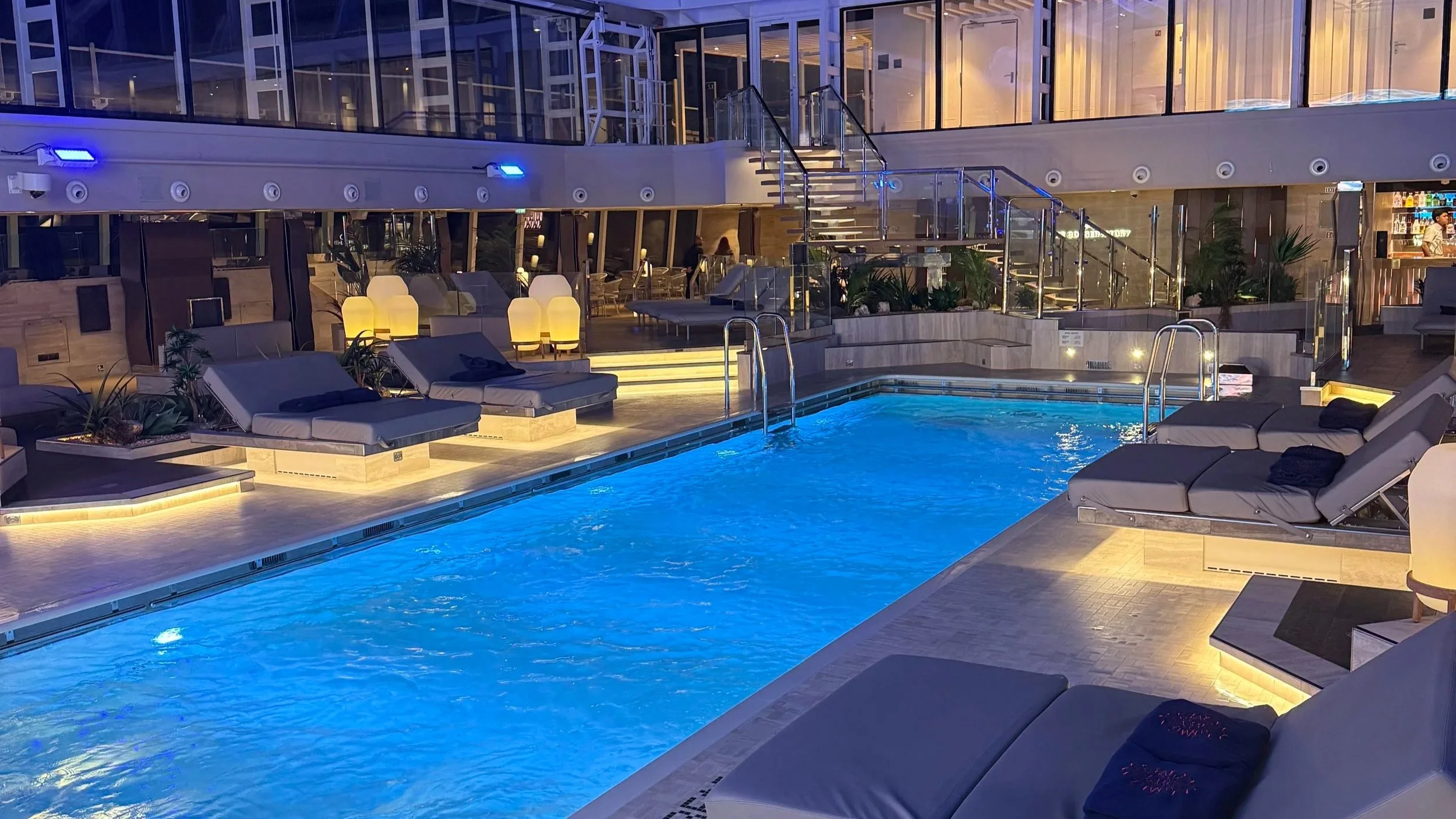
The main pool deck gets the basics right: real elegance and real space. At night it shines, and you forget you are at sea at all.
The TudorTravels Perspective
The question we get most often about Explora I is whether it is really luxury or whether it is just MSC with better lighting. The answer is that Explora Journeys has built something the established luxury lines are watching more carefully than they are letting on. The dining program alone would justify the attention. A ship where you can rotate through six distinct restaurants across a week, all included, none of them phoning it in, is not a problem most lines at any price point have solved. Explora I has.
What surprises guests most coming from premium or mainstream lines on a first sailing is not the food or the design. It is the mental shift that comes from the true all-inclusive model. By day two, most people stop thinking about what anything costs. That sounds unremarkable until you realize how much cognitive overhead on a mainstream cruise ship goes toward the running calculation of whether something is worth it. Taking that calculation away entirely changes the character of the week in a way that is hard to describe in advance and obvious the moment you are inside it.
The comparison we keep coming back to is one most people do not think to make: Explora I is what a very good European hotel would be if it spent six months a year at sea. Not formal luxury in the white-glove sense. Not the kind of ship that expects you to dress for dinner in a particular way. The kind of place where the standard is simply high across everything, the design does not age quickly, and you eat better than you expected to every single night. It sits above the premium mainstream tier, Celebrity in The Retreat and NCL in The Haven, and in a real conversation with Regent and the newer Silversea ships, though it is not yet at the service consistency of those lines at their best. The design language is ahead of them and the dining can compete with the best of them. The depth of crew experience will take time to close.
The ship is also not for everyone, and it is worth saying that directly. If production entertainment, a late-night casino, and a busy pool deck are central to how a good week at sea looks to you, this is not the right ship. Explora I's identity is food, the sea, and the hours between meals. The 922-guest count means you will run into the same people across a week in a way that larger ships never allow, and by the middle of the sailing you will know names. That either sounds appealing or it does not, and that instinct is usually the right guide.
Ready to book an Explora Journeys cruise, or looking for the right cruise for your trip? Contact us to start planning.