
Taipei, Taiwan
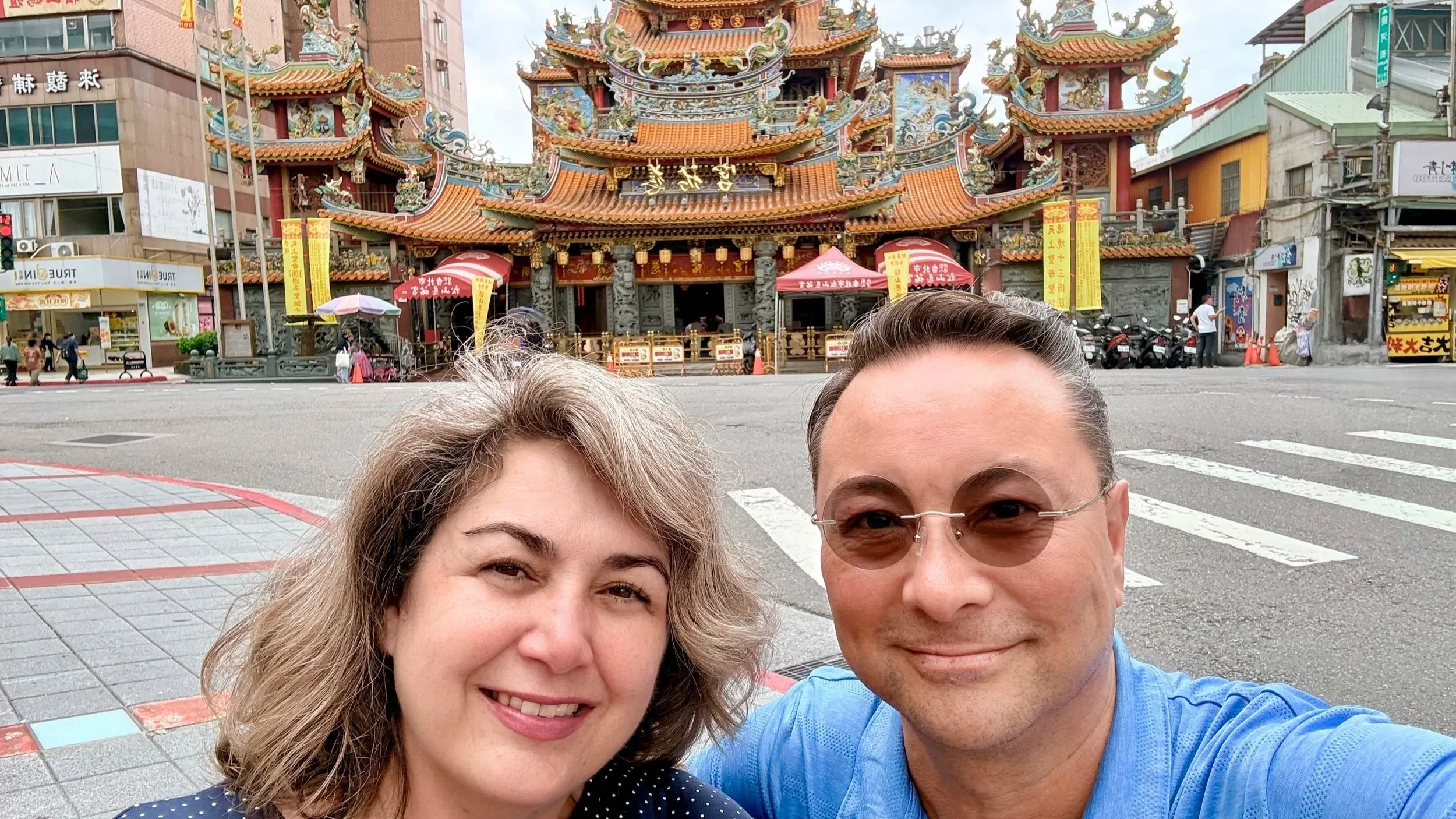
Songshan Ciyou Temple stands at the edge of Raohe Night Market.
The thing we could not stop noticing was how many wheelchair users were out and about. Not mobility scooters, which is mostly what you see at home. Wheelchair users, going about their day.
That is not how we expected to remember our first trip to Taiwan. We arrived in August with a short list: Din Tai Fung at the source, the famous night markets, and a city two friends had described to us as Japan with the prices turned down. All of that held up. None of it is what we talk about now.
What we talk about is how easy Taipei was to move through, and that nobody warned us. We have been to nearly 70 countries and we have learned to arrive braced, with a backup plan for the entrance that turns out to have three steps and the elevator that turns out to be out of service. Taipei rarely required it. The people we kept passing were out on ordinary errands in the middle of a weekday, by themselves, and that is the real measure. A city can install ramps. A city where disabled people actually go out is a different thing, and you feel the difference within a day.
The Japan comparison is fair as far as it goes. Taipei runs on organization and on people who follow the rules without being asked, and we kept saying so to each other. Where it parts company with Japan is cost. We found Taipei affordable in a way that surprised us at both ends, and the gap between a very good meal and an expensive one is narrower here than in Tokyo, Hong Kong, or Singapore.
Taipei is also quite flat. After Hong Kong, where the terrain itself is an argument, a week of level sidewalk felt like a gift.
Who should skip it: anyone whose idea of a trip is a skyline and a monument. Taipei has one famous building and one famous memorial and neither will fill a day. Who should go: anyone who travels to eat, and anyone who likes a city that simply works.
The Hotels
Two pieces of advice before the properties. Stay as close to an MRT station as you can manage, because the system is the whole argument for this city. And if it is your first visit, stay as near to Taipei 101 as your budget allows. The district around it, Xinyi, is where orientation is easiest, and a first-timer benefits from a landmark visible from most of the city.
We split six nights between two hotels facing each other across Dunhua North Road, an unusually clean comparison.
Capella Taipei: Three nights, and our favorite of the two by a clear margin. It opened in April 2025, designed by André Fu around the idea of a private residence rather than a hotel, and it is the only two Michelin Key hotel in Taiwan. We have a full review of it in this issue, so only this here: the service was warm in a way that felt unrehearsed, and the building is small enough that the staff were keeping track of what we liked. We ordered something different every morning, and every morning somebody had a recommendation that followed from the day before.
Mandarin Oriental Taipei: This is where the trip got more complicated. We booked a room with access to the Oriental Lounge on the sixth floor, and we expected this to be the grander half of the trip. Mandarin Oriental is Mandarin Oriental, the property is considerably larger, and the service is more formal than anything at Capella. Formal is not the same as warm, and we noticed the difference more than we thought we would.
The hotel is well maintained and starting to show its age. What surprised us more was the layout. It is connected to a stretch of high-end shopping and the result is a bit of a maze, the kind of building where you learn one route and use it for three days because finding a second one is not worth the effort. And the lobby is one of the smallest we have seen in a hotel at this level. We kept expecting to walk through it into the real one.
None of that makes it a bad stay. The room was comfortable and the lounge was useful. The afternoon tea downstairs is worth the trip on its own. Michelin gave it one Key and the Capella two, and having stayed in both we would land the same way. If you are choosing between them and the price is close, we would send you across the street.
Four Seasons Taipei: Not open, and worth knowing anyway. The sign is up on the building going in directly opposite Taipei 101 and the structure is well along. We would not put money on a date, because opening dates are the least reliable number in this business, but it will sit in the exact spot we just told you to book.
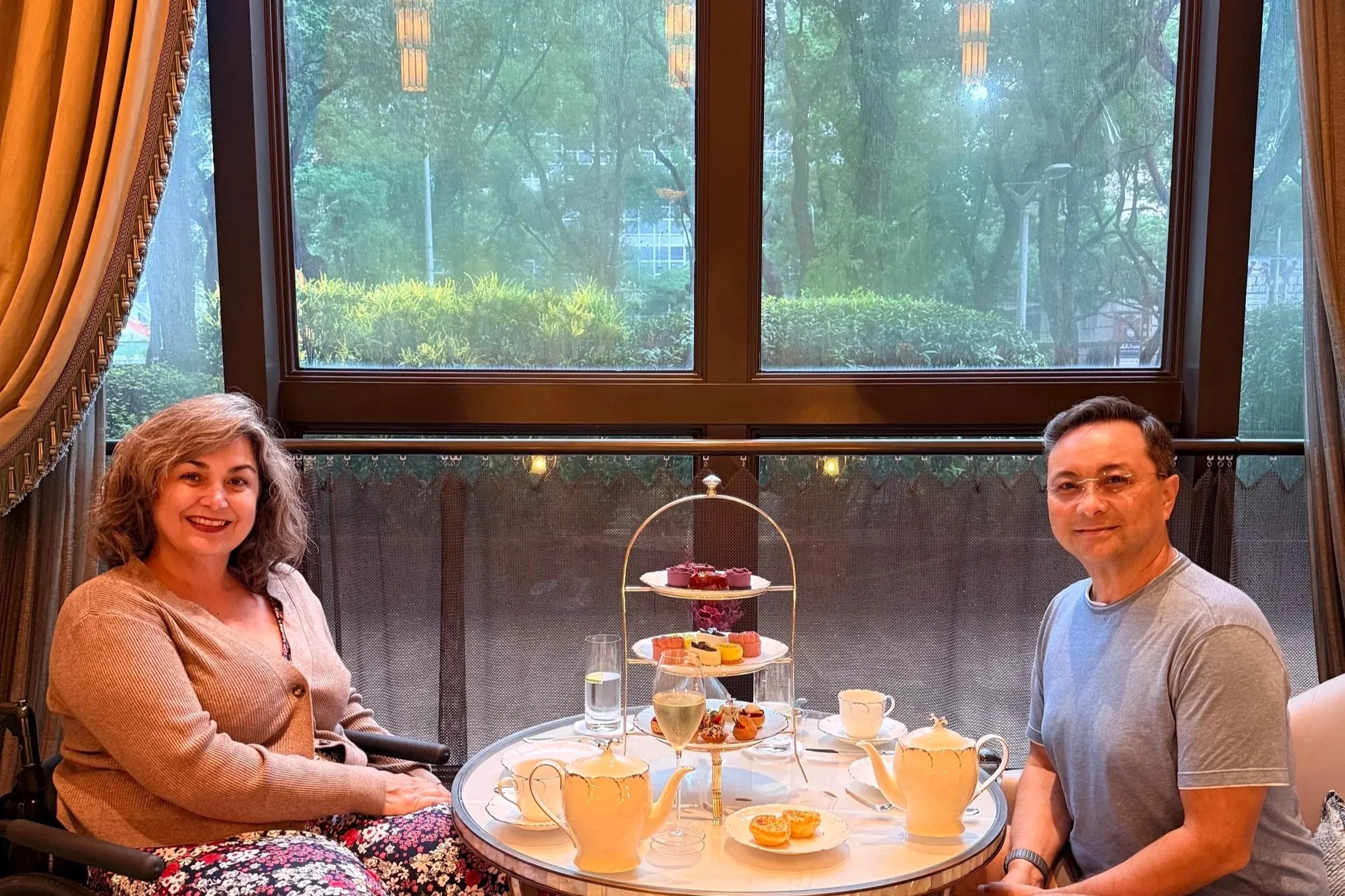
Rain ran down the window beside our table, and afternoon tea at the Jade Lounge was the best hour we spent at the Mandarin Oriental.
The Dining Scene
In Taipei we ate casually most of the time and never felt we were settling. A counter with eight stools and a dining room with a reservation are much closer in quality here than the price difference suggests. We would not build a Taipei trip around fine dining. We would build it around a list of dishes.
Din Tai Fung: We have been fans for years, across several countries, so the Taipei 101 location was less a discovery than a pilgrimage. They take no reservations and the wait hit two hours at one point, so go at an odd hour or put your name down and go shop. The xiao long bao were better than the ones we get at home, which we had hoped but not been sure about. What stood out more was the service. Full room, a long line running, and it never slipped. What we did not expect was the menu. There are noticeably fewer vegetarian options here than at the US branches, so if you are traveling with a vegetarian do not assume the menu you know is the menu you will get.
Beef Noodle Soup: The local specialty and the thing we ate most. We had it several times and never got tired of it. Braised beef in a dark broth that tastes like it has been going since morning, over noodles with enough chew to make it a meal rather than a soup. It is everywhere and it is cheap. If you eat one thing in Taipei, eat this, then eat it again somewhere else to see how different two bowls can be.
The Taipei 101 Food Court: This is the part of Taipei 101 we would actually send you to. It is one of the better casual eating floors we have walked into anywhere, enormous and spotless, and you can try four things without committing to any of them. On a hot August afternoon, with air conditioning, that is hard to beat.
The Jade Lounge: Afternoon tea at the Mandarin Oriental, served off the lobby, and the single best hour we spent in that hotel. The room is classical in a way most new hotels have stopped attempting, and it is built for exactly this. The couches are the detail we keep describing to people, curved around the end tables so the seating wraps rather than faces off. We had a table by the window while it rained outside, which is the kind of thing you cannot book. The food was great rather than merely correct, which is not always true of a hotel tea. And they hand you a gift bag on the way out, which costs them very little and which we were still talking about days later.
Mister Donut: A chain, found all over the city, and we stopped in several times for the mochi donuts. Mochi is the whole point. The texture is chewy rather than cakey, and the flavor list runs far past anything a US shop carries. It made a better breakfast than it has any right to.
Raohe Night Market: Taiwan’s night markets are famous and the reputation is earned. Raohe is the one we would send you to first. It is steps from the MRT station, and it runs as a single long street rather than a maze, so you go down one side and back up the other and you have seen it. Go early, before the crowd builds. The variety on display was the part that stopped us, stall after stall of things we could not name.
Shilin Night Market: The biggest, the most popular, and the most touristy, with a food court underneath it. If you are there to eat, Raohe is the better use of an evening. Shilin is where you go for the spectacle of a night market running at full scale, which is its own reason and a good one. Go hungry to one and go looking at the other.
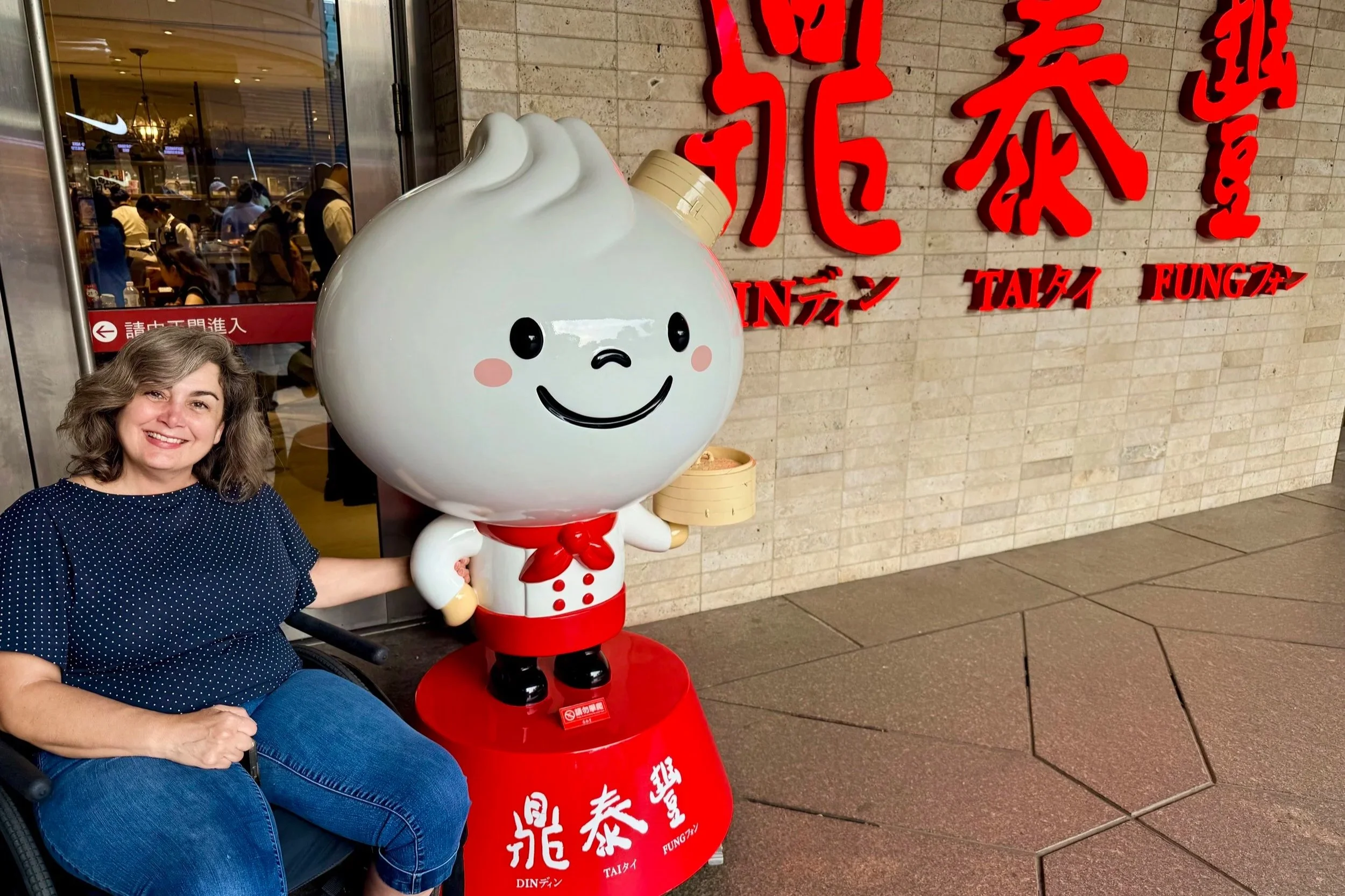
We have eaten at Din Tai Fung in several countries, so the Taipei 101 location was less a discovery than a pilgrimage.
What to See
Taipei 101: We skipped the observatory, which may be the least popular advice in this piece. Taipei is flat and low, so the view from the top is the city laid out with nothing to frame it, and we could not see what we were buying. The one thing that might have changed our minds is the damper, the steel sphere hung inside the tower to counteract sway in typhoons and earthquakes, visible to visitors and unlike anything on most observation decks. We went to the building. We just went to the bottom of it.
Chiang Kai-shek Memorial Hall: The one we would not skip. The hall itself is monumental and the changing of the guard is the thing most visitors come for, and both are worth your time. The part nobody told us about is the museum underneath. One section is given over to Taiwan’s democratization, and it lays out when the island actually became a democracy alongside when the rest of the world did. Standing there reading the dates was a revelation for us. We had not understood how recent most of this is. What lands is how many countries had to fight for basic democratic rights, how many people that took, and how much of it happened inside our own lifetimes. We came for the architecture and left thinking about something else entirely. Budget an extra hour for the museum. Most people walk past it.
Bitan Suspension Bridge: Worth going out for, and not a whole day. Bitan sits at the end of the Green Line in Xindian, so you reach a 1937 pedestrian suspension bridge by riding the subway to the last stop and walking a few minutes. The name means green lake, and the river widens here enough to earn it. We did not go out on the bridge. We followed the river instead and watched the pedal boats, and found the area more interesting than we expected from something at the end of a subway line. What we did not know until afterward is that three bridges from three different eras cross the water at this spot, the 1937 span and two later replacements, so the view is a short course in how Taiwan built things. We were there in daylight. The bridge is lit and set to music after dark, which we did not see and would time differently next visit.
The National Palace Museum: We did not go, and we should have. Everyone we asked put it near the top of the list and we ran out of days. It holds the imperial collection the Nationalists brought from the mainland, which is why a museum of that scale sits in Taipei rather than Beijing. Next time it goes on day one.
Beyond Delhi
We did not leave the city on this trip, and Beitou is the reason we wish we had.
Beitou: A hot spring district inside Taipei’s own metro system, out on the Red Line and then one stop on a short branch to Xinbeitou. Hot spring towns almost everywhere else need a car or a set of stairs cut into a hillside. This one needs a train ticket. The tourism board lists accessible facilities and wheelchair rentals there, which we have not tested and would want to before promising it to a client.
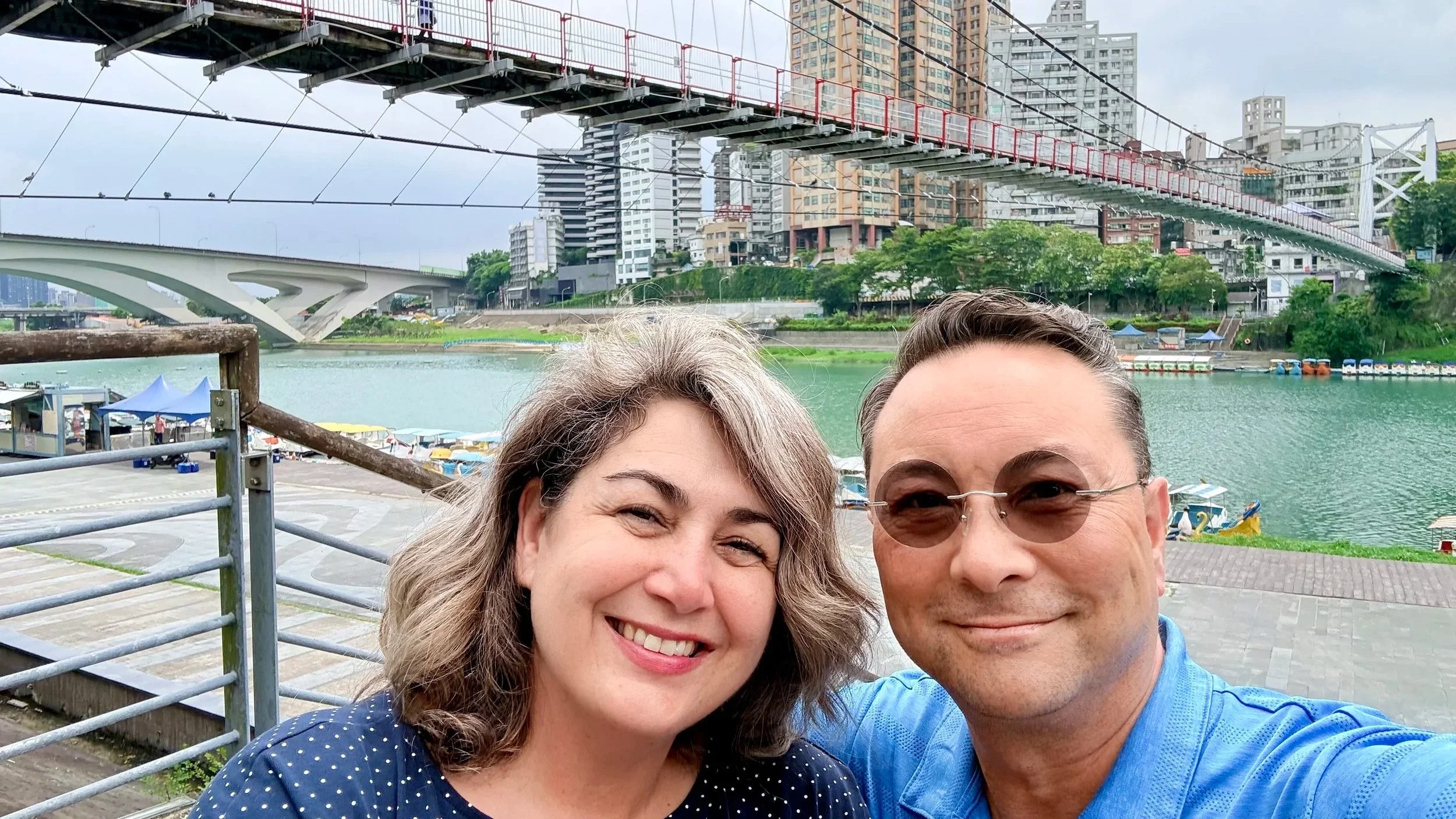
We skipped the walk across the Bitan Suspension Bridge and followed the river instead, past the swan pedal boats.
What Stayed with Us
How ordinary it was.
After more than 30 years of this, we can tell within an afternoon whether a city has built accessibility for compliance or for use. Compliance looks like a ramp around the back and an elevator nobody can find. Use looks like what we saw here, which was wheelchair users on the MRT at rush hour and in the department stores on a weekday afternoon. Not with a tour group. Not with a helper. Just out, on their own.
We noticed it first on the train and assumed we had caught an unusual morning. By the third day we understood it was just the city. The infrastructure is part of it, but infrastructure alone does not produce that, and we have been to plenty of places with good ramps and empty sidewalks. What produces it is a few decades of the infrastructure being reliable enough that people stopped planning around failure.
We have spent years building trips around the places that work and steering clients away from the ones that do not. It is rare to arrive somewhere and find the question already answered. We did not expect it from Taipei, and we have been recommending it ever since.
Our Favorite Discovery
Boba, and specifically watching it made by hand.
We knew bubble tea was Taiwanese. We did not know how contested the origin is. Two tea houses claim the invention, one in Taichung and one in Tainan, and they fought about it long enough that it went to court, where a judge ruled that nobody owns it. The drink now in every strip mall in America is unpatentable because two Taiwanese shops could not agree on who thought of it first.
Knowing that changed how we drank it. Seeing it done changed it again. We stood over the pearls being worked by hand, and what struck us is how much labor goes into something we have always treated as a convenience purchase. We have bought hundreds of these at home without once thinking about where the texture comes from.
Accessibility
Taipei is not perfect, and not close to perfect. It is still one of the best cities for accessibility we have encountered anywhere in the world, and it may just have edged out Singapore as the most accessible city in Asia we have been to.
The MRT is the reason, and the signage is what we would single out. Not only to the elevators, but to the restrooms and to which way you exit and enter, which is what you actually need in an unfamiliar station. Every station we used had a working elevator. The platform gaps were minimal and never an issue for us. We relied on the system daily for six days without a single failure, which we cannot say about any other metro we have leaned on this hard.
The street-level experience matched it. Sidewalks are wide and in good repair, curb cuts are where they should be, and the city is flat, which removes the variable that makes Hong Kong and Lisbon exhausting however good the ramps are. Crowded areas are always difficult in a wheelchair and Shilin and Raohe were no exception. Going early in the evening makes a big difference.
Accessible taxis are available and not difficult to arrange, though we would have a concierge book them rather than flag one down.
On the hotels: the Capella’s room is covered in detail in its own review. At the Mandarin Oriental, the maze-like connection to the shopping arcade is the thing worth flagging, because the route that works is not always the route the signs suggest. Ask at the desk on arrival and have them walk you through it once.
The Chiang Kai-shek Memorial and its lower-level museum were very accessible, with ramps where they were needed and elevators everywhere else. The Taipei 101 mall and food court gave us no trouble either, though we did not try the observatory.
We were in the city, not the country. We cannot speak to Taiwan outside Taipei, and we would not assume the same standard holds.
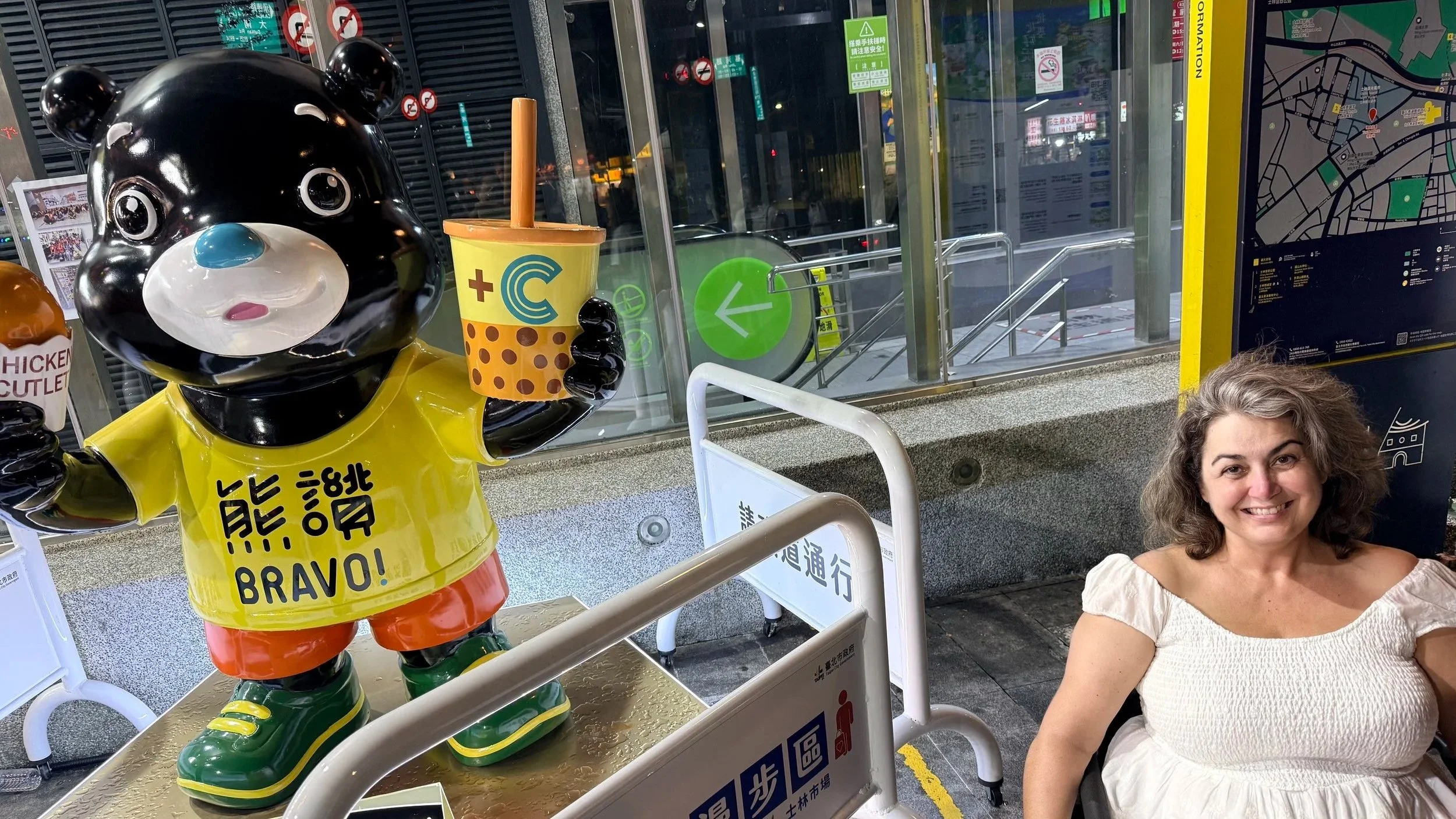
Bubble tea in one paw and a chicken cutlet in the other, the bear outside Shilin Night Market knows what people come for.
The TudorTravels Perspective
Taipei is for people who travel to eat and for people who like a city that runs on time. It is for anyone whose travel list has been quietly shrinking for reasons of access. It is not for people who need a skyline to photograph or a monument to climb. We stayed a week and could happily have stayed longer. A week is right for a first visit if you want to get out of the city and move at a leisurely pace. If you are the kind of traveler who is up early and running at the major sights, you can probably cover them in three days.
What we would do differently: we would leave. Not Taipei itself, which earned every day we gave it, but we booked the trip as a city break and Taiwan is an island with a coastline and a mountain range we never saw. Next time we would keep the week in Taipei and add the island on top of it.
The thing we keep coming back to is not the food, and the food was very good. It is that we spent six days in a major Asian city and never once had to ask whether we could get in. Plenty of cities are more beautiful. Not many are this easy, and we would go back in a heartbeat.
Inspired by Taiwan? Contact us to plan your time there, or anywhere else in Asia you want to explore.