
Four Seasons Madrid
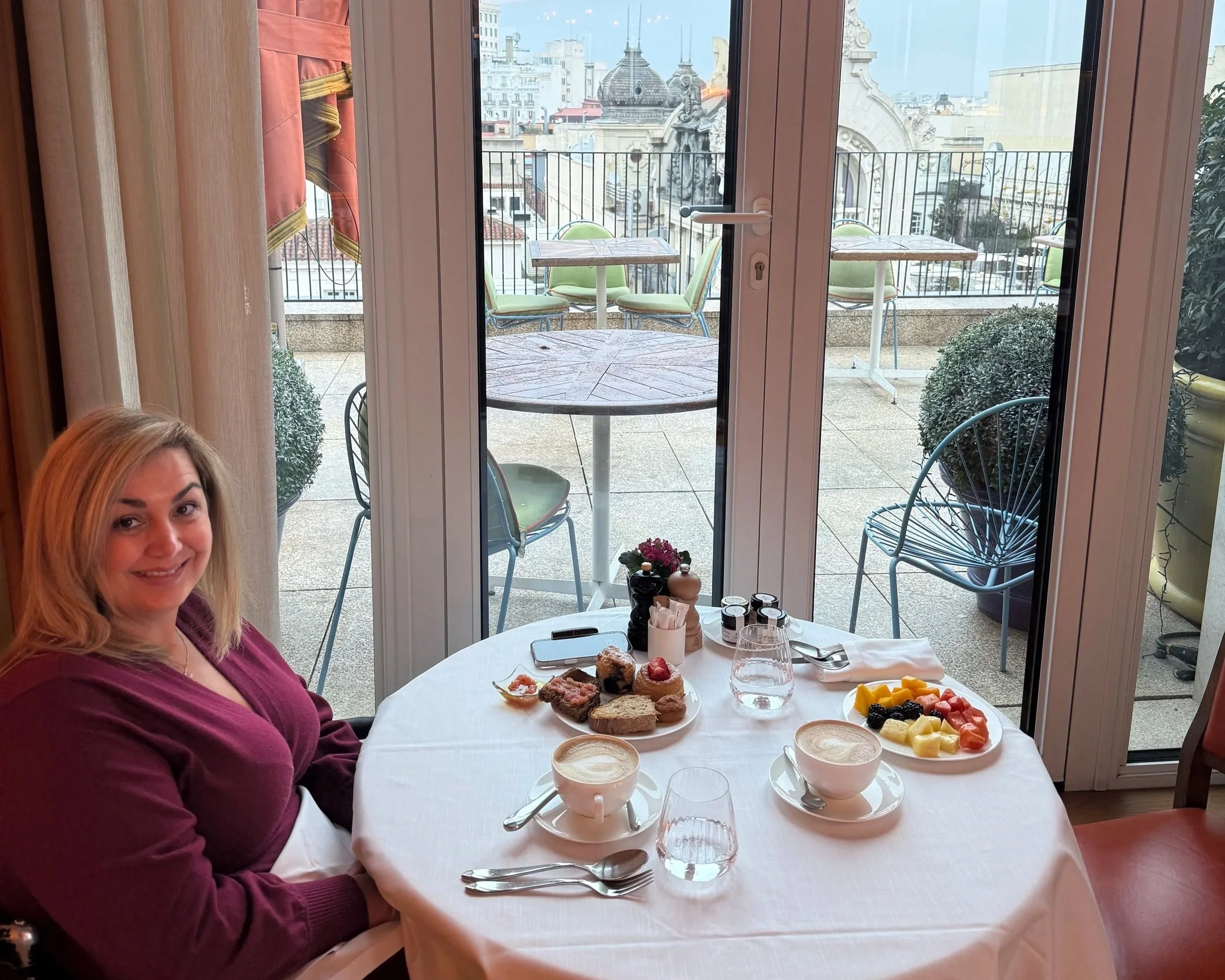
Morning at Dani Brasserie. Cappuccinos, the fruit and pastry spread, and a wall of Madrid rooftops behind the glass.
We had breakfast on the seventh floor on our second morning and stayed through a second cup of coffee because leaving did not seem like the right decision. The terrace had the rooftops of central Madrid laid out in front of us and the morning entirely to ourselves. We made no plans for the next hour. That is what the rooftop at the Four Seasons Madrid is for.
The hotel occupies seven historic buildings in the Canalejas district, the oldest of which date to 1887. The buildings sat in disuse for fifteen years before a restoration project that ran from 2013 to 2019 and cost €530 million reassembled them into the only Four Seasons in Spain. More than 16,000 individual pieces were extracted and catalogued during the work, and roughly 3,700 of them came back into the building. The hotel does not feel like it was converted. It feels like it was always this.
The address is the other reason to be here. Puerta del Sol is steps from the front door. The Thyssen-Bornemisza Museum is a five-minute walk. The Prado is fifteen minutes. Retiro Park is twenty. Plaza Mayor is a short walk west, and the Royal Palace is reachable on foot in about fifteen minutes, though the approach to it gives back some of the flat ground the rest of the center is known for. Around Puerta del Sol and the museums, the terrain stays level, which matters more than most travel writing acknowledges. Madrid's historic center rewards the traveler who moves through it without a taxi, and the Four Seasons sits at the center of that.
The Room
The Four Seasons makes a specific promise about its beds and keeps it everywhere it operates. Madrid is no exception. This is one of the most consistently reliable places to sleep of any brand in the world, and arriving back from a long day in the city means something here.
Our room ran in soft creams and warm neutrals, anchored by a tufted headboard that filled the wall behind the bed and a band of restored plaster molding tracing the top of the room. The detail is quiet and it does the same work the rest of the building does, telling you the room was put together with care rather than assembled from a kit. A marble-topped console runs along one wall and doubles as the desk. The bathroom carries the material through: white veined marble runs floor to ceiling against a black marble floor, and a long mirror is lit down one edge. The shower is a walk-in set behind frosted glass with a handheld head.
This was the accessible room, and it is one of the better ones we have used. The layout gives you real floor space to move rather than the minimum a code requires, and the shower is a level walk-in rather than something you step up into. None of it reads as a clinical accommodation. It is the same room everyone else gets, built so that it works for us too.
Our room looked onto the interior courtyard rather than the street, and it was the better side to be on. The French doors open onto a wrought-iron Juliet balcony, with ivy climbing the wall opposite and the building's iron balconies repeating around it. It is quieter than a street-facing room would be, and the light comes in soft rather than straight off the glare of the road.
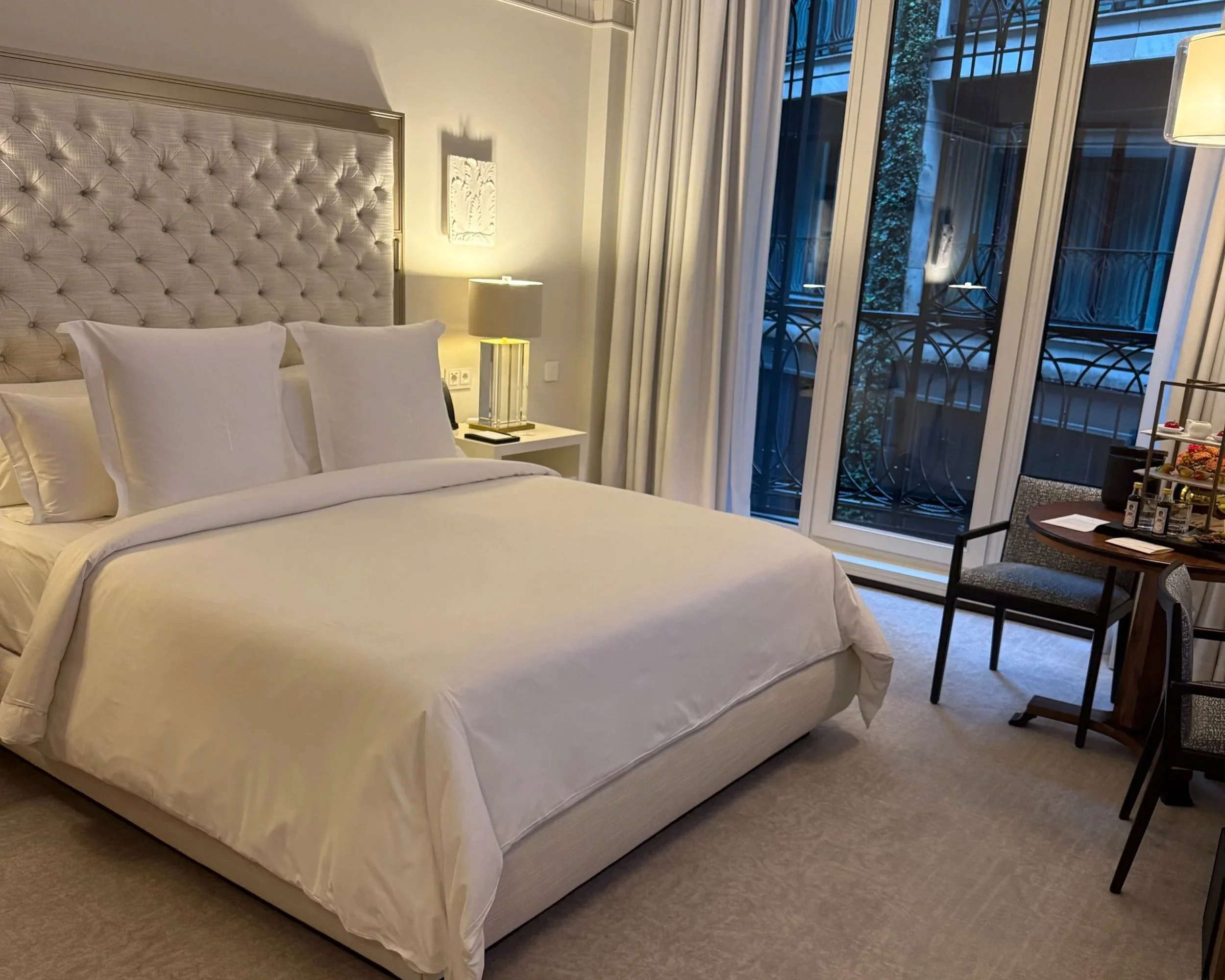
Four Seasons makes one promise about its beds and keeps it in every city. Madrid included.
The Dining Scene
Dani Brasserie: The main restaurant takes the entire seventh floor and opens onto the rooftop terrace that makes breakfast worth arriving early for. Chef Dani García built his reputation in Marbella and Andalusia and holds three Michelin stars, and the room he put on top of the Four Seasons was designed by Martin Brudnizki, whose studio is behind some of the most recognizable restaurants and bars in the world. The look is warm and lightly colonial, greens and ambers against the light, and the space is as much a reason to come as the food. It runs its own entrance on Calle Sevilla straight up to the roof, which tells you what it is: a Madrid destination in its own right, not a hotel restaurant that happens to have a view.
Breakfast is the argument for staying here rather than going elsewhere. Start with the pan con tomate, the version of bread and ripe tomato over Spanish olive oil that Madrid has been getting right for centuries. It is as Madrid as breakfast gets, and better here than you will find it almost anywhere else. The avocado toast, built to order, makes the same case for the olive oil in a different form, and the churros come thin and crisp with thick hot chocolate for dipping that has nothing in common with the American version of the same name. Take a table on the terrace and get there before the room fills, because once the city is below you there is no reason to be anywhere else for the next hour.
For dinner, García's Andalusian roots come through. The Tomate Nitro on the menu is the dish that earned him his third Michelin star in 2018, and the green gazpacho with shrimp tartare is from the same period in his cooking. The bluefin tuna is the one to order if you want to understand where the kitchen sources, because it comes from the almadraba catch off Cádiz, the centuries-old ronqueo ritual that runs each spring as the tuna migrate through the strait. If you want the through-line of who García is, ask for The Best of Dani, a separate menu of seven dishes drawn from across his career. One thing worth knowing: his two-Michelin-star Smoked Room is a different restaurant elsewhere in the city, not in the hotel, though the brasserie hosts four-hands dinners that occasionally bring it up to the roof.
ISA: ISA is the hotel's cocktail bar and Asian street-food restaurant, the work of chef Ignacio Vara, with a drinks program that runs deep on sake alongside the wine and the signature cocktails. The signature is worth knowing about before you arrive. Cocktails come to the table on a trolley and are finished in front of you, a foam or a controlled flame depending on what you ordered. Order something that calls for the show. The theater is real rather than performed, because the drinks behind it are actually good.
El Patio: The lobby lounge sits in what was once the operations courtyard of the Banco Español de Crédito, where green marble columns and gilt capitals rise to ceilings that tell you exactly what kind of institution used to do business here. The afternoon tea service runs from 3 to 6pm and takes the format somewhere Spanish, with tiered stands of pastries from Balbisiana and tapas that move through the regional classics, served on porcelain from the Madrid tableware house Molecot. It is the right place to land when you come back from the Prado and need to decide what the evening is.
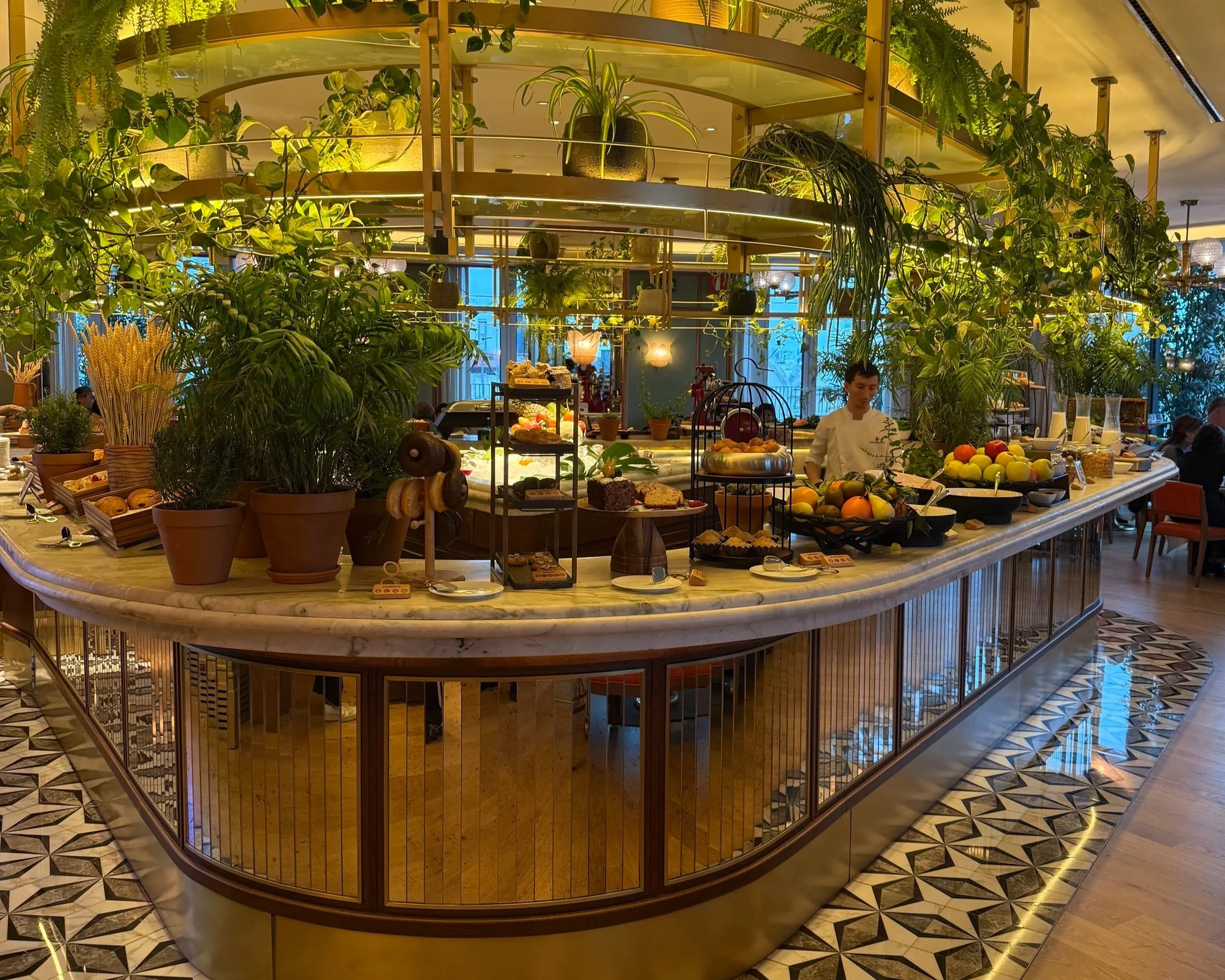
Half conservatory, half supper club, and somehow exactly right for a Madrid.
Beyond the Room
The Spa and Rooftop Pool: The Wellness Centre runs across four floors and is the largest urban spa in Spain, which is the kind of fact that tells you how the hotel sees itself, as a destination for Madrid and not only for its guests. It carries its own Forbes Travel Guide Five-Star rating, separate from the hotel's, which almost no urban spa earns. The showpiece is the 14-metre pool on the eighth floor, set under a skylight that runs the full length of the water, with a sun terrace beyond it looking over the tiled roofs of the city. The spa fills the floors below with treatment rooms and a Rossano Ferretti hair salon, and the terrace hosts dawn yoga when the weather allows. The therapists are trained through the Wellness for Cancer program, which most luxury spas do not bother with and which is worth naming. Both the pool and the spa are fully accessible, which is not something every property at this level gets right.
Galería Canalejas: The hotel has direct access to Galería Canalejas, a luxury retail gallery built within the same historic complex. If shopping is part of what brings you to Madrid, it is there without leaving the building.
The Golden Triangle of Art: The reason to choose this address over a quieter one is what sits within reach of the door. Madrid's three major museums make up what the city calls its Golden Triangle of Art, with the Thyssen-Bornemisza nearest and the Prado and Reina Sofía just beyond. We would take the Thyssen first thing before the crowds and save the Prado for late afternoon, when the building has thinned out and you can stand in front of the Velázquez rooms without working for the space.
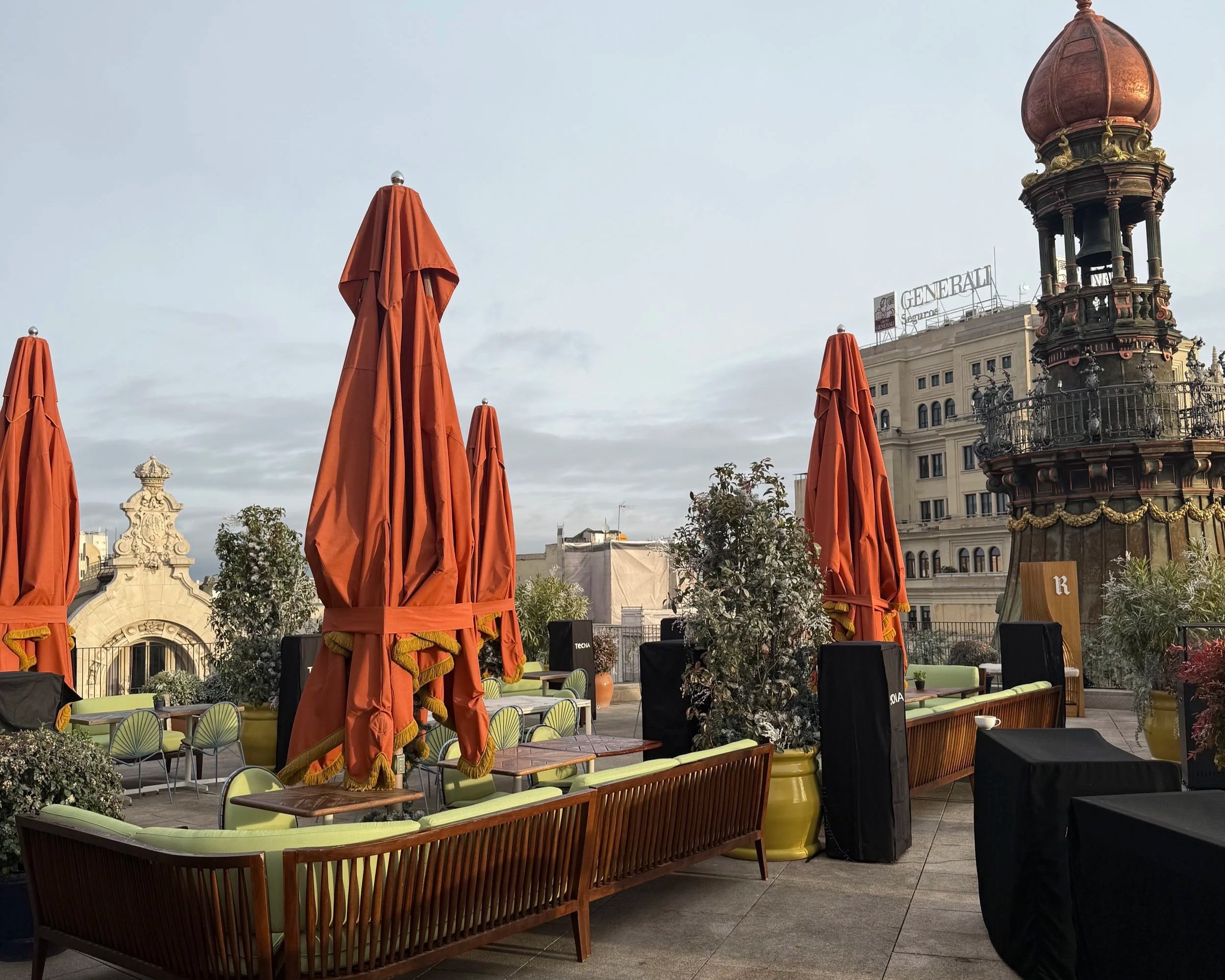
A flat, open rooftop where the architecture next door is the best thing on the table.
The Experience
Brand: Four Seasons Hotel Madrid opened in September 2020 as the brand's first property in Spain and its most ambitious historic restoration to date. The brand has form in landmark buildings, but Madrid required something more complex: seven separate structures, each with its own architectural identity, unified into a single hotel without erasing what made any of them distinctive. The €530 million, seven-year restoration is the answer to whether that worked. The recognition has followed, including a Forbes Travel Guide Five-Star award for the hotel.
Within the Four Seasons portfolio, Madrid sits alongside the brand's most architecturally significant properties, operating at the level the city demands in a building that has been part of Madrid since before most countries in the world had modern banking systems.
Ambiance: The hotel is formal in the way that Madrid itself tends to be formal: aware of its own significance without being stiff about it. The contrast inside the building is the thing to notice. Downstairs is the old banking hall, its stonework original. Upstairs, the Brudnizki rooftop is its opposite, modern and full of light. Upstairs, the Brudnizki-designed rooftop runs warm and modern over the city. The restored interiors, from the ironwork to the original wood joinery brought back into service, give the building a weight that newer construction cannot replicate. You are staying in a place that has been something important for a very long time, and that history is present in every room. Central Madrid is loud and relentless, and walking back in off those streets, with the building closing around you, is the part of the day you come to look forward to.
Service: Four Seasons service has a recognizable shape no matter where the property sits, and the value of that consistency is something we have come to count on. The door is attended, your name travels with you, and the things you mention in passing tend to be handled before you raise them again. The Four Seasons app does real work here too: we have sorted a dinner reservation from the car on the way in from the airport and flagged an accessibility need before arriving at the door. The Madrid team will also set up things you would not think to ask for, including the rooftop pool and terrace booked for your party alone late in the evening, with a private dinner served up there if you want it.
What stayed with us was smaller and more personal. Waiting in the room was a welcome spread with a chilled bottle of Spanish cava, and beside it a hand-painted ceramic tile done in the style of Madrid's old street signs, a sketch of the hotel building above the words Calle de Tudor. Someone had turned our name into a Madrid street and had it fired onto a tile before we arrived. It is the kind of touch that cannot be systematized, and it is exactly what tells you a hotel is paying attention.
Accessibility
The location is among the most naturally accessible in Madrid. The Canalejas district sits on flat terrain, and the sites you would actually walk to present none of the uneven cobblestone or significant grade that complicates mobility elsewhere in the city. Everything in the immediate area is a step-free walk from the door.
The accessible room delivers. The layout is spacious and well-considered, and the bathroom gives you real room to move rather than a token clearance. The spa and rooftop pool are reachable and usable, not just technically compliant. For travelers with mobility considerations, this is one of the more complete packages of any city hotel we have stayed at: the right room in the right location, with amenities you can actually use rather than ones that are merely there on paper.
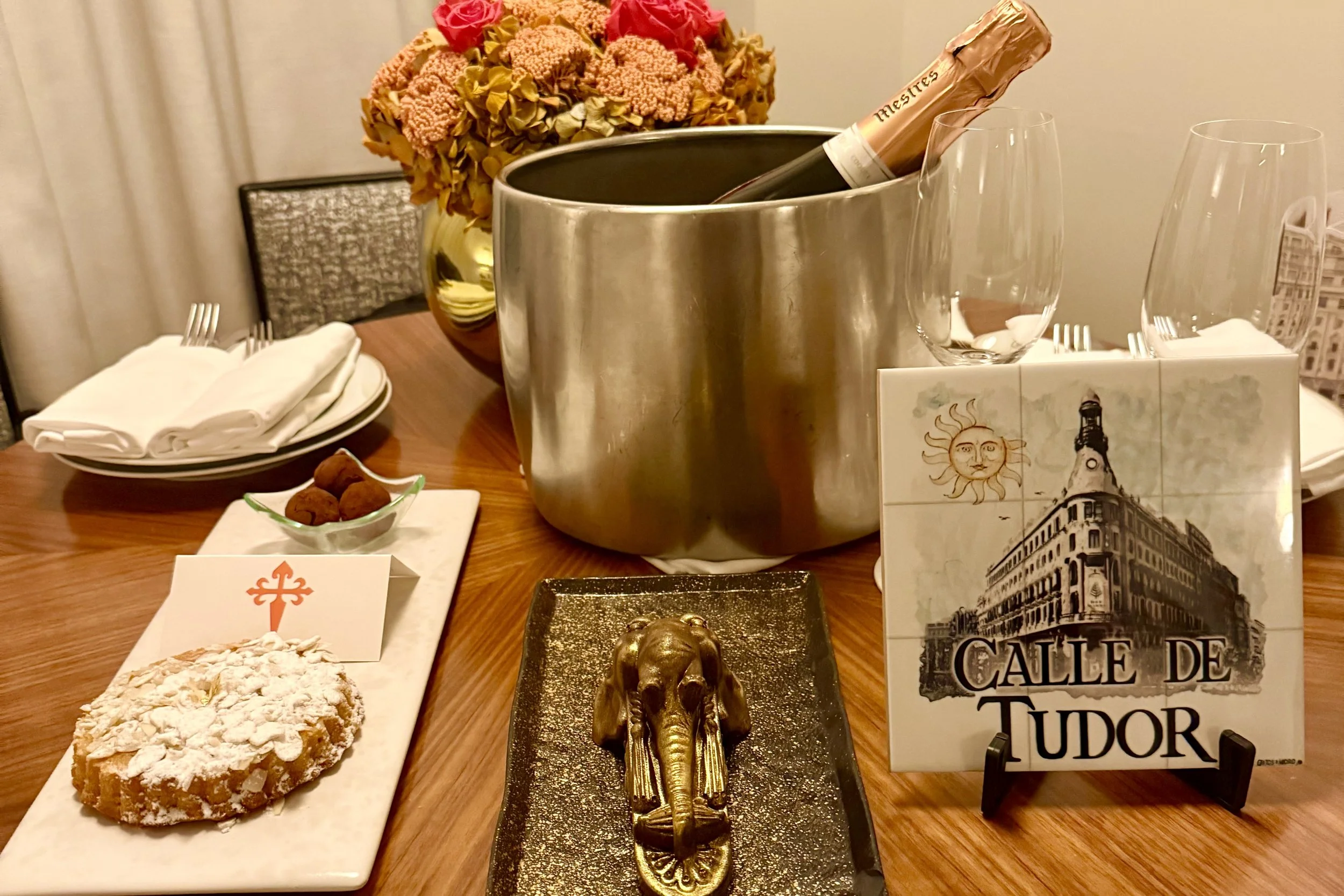
A welcome set up in the room, down to a hand-painted tile renamed Calle de Tudor.
The TudorTravels Perspective
The Four Seasons Madrid works for travelers who want to be inside Madrid rather than looking at it, and that is what we look for in a hotel anywhere in the world. It starts with a sense of place. The interior should tell you where you are even when it does so quietly, and this building could only be Madrid. More than that, we want to step out the front door and already be there, with no transfer and no anonymous district to get out of first, just the city starting the moment the door closes behind you. Plenty of hotels sit in the generic part of a city and ask you to travel to reach the part worth seeing. Those are not for us. Here, Puerta del Sol is outside the door and the ground is flat enough that you can start walking the second you leave.
The other thing we want is calm. We travel to get out into a place, to eat where the locals eat and see the things worth seeing. The conversations with people who actually live there are part of it too. We do not want the hotel itself to be the adventure. We want the opposite, the comforts we count on and a bed we know will be right, so that we can recharge for the next day. The Four Seasons Madrid does both halves of that, which is rarer than it sounds. It puts you in the middle of the city and then gives you somewhere calm to come back to, with the same bed the brand has been getting right for decades behind a door that closes the city out when you need it to.
We book through our Four Seasons Preferred Partner program, and the part worth understanding first is that it costs you nothing. You get the same best available rate you would booking direct on the Four Seasons website, and you remain eligible for any special Four Seasons happens to be running. The Preferred Partner benefits sit on top of all of that at no added cost. There is no version of this where booking through the program leaves you worse off, which is the whole point of using one.
The benefits themselves are the icing. Daily breakfast for two is included, which matters more than it sounds because breakfast at Dani Brasserie is one we would not skip regardless and having it covered removes a daily decision. There is a hotel credit, $100 toward a room or $200 toward a suite or private retreat, with no shortage of places to spend it across the dining program or the spa. The booking also brings an upgrade to the next category and early check-in with late check-out, both subject to availability. At a hotel built from seven different structures, where rooms vary more than they would in a single purpose-built tower, that upgrade can be a real step up rather than just a bigger number on the door.
Who should look elsewhere: if you want a resort, or a quiet retreat away from a city center, this is not that. The Four Seasons Madrid is a city hotel that puts you in the middle of one of Europe's most walkable historic centers and expects you to use it. If that is the trip you are taking, there is no better-placed address in Madrid.
Ready to book the Four Seasons Madrid, or looking for the right luxury stay for your trip to Spain? Contact us to start planning.