

The sky lobby at the Four Seasons Otemachi. Flowers, silence, and thirty-nine floors of distance between you and the city.
You check into the Four Seasons Otemachi on the 39th floor. There is no lobby at street level. You arrive in the Otemachi financial district, one of the most pressed-suit, fast-walking corners of Tokyo, walk through a tower entrance that could belong to any office building, and step into an elevator. The doors close. The city disappears.
When they open again on the 39th floor, you are somewhere else entirely. The Imperial Palace Gardens fill the windows ahead of you, wide and still, the stone walls of the Palace grounds cutting a clean line through the green below. Behind you is the Otemachi skyline. In front of you is quiet. We had been in traffic twenty minutes before this. It takes a moment to catch up.
What gets you next is how right it feels up here. The lobby does not announce itself the way grand lobbies often do. It is simply high above everything, clean-lined, floor-to-ceiling glass, the city laid out below you like something you are finally seeing clearly. We found ourselves standing at those windows for longer than made sense, watching the tiny figures moving through streets we had just been standing in, feeling like we had found a perch above Tokyo that felt entirely our own.The RoomThe design here does something unusual: it does not announce itself. The Japanese minimalism is quiet and deliberate, every material and texture considered, but the room never feels like it is performing. It just feels right. You notice it the way you notice good lighting, not immediately, but after an hour you realize why you are so comfortable. The technology works the same way. Curtains, temperature, lighting, all controlled through panels that take about thirty seconds to understand, which after a long travel day is a welcome detail. For anyone with mobility needs, the control placement and room layout make this one of the more thoughtful high-floor rooms we have stayed in. We will say about the Four Seasons bed what we say every time we stay with this brand: it is the best in the business. We have never slept in a disappointing Four Seasons bed anywhere in the world, and Tokyo does not break the streak. The soundproofing deserves its own mention. You are in one of the most densely populated cities on the planet and the room is completely, unexpectedly quiet.The view is what the room is built around. Tokyo from above looks different from what you expect: denser, more layered, almost overwhelming. But the Imperial Palace Garden cuts through all of that. You are looking down at ancient stone fortifications that have stood for centuries, surrounded by water and trees, completely intact in the middle of a city of fourteen million people. The contrast stops you. The garden held our attention in a way a skyline never does, and we found ourselves returning to the window throughout the day, each time the light had shifted and the scene had changed. In a vertical city like Tokyo, a city-facing room at this height often means staring directly into the lit offices of the building across from you. The Palace Garden view means something else entirely.Request This: The Imperial Palace Garden View. Do not settle for a city-facing room. The Palace Garden sitting intact in the middle of one of the world's most modern cities is a sight that does not get old.Don't Miss: The view at twilight specifically. The way the shadows move across the ancient fortifications as the sun goes down is a completely different experience from the daytime view. Position yourself at the window for it.
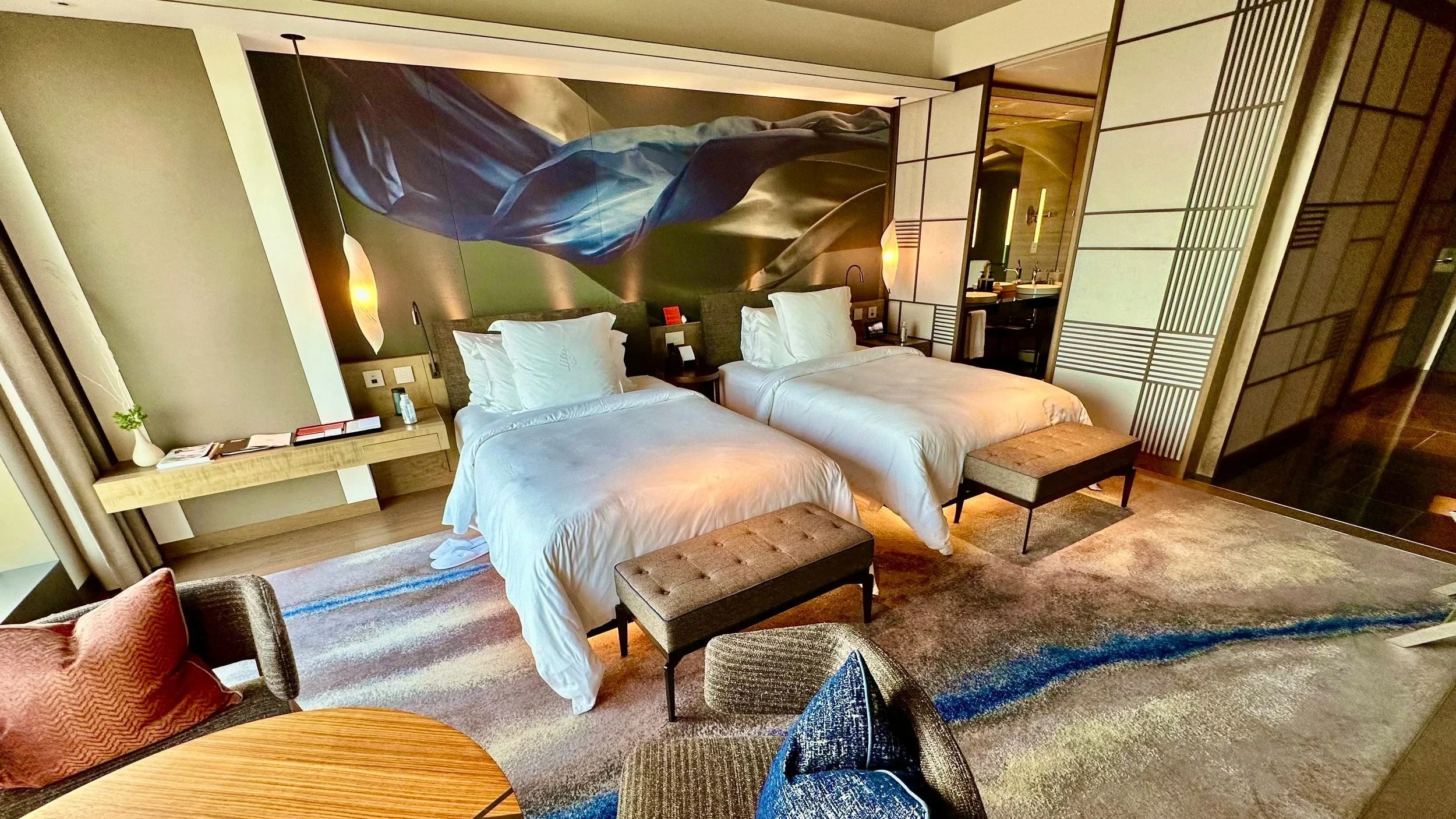
This is the room the city disappears into. The artwork, the shoji panels, the lighting, all of it is just right.
The Dining Scene
Travel for us is driven by culinary depth. Of course Tokyo is a foodies paradise but the Four Seasons Otemachi offers some very vibrant dining experiences of their own. The hotel has successfully created a destination for locals and guests alike. This gives the dining spaces a lived-in energy that many luxury hotel restaurants lack.
est: Holding a Michelin star for multiple consecutive years, est is Chef Guillaume Bracaval's study in what happens when French technique meets complete commitment to Japanese ingredients. 95 percent of everything on the plate is sourced from local farmers, fishermen, and foragers across Japan. The design feels lighter and more rooted in the destination than a typical fine-dining room at this level. We toured it on our last visit and have been plotting a dinner ever since.
Order This: The degustation menu. It tracks Japan's micro-seasons and changes constantly. There is no point asking what will be on it. That is the whole point.
Don't Miss: They place a card on the table alongside the menu listing every ingredient and exactly where it came from. Read it before the first course arrives. Book well in advance, we learned that the hard way.
Pigneto: While est is the culinary headliner, Pigneto became our daily anchor because of one specific thing: it has an outdoor terrace, which is rare to find at this altitude in Tokyo. Breakfast here was the highlight of our mornings. The pastry spread is exceptional and we found ourselves consistently lingering over a second cappuccino just to hold on to those palace views before starting the day.
Don't Miss: The terrace seats fill up early. Come down before the rush or you will end up inside (which is not bad either, especially when it’s raining).
Virtù: For a nightcap, this bar is not a bad option. It blends French Art Deco aesthetics with Japanese bartending precision, and is listed on Asia's 50 Best Bars. What we loved most was the theater of it. Watching the bartenders hand-carve crystal-clear ice blocks is mesmerizing. The Paris-meets-Tokyo atmosphere makes it the right place to end the evening.
Order This: The Virtu Martini: Japanese gin and vodka with French vermouth and hinoki bitters. Or the Smoked Ume Fashioned if you want something darker and more Japanese in character.
Don't Miss: No reservation required, but it fills up fast after dinner. Get there early or plan on waiting.
The Lounge: Do not overlook the lobby lounge. We found that ordering a hot cup of coffee here immediately after arriving from the airport was the best way to reset our internal clocks. It is those small, unhurried moments, like watching the steam rise from a bowl of udon while the staff treats you like family, that made this hotel feel like home from the first hour.
Order This: The udon. It is simple, warm, and exactly the right thing after a long flight.
Don't Miss: If this is your first visit to Tokyo, tell the staff it is your first visit. The way they look after you from that point forward sets the tone for the entire stay.
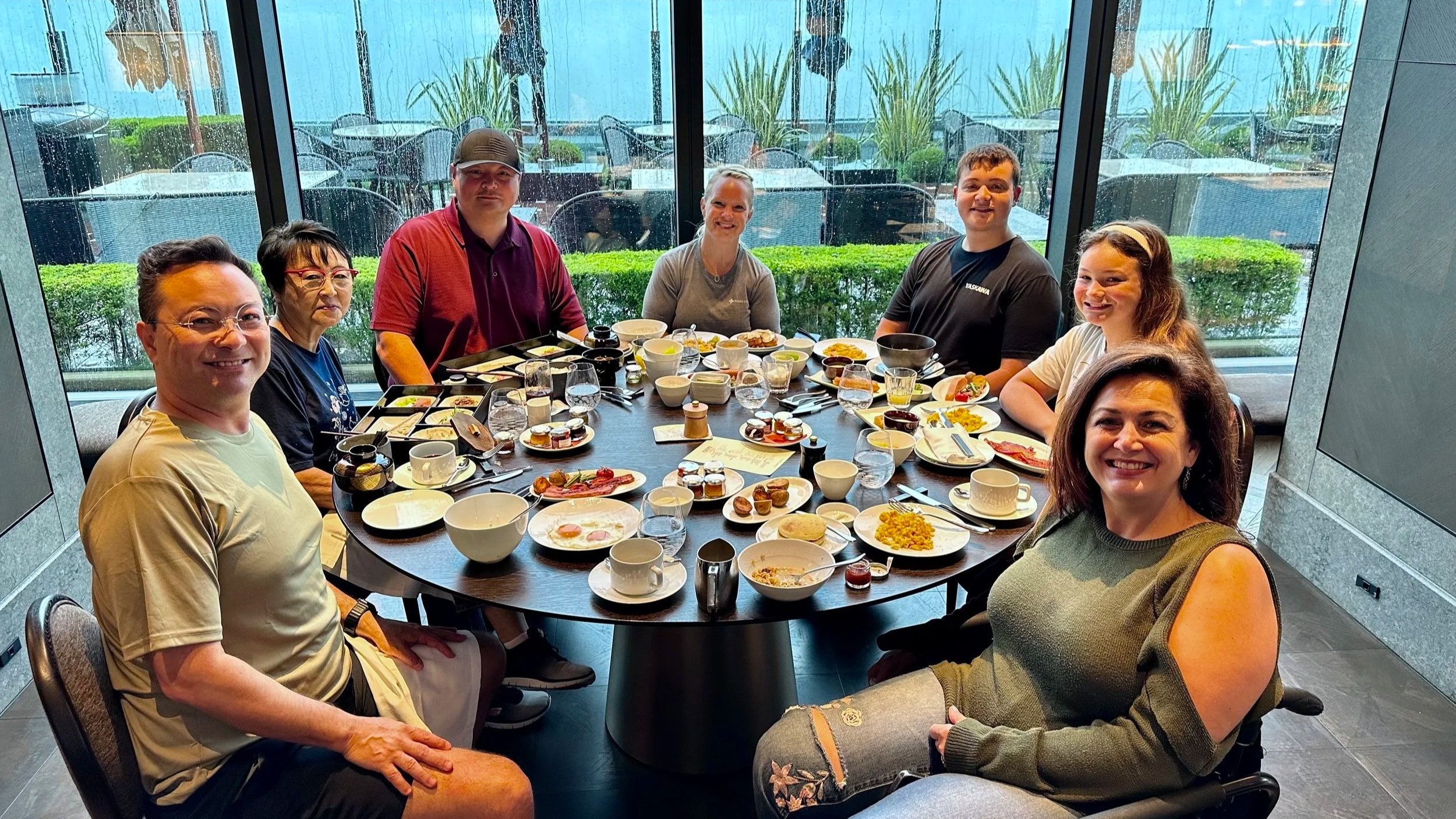
Our favorite morning ritual, lingering over a long family breakfast before hitting the city.
Beyond the Room
The Spa: The spa is on the 39th floor and the dedicated elevator up there is already part of the experience. You step out into a space that operates at a completely different pace from the city below. The treatments are grounded in Japanese wellness traditions, thoughtfully done and not generic, but for us the real draw was the relaxation lounge. The silence in that room stopped us the first time we walked in. You are hovering above one of the most frenetic financial districts in the world and you cannot hear any of it. We started arriving at least thirty minutes before our treatment time, not because we needed to but because sitting in that stillness was worth planning around.
The Pool: The 20-metre indoor heated pool sits alongside floor-to-ceiling windows with views of the Imperial Palace gardens and the Tokyo skyline. Swimming in it at this height is a specific kind of experience. When you reach the wall and look up, you are looking at the city from inside of it. Our favorite spot in the entire amenity floor is the heated vitality pool next to the mist chairs. On the visit where we timed it right, we sat in the warm jets as the sun went down over the Palace gardens. We have been telling other travelers to plan specifically for that moment ever since.
City Exploration: One detail that caught our eye was the fleet of complimentary bikes available to guests at the front entrance. We did not ride them ourselves, but we loved watching the valet team send other guests off. They do not just hand over the bike. They send you out with cold water bottles and a digital map of the recommended routes through the neighborhood. It is a thoughtful service and a smart way to explore the area on your own terms rather than by car service.
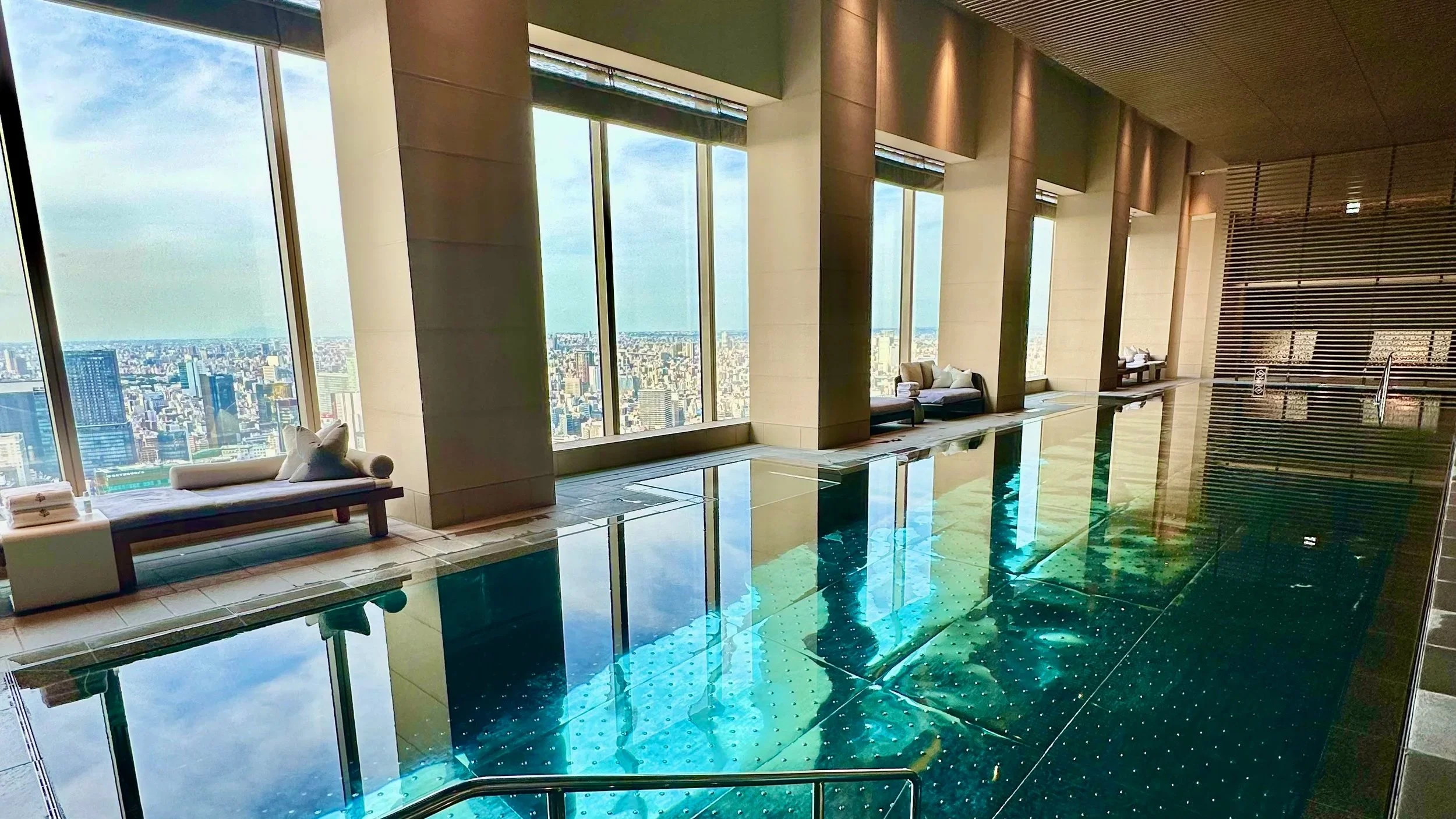
This pool has one of the best views of any hotel. The combination of height, the garden below, and the skyline is hard to prepare for.
The Experience
Brand: We have stayed at Four Seasons properties so many times now, and the one word that keeps coming up is consistency. We arrive somewhere new, walk into a room we have never been in before, and immediately feel oriented. The finish, the light, the way the staff acknowledge you at the door. Something is always recognizable, and after enough stays you realize that is not an accident. It is what Four Seasons has built its entire reputation on, and they have held it across more than 100 properties worldwide, which is hard to do. The beds are the most honest proof of this: no brand we have stayed with comes close to Four Seasons for consistent sleep quality across an entire portfolio. The app is worth mentioning too. We have used it to sort a dinner reservation from the car on the way from the airport, to flag an accessibility need before we even checked in, to reach someone at two in the morning without picking up the phone.
To put this simply, Four Seasons is not the brand for travelers who want their hotel to feel like an extension of the destination. The experience is excellent precisely because it is not trying to do that. But if you want to spend your days out in the city, fully embracing its culture, its food, its energy and ambiance, and come back each night to somewhere that already feels like home, instantly familiar and completely reliable, Four Seasons is hard to beat.
Ambiance: The design here is sleek and deliberate throughout, clean lines and no excess, which feels entirely right for a hotel sitting above one of the world's great financial districts. What caught us off guard was the energy. We expected a certain formality given the address and the price point and we did not find it. The crowd tends toward fashion-forward and the hotel matches that sensibility without working at it. There is a warmth here that sits alongside the modernity rather than competing with it, and that combination is harder to pull off than it looks.
Service: The team here operates the way the best Japanese hospitality always does: attentively and without any visible effort. What stays with us after every visit is how quickly they learn you. After a single interaction, someone knows your name and whatever preferences you mentioned in passing. In the second most populated city on the planet, being remembered inside a hotel changes something about how the whole stay feels. They are observant in the specific way that removes small inconveniences before they occur rather than fixing them after you mention them. There is no friction. Things simply work, and the right thing arrives before you thought to ask for it. It is the Japanese hospitality tradition running at full strength through a modern property, and it is the best version of hotel service we have encountered in Tokyo.
Accessibility
The Property: The Four Seasons Otemachi opened in 2020 and the accessibility reflects it. Lobby circulation paths are wide, guest room showers have no-lip entries, and the property moves without the retrofitted feel of older Tokyo hotels. One detail worth noting: because the lobby, restaurants, pool, and spa are all on the 39th floor and above, the entire hotel is reached by elevator from the moment you arrive at street level. Once you are in, you do not deal with stairs between amenities.
The Neighborhood: Otemachi Station connects directly to the hotel by elevator, putting the full Tokyo subway network within reach without navigating street level at all. The surrounding financial district has wide, flat sidewalks that make the immediate area easy to move through. One honest caution from our last visit: we encountered a broken wheelchair lift on the public passage leading to the station. The hotel itself was fine, but we recommend asking the concierge to confirm the station lifts are operational before heading out. It is easy to check and worth checking.
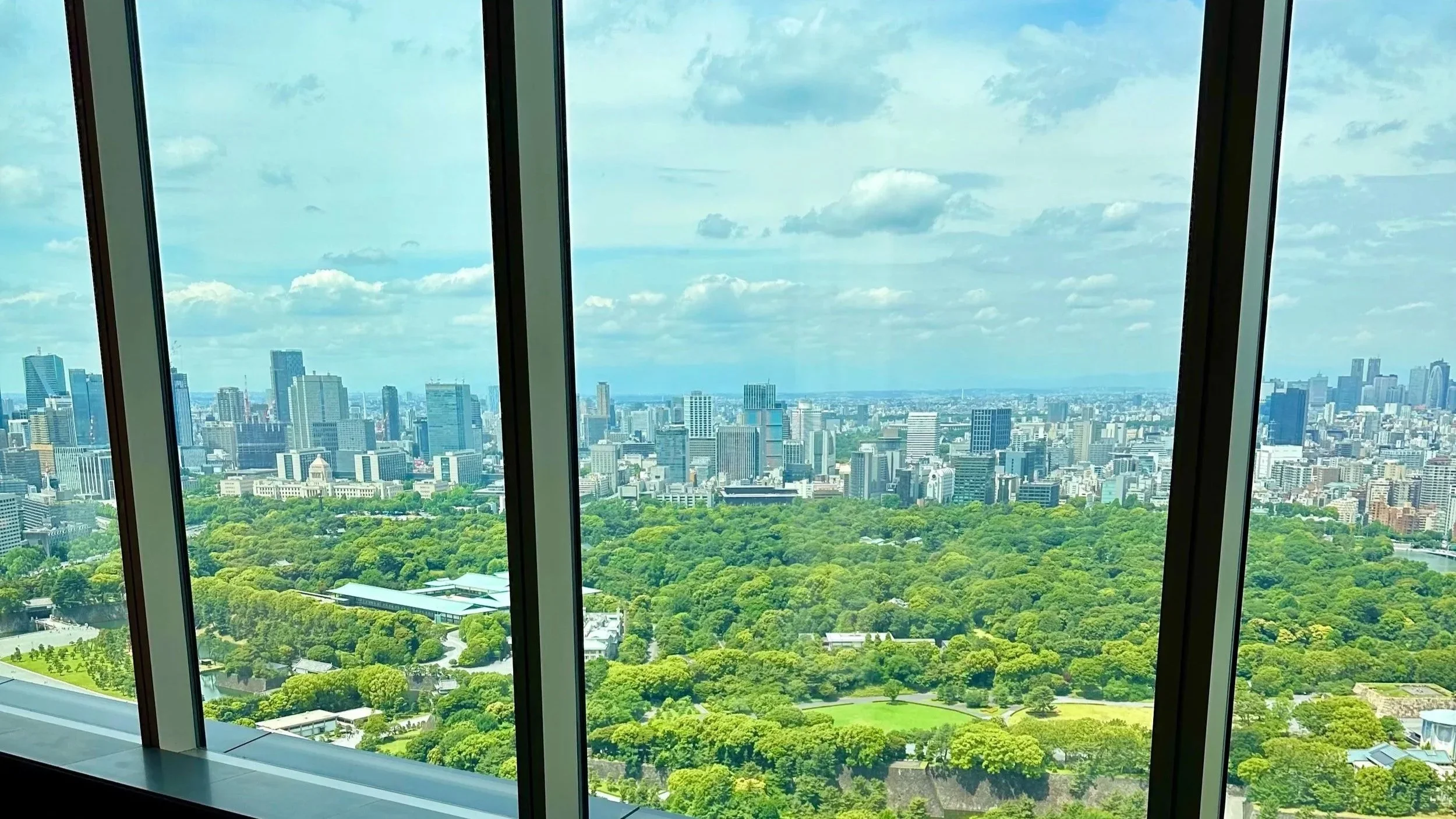
The Imperial Palace Gardens from the 39th floor. A forest in the center of 35 million people, the ancient stone walls holding it all intact.
The TudorTravels Perspective
The Four Seasons Otemachi is for the traveler who wants Tokyo to feel manageable. It is not in Shinjuku or Shibuya or anywhere near what most people picture when they imagine the city. It sits above the Imperial Palace Gardens in a quiet financial district, and the quiet is deceptive. Tokyo Station, the main rail hub for the city and the bullet train network, is a short walk away, and the subway connection is direct and covered in the Accessibility section. If you want to drop straight into the noise and the crowds, there are better-located hotels for that. If you want a base that holds the city at arm's length and lets you go into it on your own terms, this is the one.
We book through our Four Seasons Preferred Partner program, which covers daily breakfast for two. In practice that means Pigneto's terrace every morning. You will not be in a hurry to leave it. A resort credit comes with it as well, best used at the spa or at Virtù in the evening.
Tokyo rewards experience. If this is your first visit, the city is a lot, and having somewhere this calm and familiar to return to each night makes a real difference. If you have been before and want a different version of it, slower and higher and quieter, this is the right base for that trip. Tokyo is a city that gives a great deal and asks a great deal in return. The Four Seasons earns its place on both ends of the day. Going out into it is one kind of reward. Coming back is another.
Ready to book the Four Seasons Tokyo, or looking for the right luxury stay for your trip to Japan? Contact us to start planning.