
Park Hyatt Bangkok
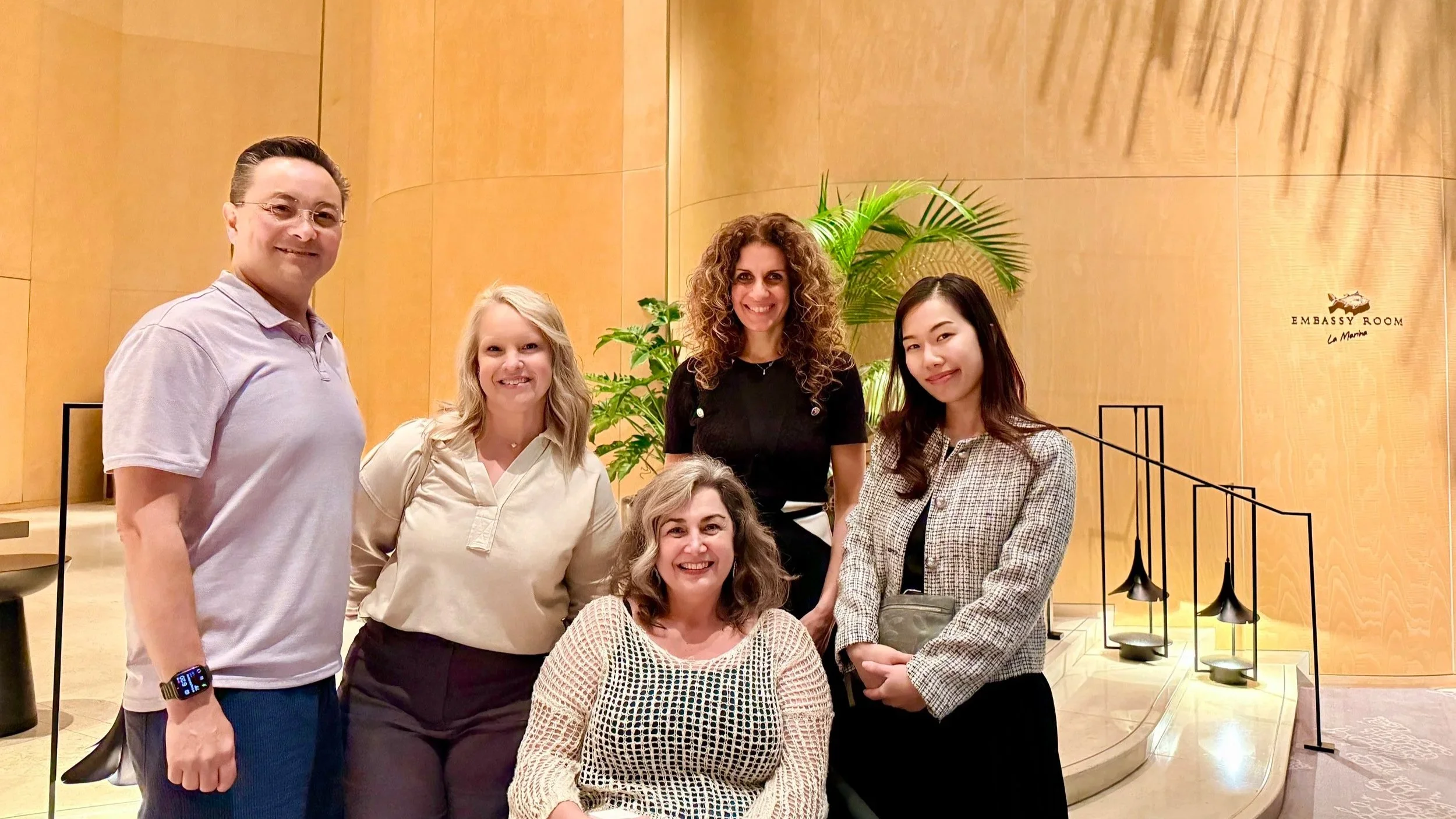
The level of personal service the Park Hyatt Bangkok delivers from the first day to the last was impressive.
Bangkok is a city that operates at its own pace. The heat, the noise, the traffic are all fully present from the moment you step outside the airport, and none of it lets up. We have been here many times. The Park Hyatt does something specific with all of that: it does not attempt to pretend the city outside is something other than what it is. It simply removes you from it the moment you walk through the doors.
The hotel occupies the top floors of the Central Embassy tower in the Phloen Chit neighborhood, one of the city's premier high-end shopping and dining destinations. The building is distinctive from a distance: a coiled aluminum tower shaped around an infinity form, its reflective facade catching the light differently at every hour of the day. Inside, the contrast with the streets below arrives immediately. Natural light, clean lines, and a quality of stillness that the city outside is not offering anyone.
What sets this property apart from others we have stayed at in Bangkok is how completely it manages to be both connected and private at the same time. You can move from the hotel lobby directly into one of the city's best retail and food destinations without touching a curb or entering the heat. You can also disappear into the property entirely and not need anything from the city until you decide you are ready for it. For a place that asks as much of you as Bangkok does, that kind of choice is worth weighing heavily when you are deciding where to stay.
The Room
The design at the Park Hyatt Bangkok makes a deliberate choice that many older luxury properties in Asia do not. There is no heavy gold, no dark lacquered wood, no attempt to signal luxury through ornament. The rooms work in soft creams and warm oaks, and the effect is a specific kind of quiet that extends well beyond the acoustics. After a full day in the color and noise of Bangkok, walking back into this palette does something immediate to your nervous system. It is precisely the right approach for this city.
Every room has floor-to-ceiling windows that frame the Bangkok skyline, and the view changes character throughout the day in a way that makes the window itself feel like a considered element of the design rather than an afterthought. The bathrooms are spacious, clad in white marble with deep soaking tubs that became part of our daily routine here. There is a lotus bloom hand-carved into the stone above the tub that is easy to overlook the first day and worth finding. It is a single, quiet gesture that anchors the room in its location without making a performance of it.
The technology is handled the way most hotels fail to handle it. The lighting and climate controls are tactile and direct. There is no wall panel requiring interpretation in the middle of the night. The Le Labo products and the robes are the details that turn the last hour of the day into something you plan for. We have stayed here multiple times in standard rooms, never in a designated accessible category. The standard room layouts are designed with a spatial generosity that most hotels reserve for dedicated accessible categories: wide doorways, open floor plans, and a bathroom scale that accommodates without requiring modification. That is the design exception rather than the rule.
Request This: A high-floor room for the full Bangkok skyline. The city spreads in every direction and the light changes enough from morning to evening that you find yourself at the window without having planned to be there.
Don't Miss: The lotus bloom carved into the stone above the soaking tub. It is understated and specific and it is the detail that makes the bathroom feel intentional rather than just expensive.
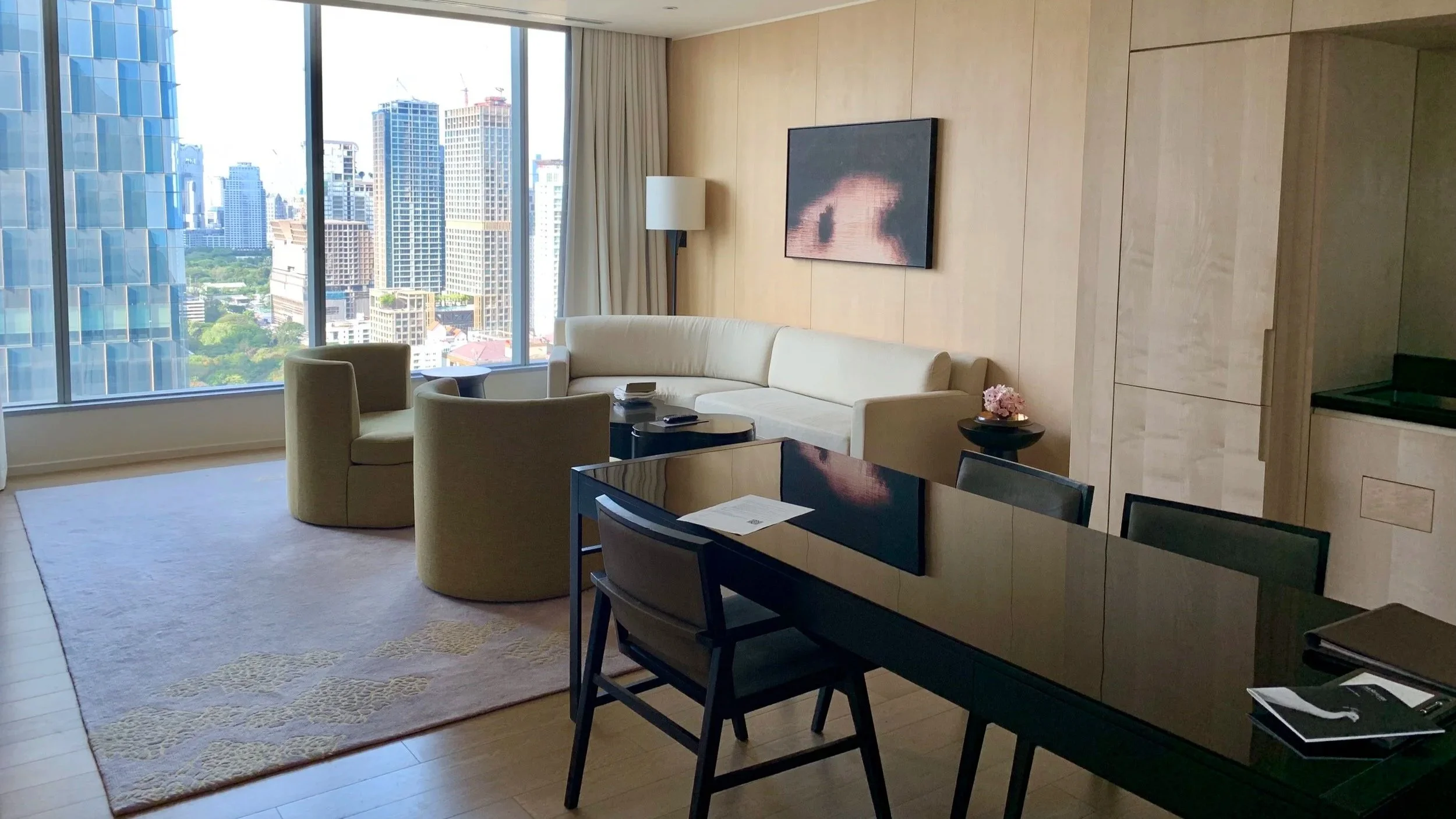
Our suite at Park Hyatt Bangkok. Light, calm, and quiet in a city that is none of those things outside the window.
The Dining Scene
Embassy Room La Marina: This venue anchors the hotel's food program and does two different things well. In the morning it is where breakfast happens, and the spread earns the time you give it. The fresh-cut tropical fruit is the first thing worth going back for: the mango at peak season in Bangkok operates at a ripeness level that has no equivalent outside Southeast Asia. The Thai-style omelette from the à la carte menu is the right local note to start a day of sightseeing on. By evening the room becomes La Marina, focused on Italian cuisine inspired by coastal fishing villages and provincial markets, with fresh seafood and handmade pasta at the center of the menu. The lobster linguine is the reason to return more than once.
Order This: The Thai-style omelette at breakfast and the handmade pasta at dinner. Two entirely different meals with two different reasons to be at the same table.
The Living Room: The social center of the hotel through most of the day. Natural light through large windows, comfortable furniture, and a pace that is deliberately unhurried. It works as an afternoon tea setting, a place for a glass of wine in the early evening, or simply somewhere to be inside the hotel without being in your room. And sometimes the heat makes a slow afternoon in a room like this the only reasonable answer.
Order This: The afternoon tea service. The program is well considered and earns more time than a quick pass through.
Don't Miss: The window seats in the later afternoon when the light comes in from the west. The city below is still fully operational and watching it from this remove is one of the better things the hotel offers.
Penthouse Bar + Grill: The top three floors of the hotel house a collection of spaces that operate as a private club above the city: a steakhouse, a chef's table, a cocktail bar, and a dedicated whiskey room across floors 34 and 35, with the alfresco rooftop bar sitting at the top on 36. The atmosphere across all of these spaces is darker and more intimate than the rest of the property, which is built around light and openness. The contrast is deliberate and works well. We did not dine at the Grill on this visit, but the spaces themselves are worth going up to see on their own.
Order This: The Tasmanian salmon. Salmon is not normally our favorite but the kitchen applies the same precision to the fish program that it does to the steakhouse menu, which is exceptional.
Don't Miss: The rooftop on the 36th floor as the sun goes down. Bangkok from that height at night is a different city from the one at street level, and the transition from orange to dark is the specific moment this bar was built to frame.
Central Embassy: Eathai: On the ground floor of Central Embassy and one of the better food decisions available to a Park Hyatt guest. Eathai is a high-end indoor Thai street food market: clean, air-conditioned, and covering dishes from every region of the country alongside other Southeast Asian options. You receive a card at the entrance, move from stall to stall watching things being prepared in front of you, and settle up at the end. The variety is staggering. For a first visit to Bangkok, this is one of the most efficient ways to understand the range of what Thai cooking actually covers before you start making specific restaurant choices.
Order This: Move through the full length of the stalls before committing to anything. Watch what is being cooked and choose from there. The regional dishes from the north and northeast are worth finding specifically.
Don't Miss: The fresh mango sticky rice when available. The version here holds up to anything on the street.
Central Embassy: Kub Kao' Kub Pla: A sit-down Thai restaurant in Central Embassy operating as a proper restaurant rather than a food court option. The name translates as dishes to eat with rice, and the kitchen takes that seriously. The setting is modern and well-lit, and the spice levels are calibrated in a way that rewards asking for something authentically spiced rather than the adjusted version many tourists receive by default.
Order This: Ask the server what is good that day. The fish and rice dishes at the heart of the menu are always excellent and the kitchen does not overcomplicate them.
Don't Miss: This is the right choice when Eathai is too loud and you want to sit down and eat at a real pace. The quality is not a step down from the market; it is a different experience of the same cuisine.
Central Embassy: Coffee Beans By Dao: The name undersells what this is. Coffee Beans By Dao offers a full menu of Thai and Western dishes alongside strong coffee and a cake program with a genuine following in the city. The service is fast and the quality is consistent. We used it as a casual dinner option more than once without any reason to go elsewhere.
Order This: The cakes are the thing this place is known for and they earn the reputation. Come for coffee and leave with dessert at minimum.
Don't Miss: Ask about the Thai desserts that are not on the main cake display. What is made in house that day is the right question.
Advisor Notes: The supermarket adjacent to Eathai on the ground floor of Central Embassy is worth fifteen minutes on its own. Thai drinks, local snacks, and packaged regional products that do not appear in hotel minibars. We brought things back to the room from there on multiple evenings and it became a ritual.
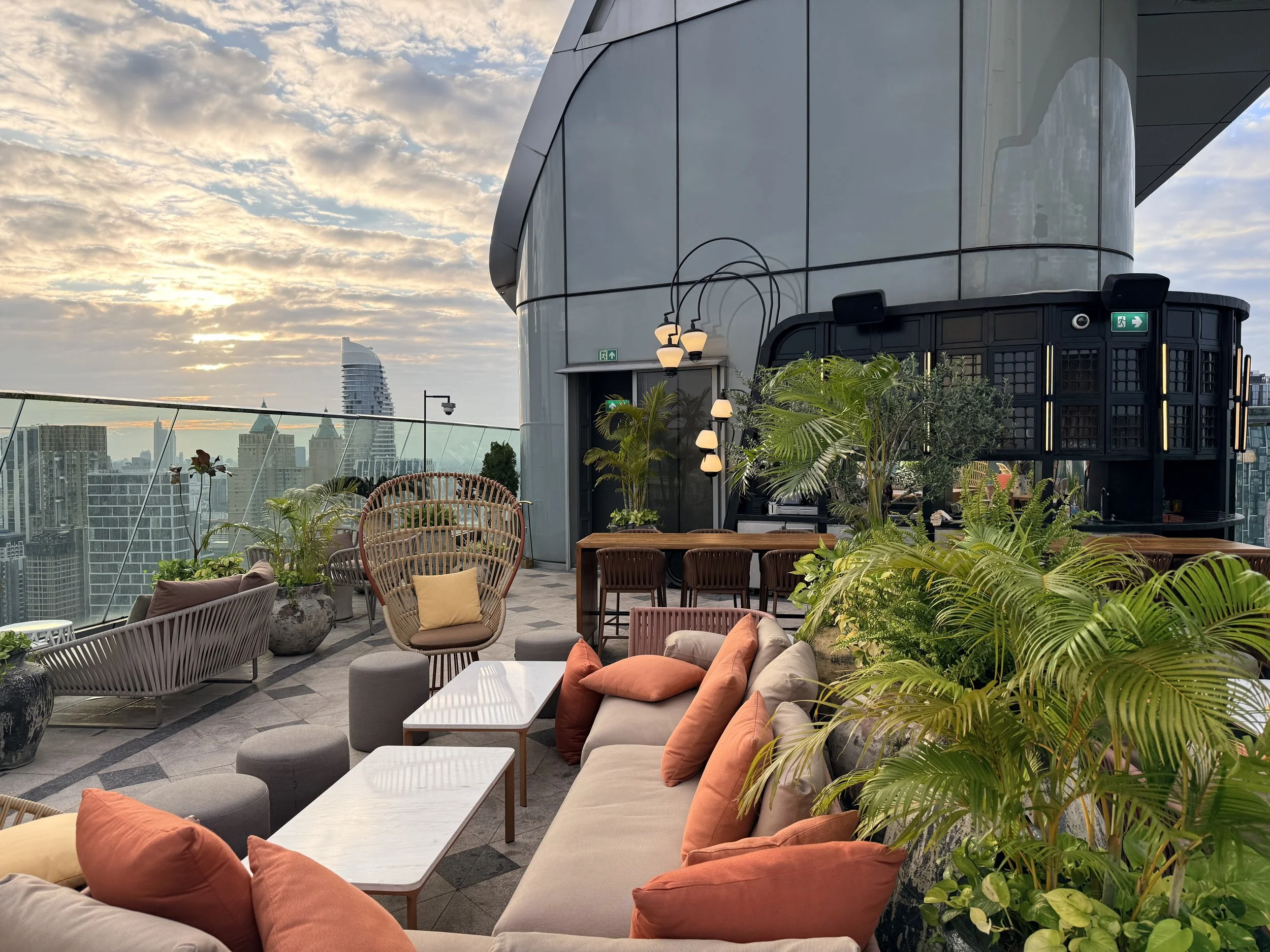
The rooftop terrace at sunset. Bangkok does dramatic skies, and this is the right place to watch them.
Beyond the Room
The Infinity Pool: The pool sits on the 9th floor: 40 meters of saltwater with an infinity edge facing the Bangkok skyline. At this height the property sits well above the street-level noise, and the pool deck is quiet in a way that the city below is not. The water is gentle on the skin and the lap lane is a genuine 25 meters rather than a decorative length. We spent significant time here across every stay, in the water and on the loungers, and the poolside service operates at the level of the hotel throughout. Lunch delivered to a lounger with the urban sprawl of Bangkok in front of you is the kind of afternoon that earns its place in the memory.
PAÑPURI Organic Spa: PAÑPURI is a Thai luxury organic brand and their spa on the 11th floor is worth knowing about even for guests who plan to do most of their bodywork at street-level parlors. The treatment rooms are quiet in the specific way that a well-designed spa room can be, and the heated massage beds changed our expectations for what a hotel spa could offer. The facilities beyond the treatment rooms include crystal-steam rooms, laconium dry-heat rooms, and whirlpools, all within a space compact enough to feel private throughout. For a city with as strong a massage culture as Bangkok, having this level of facility a floor above the pool is a meaningful thing.
The Garden Terrace: Tucked near the pool and easy to miss. A green, planted outdoor space in a city where that kind of room is not easy to find. It is not large, but it is real, and the early morning before the day heats up is when it earns its place. A walk through here before breakfast is the right start to a Bangkok day.
The Mall Connection: Central Embassy is directly below the hotel and the path between them stays indoors and climate-controlled throughout. From Central Embassy you can continue through to Central Chidlom, one of the city's flagship department stores, without going outside at any point. The hotel is also connected by covered walkway to BTS Phloen Chit station, which puts the entire BTS Skytrain network within reach without navigating street-level traffic. In a city where the heat and the traffic are both consistently working against you, this kind of range matters more in practice than it sounds on paper.
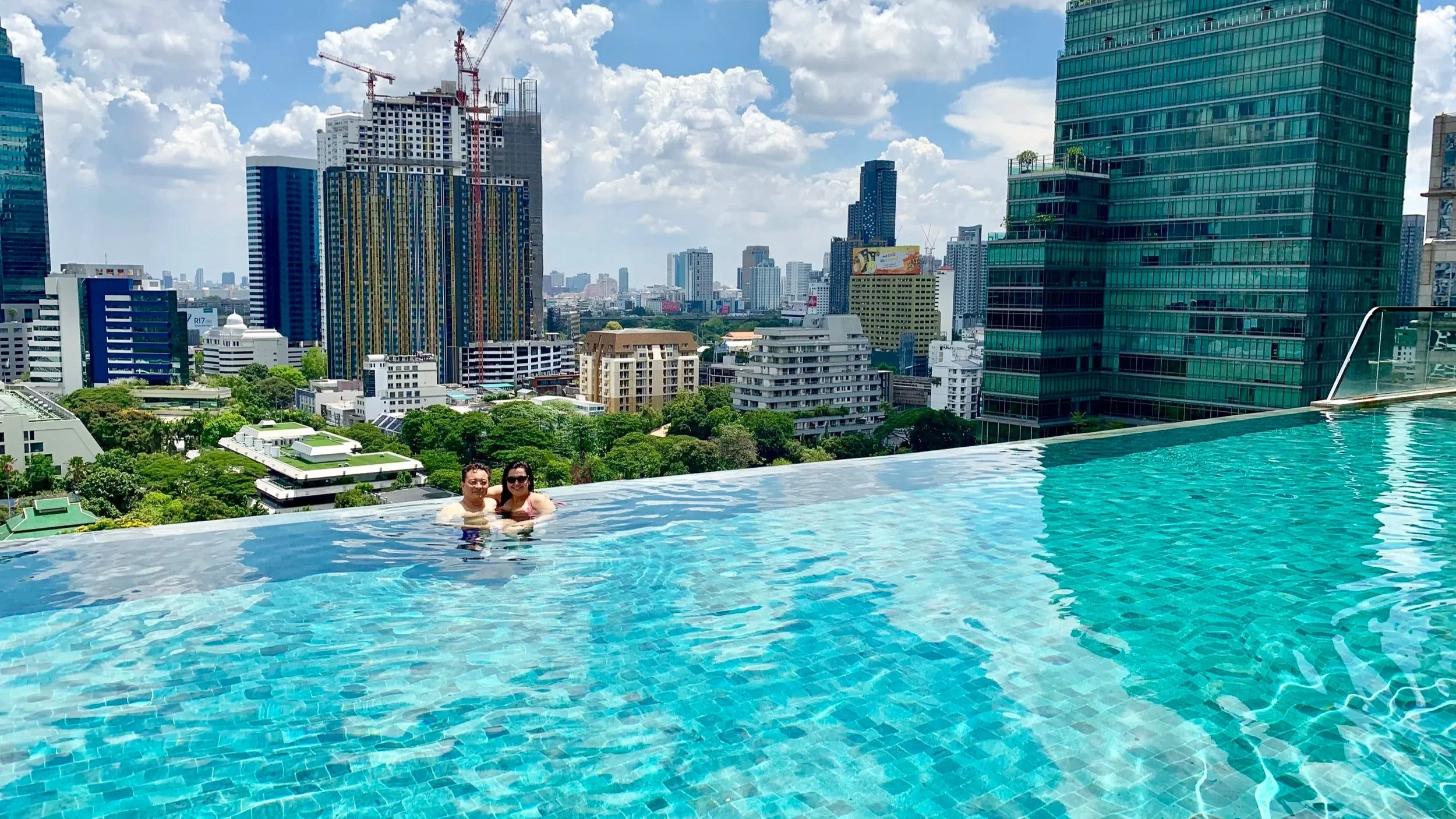
Thirty floors up, Bangkok stretched out in every direction, and nowhere we needed to be. We stayed for a while.
The Experience
Brand: Park Hyatt has been one of our favorite luxury hotel brands for several decades. What distinguishes the brand more than anything else is where its properties sit. Sydney, Milan, Paris: Park Hyatt occupy central locations that most luxury hotel groups simply cannot access, and the Bangkok tower belongs on that list. The brand now has over 50 properties open worldwide, and with the pipeline of confirmed openings across the next few years, that number should pass 60. For a period it seemed the brand had stepped back from building new properties but the pace of development this decade has been significant, and the new Park Hyatts opening this decade have been among the most design-forward we have seen in the luxury tier. The visual language across those properties is consistent and immediately recognizable to anyone who knows the brand.
On service, Park Hyatt brand does not have the consistency of luxury brands like the Four Seasons. The experience across individual properties varies more and depends considerably on the general manager and team in place. What we have found across every stay over the years is that the range runs from very good to legitimately excellent, never below that, and the Bangkok property sits firmly at the top of that range. It is a relatively contained hotel by Bangkok standards, and the staff operates with a focus that reflects a manageable number of guests to look after. You are not moving through a resort. You are in a hotel where the team knows the guests.
Ambiance: Thai artwork placed through the common areas does exactly what it should: it does not turn the hotel into a cultural exhibit, but it grounds an architecture that could otherwise belong anywhere in the world in the specific city it occupies. Without it, the Park Hyatt Bangkok could be a Park Hyatt in any major city. With it, the building knows where it is, and that quiet specificity runs through every common area you move through.
Service: The service here is warm without being performed. Thai hospitality sets a high baseline and the Park Hyatt training adds precision to that rather than formality. By our second morning at breakfast the team knew what we ordered and how we took it. That kind of attention in a hotel restaurant takes genuine effort to develop in two mornings and it tells you something about how the staff at this property approaches the work.
Accessibility
Two things are worth knowing before arrival. The breakfast buffet in Embassy Room La Marina has one stepped section with no permanent ramp. The staff had a portable wood ramp in place for us every morning without needing more than one request, and it resolved the issue completely, but a permanent solution does not yet exist. The pool does not have a lift, which is not uncommon outside the United States. A portion of the lounger area is tiered without ramp access, and if the pool-level loungers are occupied and stairs are not an option, the choices become limited. Both are worth flagging directly with the hotel before arrival so that what can be arranged in advance is.
The PAÑPURI Spa on the 11th floor is fully accessible and have an elevator to reach the massage rooms. They also have powered massage beds can be lowered to allow for independent transfer. In a city with a massage culture as strong as Bangkok's, a spa at this level that works without assistance is not something we take for granted.
Beyond those points the hotel is largely flat and well-suited to mobility devices throughout. The direct indoor connection to Central Embassy and the covered walkway to BTS Phloen Chit station mean that a significant portion of what Bangkok offers, from dining to transit to shopping, is reachable without navigating street-level heat or uneven surfaces. For guests with mobility needs, that practical reach changes the character of the stay considerably.
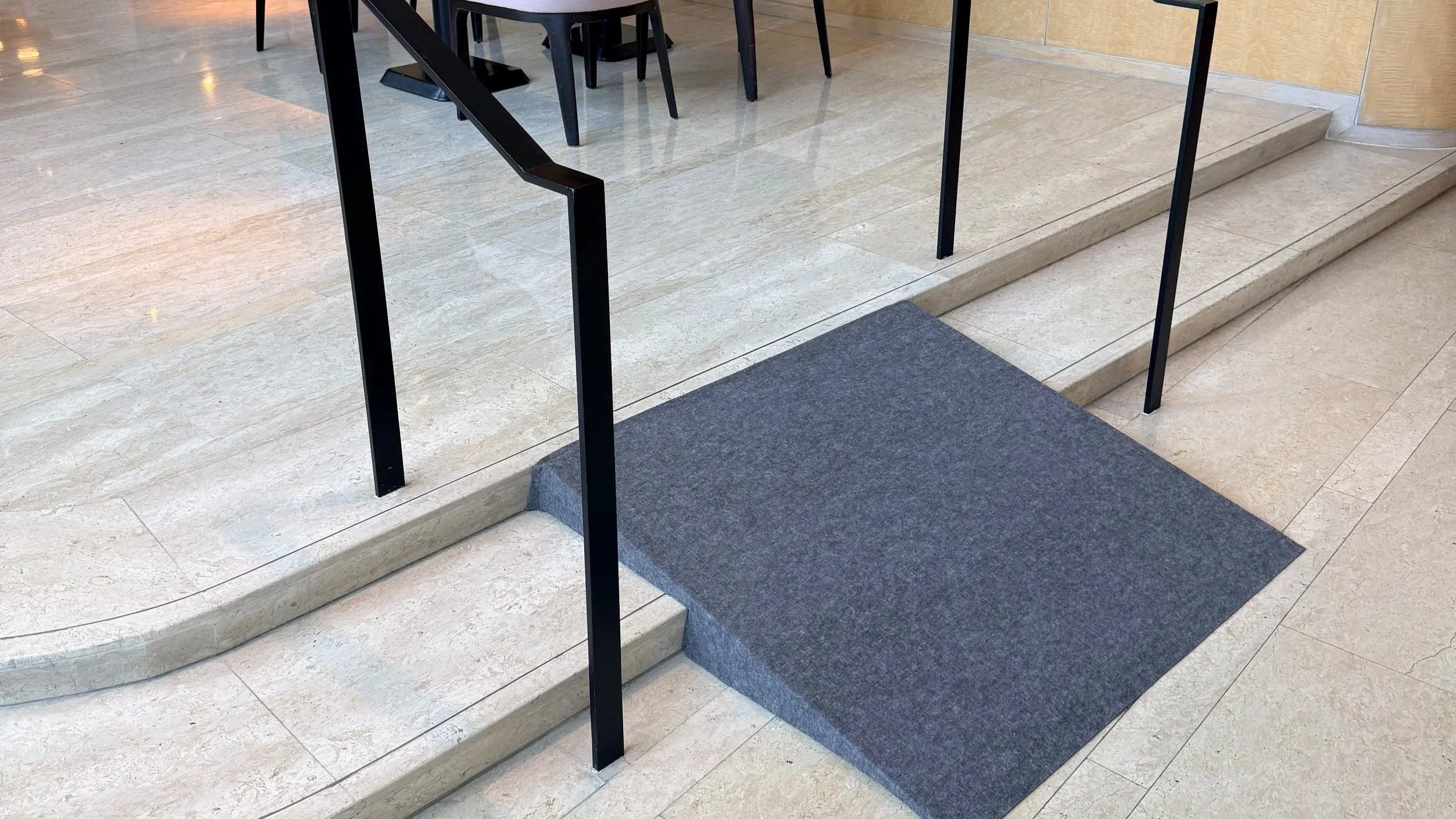
The portable ramp they built and had ready before we arrived each morning. A permanent solution would be better but we appreciated the effort.
The TudorTravels Perspective
Bangkok is one of the most exciting cities in the world and one of the most demanding. The heat, the noise, the pace, the traffic: they are all real, they are present from the moment you arrive, and they do not let up. A week here gives you a lot, but it takes something from you at the same time. The hotel you come back to at the end of each day matters more in Bangkok than almost anywhere else we travel.
The Park Hyatt is the right answer to that problem. Walking through the doors here does something specific: it gives the day a clear ending point, and after Bangkok, that boundary matters. The team here knows the guests, anticipates what they need before they ask for it, and creates the kind of environment where coming back to the hotel at the end of the day is something you actually look forward to. After a full day of temples, markets, and streets that are always asking something of you, that is not a small thing.
The debate in Bangkok is always the river or the center. The river gives you atmosphere and a slower pace. The center puts you inside the best dining and transit the city has. The Park Hyatt is the strongest version of the center option we have found, and we have been coming back to it for that reason.
We book through Hyatt Privé relationship, which adds complimentary breakfast, a property credit, and a room upgrade when available. What makes the program work particularly well here is how directly those benefits apply. The breakfast at Embassy Room La Marina is one of the best we have had anywhere in the world and not something you would skip regardless, so having it included removes a daily decision. The property credit has no shortage of places to go across the dining program or you can use the spa. And the upgrade matters here more than at most addresses because the floor determines the view, and the higher you are, the more Bangkok earns its place as the backdrop to everything else.
Ready to book the Park Hyatt Bangkok, or looking for the right luxury stay for your trip to Thailand? Contact us to start planning.