Istanbul, Turkey
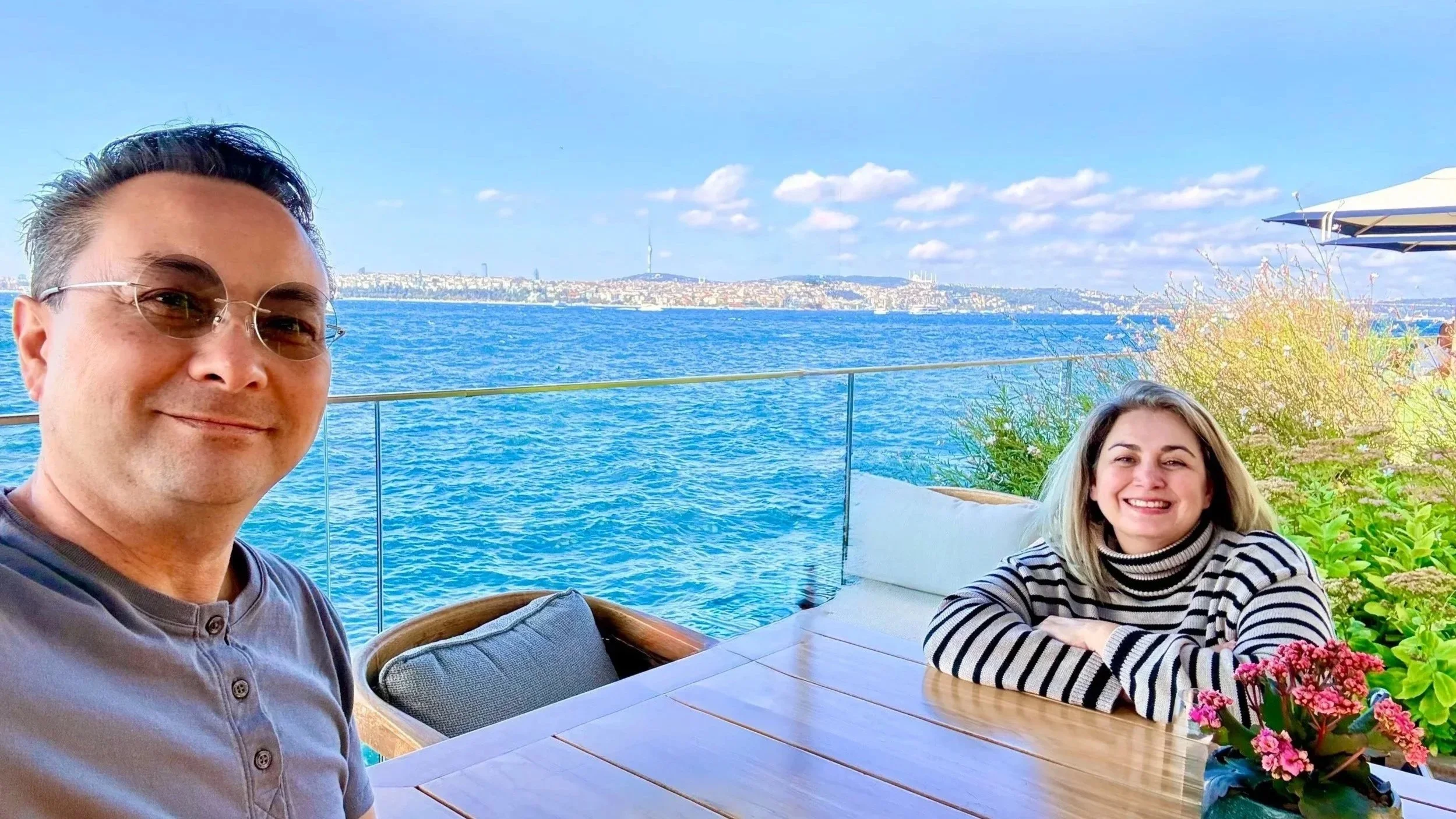
Lunch on the Bosphorus, with Asia on the other side of the table. One of the few cities in the world where that sentence is literal.
We were watching a man eat grilled fish from a paper plate at the water's edge in Kadıköy when we first started to understand what kind of city this was going to be. The fish came from a stall a few steps back, still warm from the grill. The ferry to Europe was pulling away from the dock behind him. Across the Bosphorus, the minarets of Sultanahmet were visible on the opposite shore. He ate without looking up. That skyline has been there his entire life and it stopped being remarkable to him a long time ago. Istanbul places something extraordinary directly in the middle of an ordinary afternoon and lets the locals demonstrate, by continuing to eat their lunch, that the extraordinary eventually becomes background.
Hagia Sophia says the same thing in a more concentrated form. Inside, the dome opens above you larger than you expect even when you have been told to expect it. Hagia Sophia was the largest cathedral in the world for nearly a thousand years. It has been a Byzantine church, an Ottoman mosque, a secular museum, and since July 2020 it is an active mosque again. We visited when it was still a museum, which meant the Christian mosaics were uncovered and fully visible, and you could walk through the building with every layer of its history legible on the walls. The current structure was built in 537 AD, but there was a church on this ground before that, and another before that, going back to around 360 AD. After the Western Roman Empire fell in 476 AD, Constantinople was what remained of Rome, and Hagia Sophia was the center of that world. Standing inside a building that absorbed the end of one civilization and the beginning of another, and is still standing and still in use, produces something that takes a moment to locate. That was day two. Istanbul had already been doing this to us since we arrived.
We came in October, which turned out to be close to ideal. The summer heat in Istanbul is real and it reorganizes your day around it. By fall the temperature settles into something more forgiving, and we could move through the city without planning around the midday hours. It was still warm enough that the pool at the hotel was a real part of the afternoon, and the Bosphorus has a different quality of light in October than it does in summer. The crowds thin after August. We would go back in the fall again without thinking twice about it.
Istanbul works on a different scale from any other historic city we have visited. The site of Hagia Sophia has been sacred ground since 360 AD. The street outside Topkapi Palace has been walked by sultans and merchants and now us and the people heading home from the office. The Bosphorus has carried every civilization that needed to move between two continents, and the container ships still go through it in the same direction they always have. None of this is marked or explained. It is simply there, and the city moves around it without breaking stride. Whether we were standing in front of a baptismal font that has sat in that courtyard for fifteen centuries, or eating grilled fish from a paper plate by the water in Kadıköy while the ferry to Europe pulled away from the dock behind us, Istanbul kept making the same quiet point: the distance between ancient history and an ordinary Tuesday afternoon is, in this city, essentially nothing.
The Hotels
We have reviewed the Peninsula Istanbul separately in our Where We Stay section, and it remains our first recommendation in the city. What follows covers the broader field.
Four Seasons Istanbul at the Bosphorus
This hotel sits directly on the strait in the Beşiktaş neighborhood, and the water views are not incidental to the experience. They are the point. The terrace and pool deck face the Bosphorus, and on a clear morning you watch container ships, ferries, and the occasional tanker move past at close enough range that the scale of the waterway becomes physical in a way it doesn't from any street view. The city is very much present, but it feels held at a comfortable distance.
We ate at two of the hotel's restaurants and both were memorable for different reasons. Ocakbaşı, the hotel's Turkish grill, has private glass igloo domes on the terrace. We sat inside one with the cold October air just beyond the glass and the grill going in the center, and the combination of that warm enclosure and the Bosphorus directly in front of us made the evening feel entirely separate from ordinary dining. The other meal was at Aqua during Ramadan, when the hotel puts out an iftar buffet for the fast-breaking at sunset. Being in that room as the call to prayer sounded outside and the food arrived all at once, eating alongside people breaking their fast together, was one of the quieter privileges of paying attention to where you are.
Book This: A Bosphorus-facing room. The price difference from a courtyard room is real and it is worth it. This is the view you came for.
Accessibility: A modern build with strong accessibility throughout. Flat pathways connect rooms, terrace, and restaurant areas. Pool lift available.
Four Seasons Istanbul at Sultanahmet
A completely different property from its Bosphorus sibling, and for a first-time visitor to Istanbul it may be the single best place to base yourself. This is the converted 19th-century Ottoman prison, sitting inside the historic peninsula right in the heart of the historical city center. Hagia Sophia, Topkapi Palace, the Basilica Cistern, and the Grand Bazaar are all within walking distance. You wake up already inside the part of the city you came to see.
Breakfast in the courtyard restaurant, set within the hotel's central stone courtyard, is one of those meals that earns its place in the memory of the trip. The setting does something to the pace of the morning.
The honest note: the historic stone structure has accessibility challenges throughout. Stairs are everywhere in this building, and uneven surfaces run through the property. For a traveler who moves easily and wants to wake up inside the most historically dense part of the city, the address is hard to argue with.
Book This: A courtyard-facing room in the original prison building. The atmosphere is not replicated anywhere else in Istanbul.
Accessibility: Stairs throughout and uneven stone surfaces across the historic structure. Not the right fit for wheelchair users or guests with significant mobility limitations.
Raffles Istanbul
Inside the Zorlu Center in Beşiktaş, one of Istanbul's premier luxury shopping complexes. The Raffles sits high on one of Istanbul's hills, and the views from the upper floors and public spaces over the city are genuinely impressive. The rooms are large by any standard, modern, and well-designed. It doesn't have the Bosphorus drama of the Four Seasons property, but for travelers who want generous, contemporary spaces with outstanding views and don't want to navigate the older buildings and cobblestones of the historic peninsula, this is the right call. The spa and pool are excellent, and the Long Bar is one of the better hotel bars in Istanbul.
[Editor's note: Worth checking whether there is anything else distinctive about this property beyond the views and Long Bar before this goes to print.]
Book This: A visit to the Long Bar before dinner, regardless of where you are staying in the city.
Accessibility: Modern construction throughout. Level access, elevators, and wide pathways across the entire property. Among the most accessible luxury hotels in the city.
Park Hyatt Istanbul Maçka Palas
A 1922 Art Deco building in Nişantaşı, Istanbul's upscale shopping and residential neighborhood, the Park Hyatt here has a different character from the Bosphorus properties entirely. The hotel is actually owned by Nusret Gökçe, known globally as Salt Bae, who purchased the building and opened his flagship Nusr-Et steakhouse inside it. The steakhouse is exactly what you would expect: theatrical, expensive, and very much an experience in itself. Beyond that restaurant, the neighborhood puts you in the center of Istanbul's best boutique shopping and some of its best dining outside the historic peninsula. Nişantaşı's streets are flatter and smoother than the old city, which makes it one of the more naturally navigable parts of Istanbul.
This hotel is for travelers who want a city experience rather than a monuments experience: people who like to walk out the door, browse boutiques, try a new restaurant every night, and not be in the middle of a tourist district.
Book This: A Park Spa Room with a private Turkish hammam. The in-room hammam, steam room, and deep soaking tub make the room itself a destination, and it is one of the more unusual room categories in Istanbul.
Accessibility: The 1922 building has been modernized with elevator access throughout. Nişantaşı's streets are notably smoother than the historic peninsula.
Pera Palace Hotel Jumeirah
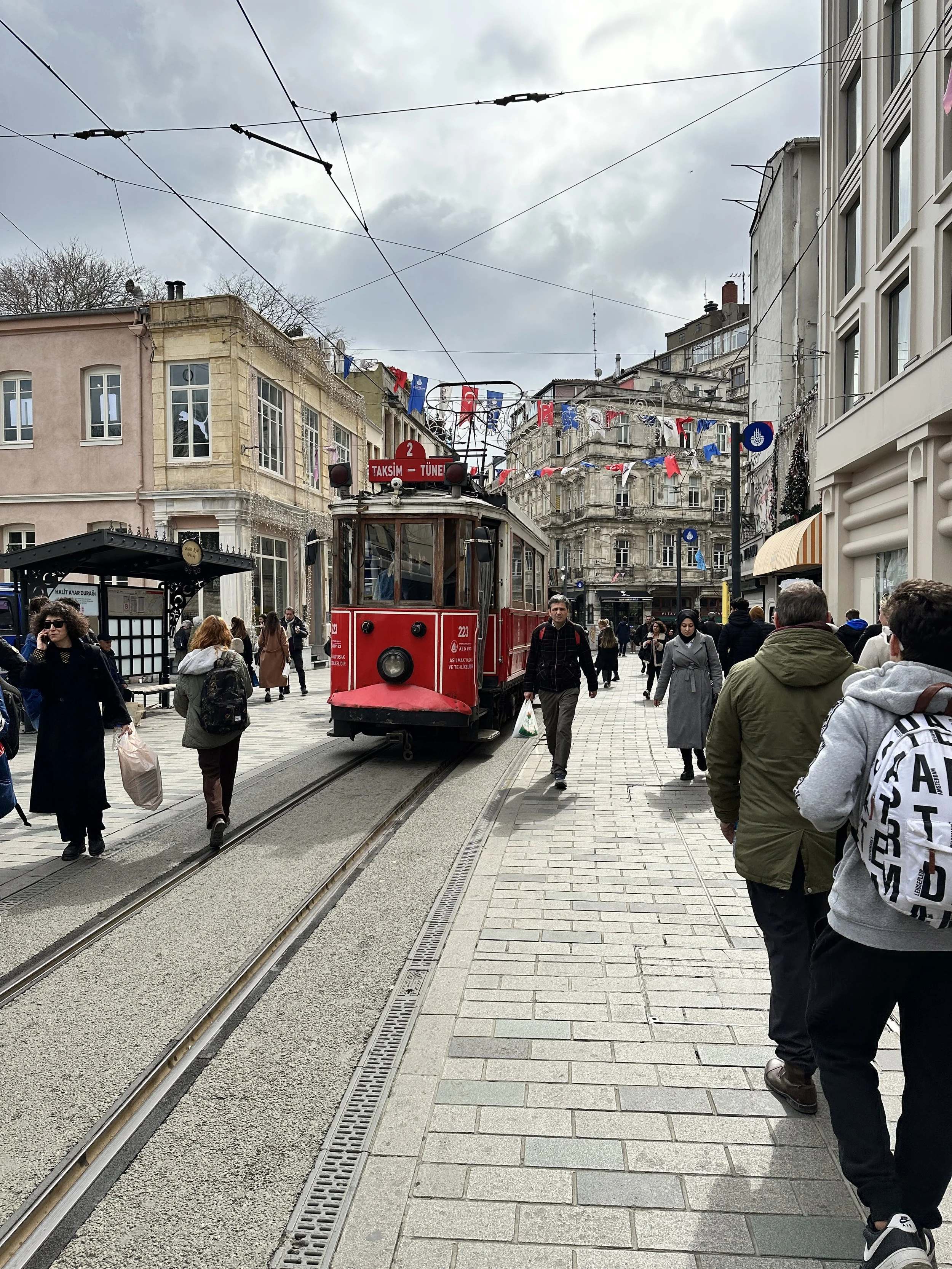
Built in 1892 to receive passengers arriving on the Orient Express, the Pera Palace sits on Meşrutiyet Caddesi in Beyoğlu, a five-minute walk from Istiklal Avenue and a short distance from Taksim Square. This is the hotel if you want to be near the living center of modern Istanbul. Istiklal Avenue is one of the great pedestrian streets in any city: 1.4 kilometers of shops, restaurants, cafes, art galleries, and consulate buildings, with a historic tram running its length and the energy of a city that treats it as its main thoroughfare. Taksim Square at its northern end is the symbolic heart of modern Istanbul, where major events, public gatherings, and the ordinary pulse of the city converge.
The Pera Palace itself is the most storied hotel in Istanbul and one of the great historic hotels in the world. Agatha Christie stayed here repeatedly, in Room 411, now the Agatha Christie Suite. The hotel will tell you she wrote Murder on the Orient Express in that room. The suite has been fully booked for decades on the strength of that story, which tells you something about how well it works. The bar is one of the finest in the city. The restoration brought the building back beautifully without stripping the history out of it.
Some of our favorite döner in Istanbul is a short walk from here, and we almost always ended up with a paper bag of warm chestnuts from a street cart on the way back to the hotel. This neighborhood rewards wandering.
Book This: The Kubbeli Saloon for afternoon tea or an evening cocktail. The Belle Époque interior, with its glass-domed ceiling and original tilework, is worth the trip whether you are staying here or not.
Accessibility: Elevators and accessible rooms are available. Some historic areas of the building are more navigable than others. Worth calling ahead to understand the current accessible routes.
Baklava and tea at a ferry-side cafe. The combination is non-negotiable, and Judy was a few bites past negotiation by the time the photo happened.
The Dining Scene
Istanbul's food is, without qualification, some of the best we have eaten anywhere in the world. We want to say that clearly before we list a single restaurant. The quality holds from the high tables to the street carts. This is a serious food city that does not get the recognition it deserves.
Mikla
The rooftop at the Marmara Pera hotel, and the view from up here stands above most of the city in every direction. The Golden Horn, the Bosphorus, the Sultanahmet skyline, the hills on both continents. It is as close to a full panorama of Istanbul as you will find from a restaurant table. We went at dusk and stayed well into the evening, watching the light change over the strait in both directions.
Chef Mehmet Gürs has been doing contemporary Turkish-Nordic cuisine here long enough that the approach feels entirely his own, not borrowed from anywhere. The food is for people who are willing to be surprised. It is not straightforward Turkish cooking and it does not try to be. It is also genuinely delicious. The menu changes seasonally.
Don't Miss: Reserve well in advance and ask specifically for a table with the best view of the Bosphorus. Be clear about it when you book. And go at sunset.
Karaköy Lokantası
A traditional Turkish taverna in the Karaköy neighborhood, long beloved by locals. Tiled interior, daily specials on a blackboard, mezes that rotate with the season, and a room that has not felt the need to update its aesthetic for decades. This is what a neighborhood lunch restaurant should be and rarely is. Go on a weekday if you can manage it.
Order This: Whatever is on the blackboard. The mezes, particularly the cold vegetable preparations, are the reason to come.
Hamdi Restaurant
Near the Spice Bazaar, with views of the Golden Horn. Classic southeastern Turkish kebabs done properly, and the setting turns a lunch into an occasion. It works naturally as an anchor after a morning at the bazaars, and the service handles large groups and solo diners with equal ease.
Order This: The meze spread to start, then the chicken shish. The cold vegetable preparations are excellent, and the chicken kebab here has a cleaner, better character than most of what the surrounding area serves under the same name.
Don't Miss: Ask for a table on the upper floor when you book. The Golden Horn view is worth being specific about.
Accessibility: Elevator access to upper floors. The main dining areas are well laid out for wheelchair navigation.
On the Street
Istanbul has a street food culture that is worth engaging with seriously, not as a quick snack between museums.
The simit carts are everywhere from early morning: sesame-crusted bread rings, warm, eaten standing or walking, costing almost nothing. They are a better breakfast than they have any right to be. The hot chestnut carts, kestane, appear in the cooler months, paper bag, eaten on the move, the kind of thing you buy without planning to and think about for weeks afterward. The pomegranate juice vendors operate throughout the city, squeezing to order on the spot. A glass of it by the Bosphorus in the afternoon is one of those small things that earns a place in the trip.
Drink This: Fresh-squeezed pomegranate juice, ordered at any street cart near the water. Watch them make it and drink it immediately.
Döner in Istanbul bears very little resemblance to what is sold under that name outside Turkey. The meat is better, the bread is better, and the whole thing costs almost nothing. Do not skip it because it seems ordinary. It is not ordinary here.
And then there is Mado, the Turkish dondurma. The stretchy, mastic-based ice cream where the vendor teases you with the paddle before actually handing it over, pulling back, making you reach, surrendering it at the last moment. The experience is as much the point as the ice cream.
Karaköy Güllüoğlu
The baklava institution. Pistachios only, made fresh, sold by weight. There are other baklava shops in Istanbul. None of them are this.
Order This: The pistachio baklava. This is not the visit to experiment with other flavors.
Mandabatmaz
A tiny coffee shop on a side street in Beyoğlu. Standing room most of the time, no menu beyond Turkish coffee, lines of locals. This is the best Turkish coffee in the city, served in the traditional way, and almost everyone waiting for it lives in the neighborhood. It takes thirty seconds to find on a map and feels like a secret once you are there.
Order This: A small Turkish coffee, medium sweet if you are not sure. Drink it slowly. There is no rush and nowhere to be.
Çiya Sofrası (Kadıköy, Asian Side)
Regional Anatolian home cooking, rotating daily based on what came in from the market that morning. The dishes here represent parts of Turkey that most Istanbul restaurants don't try to cover. Whatever is in the warming trays that day is what you order. Point at what looks good, ask the staff what came in, and go with their answer. Something will arrive that you have never had before.
Order This: The stuffed vegetables. Whatever dolma or dolmalık preparation is in the warming trays that day will be filled with something you have not had before, spiced with regional combinations that the mainstream Istanbul restaurants do not attempt. This is the most consistent way to understand what Çiya is actually doing.
Borsam Taş Fırın (Kadıköy, Asian Side)
Wood-fired pide, which is Turkish flatbread baked with toppings in a stone oven. The Kadıköy location is where the neighborhood eats lunch and the pide comes out of the oven while you watch. A different meal from the sit-down restaurants, and worth making room for.
Order This: The spinach and feta pide. The blistered wood-fired dough and the sharp cheese together are the right way to understand what this oven is doing, and it is one of the better simple lunches you will have in Istanbul.
Hafız Mustafa 1864
The definitive Turkish confectionery shop, with the original location near the Grand Bazaar. Turkish delight made properly, şekerpare, lokum, pastries. The quality is noticeably different from the tourist-facing shops around the bazaars. Buy something to eat now and something to take home.
Order This: The şekerpare, small semolina and almond cookies soaked in syrup. Buy the Turkish delight for the trip home. It travels better.
İstiklal Caddesi on a weekday afternoon. The heritage tram still runs the full length of the street, which is about a mile and a half of pedestrians, side streets, and the smell of roasting chestnuts.
What to See
Hagia Sophia
The dome is larger than most people expect, and the scale of the space does something to you that photographs simply do not. The building has been a Byzantine cathedral for nearly a thousand years, an Ottoman mosque for almost five hundred, a secular museum for most of the 20th century, and since July 2020 it is an active mosque again. When we visited it was still a museum, which meant the Byzantine Christian mosaics were fully uncovered and visible. The Ottomans had plastered over them in 1453. During the museum years, restorers brought them back. They are still there, now partially covered during prayer times but not permanently re-plastered. Two civilizations sharing the same walls.
On our way out, we stopped at the baptismal font in the courtyard. A stone basin, worn and massive, sitting in the open as if it had always been there and always would be. People were baptized here in the early Byzantine centuries, when this was the center of the Christian world. It has sat in that courtyard through every conversion and conquest this building has seen. We stood there longer than we expected to.
Don't Miss: Go very early. The experience before the crowds arrive is a different one entirely. And save time for the courtyard on your way out. The baptismal font, sitting in the open air, is easy to walk past quickly, but it is worth stopping at. Note for current visitors: since July 2020 Hagia Sophia operates as an active mosque. Non-Muslim visitors are welcome but shoes must be removed at the entrance and women need head coverings. Staff at the door can help with both.
Accessibility: Dedicated accessible entrance on the north side. The interior is largely flat stone once inside.
Topkapi Palace
The seat of the Ottoman Empire for four centuries, and the compound is large enough that the scale of that history becomes physical. The Harem section and the Treasury, which holds the crown jewels including the 86-carat Spoonmaker's Diamond, are the essential rooms. The outer terrace gardens offer some of the best Bosphorus views in the city.
The honest note: the cobblestone paths through the outer courts are hard going in a wheelchair. The accessible route to the Harem and Treasury has been improved and is workable, which is where the essential content is anyway. Ask at the Babüssaade gate for the adapted route.
Don't Miss: The Treasury. The Spoonmaker's Diamond at that size, in person, is something photographs do not prepare you for.
Accessibility: Cobblestone outer courts present real obstacles. The accessible route through the palace runs through the Harem and Treasury, which are the essential rooms anyway. Ask staff at the gate on arrival.
The Basilica Cistern
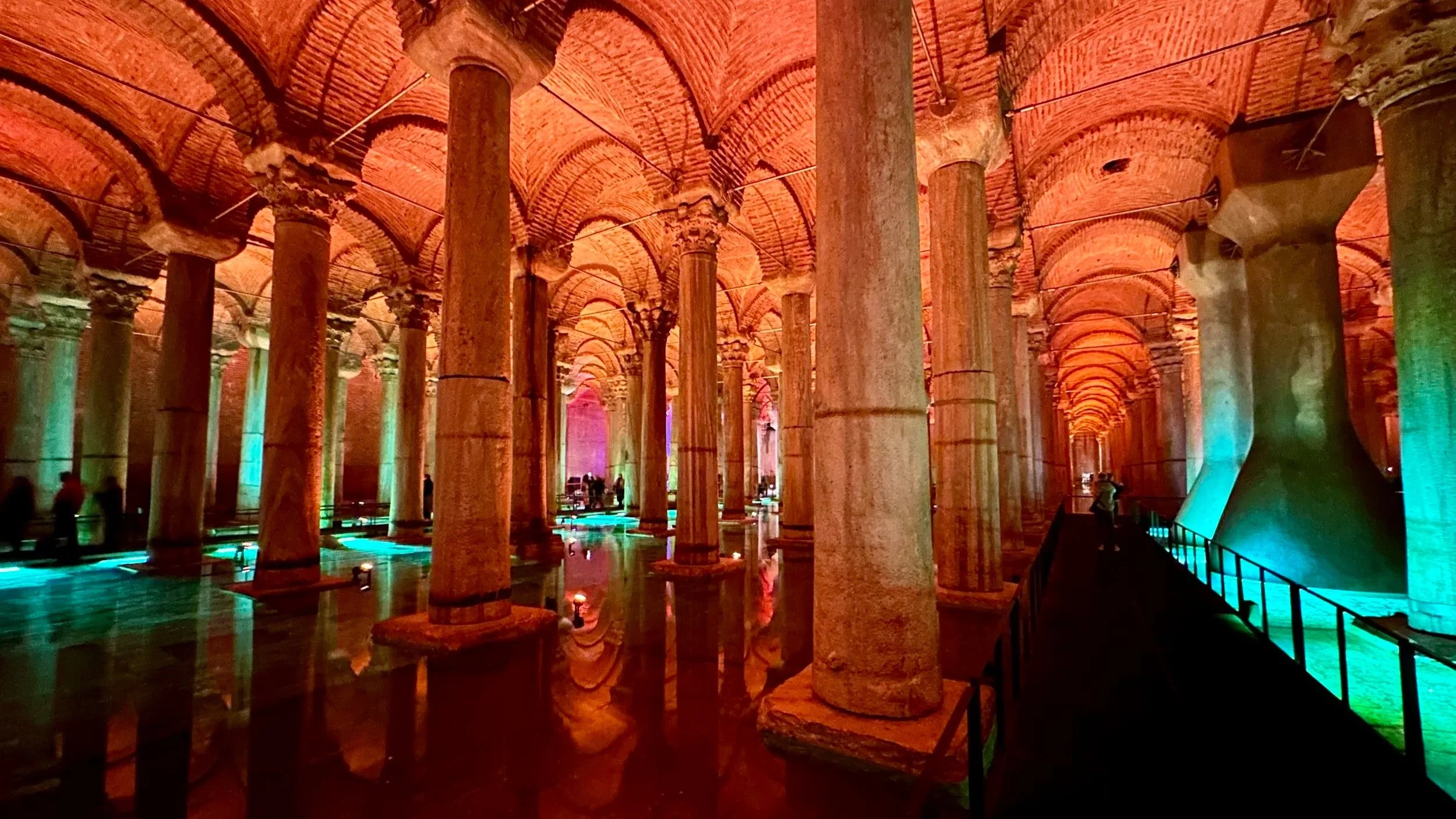
A Byzantine underground cistern built in the 6th century, directly beneath the streets of Sultanahmet. Three hundred and thirty-six marble columns rise out of still water in low light. The atmosphere is unlike anything else in the city. Recently renovated and reopened with a newly installed platform lift, which means visitors who cannot use stairs can now get underground to experience this extraordinary cistern for the first time. That is a meaningful accessibility improvement and worth stating plainly.
Don't Miss: The two Medusa column bases at the far end of the cistern, one on its side and one upside down. Ask why they are positioned that way before you go. The answer involves Byzantine superstition and adds something to the visit.
Accessibility: A platform lift has been installed as part of the recent renovation. The cistern is now accessible without stairs. One of the more significant accessibility improvements we have encountered in Istanbul.
The Bosphorus at Sunset
The public Şehir Hatları ferry system is excellent and worth using. But for the version of this waterway that stays with you, book a private two-hour sunset cruise. The strait separates Europe from Asia. On both shores, the yalı, the traditional Ottoman waterfront mansions, line the banks in both directions. Container ships share the water with fishing boats and commuter ferries. The activity on the Bosphorus never fully stops, regardless of the hour.
There is something specific about watching both continents from the water with the minarets visible on each shore at the same time. The Grand Bazaar and the museums give you Istanbul's history. The Bosphorus gives you its geography, and that geography is what made the city what it is.
Don't Miss: A private charter if you can. The route and the pace become your own, and the experience is significantly different from a group tour.
Accessibility: Finding a private boat that is genuinely wheelchair accessible is very difficult. Most charter vessels are not set up for it, and even when operators say they can accommodate, the reality at the dock is often different. The more reliable option for getting out on the Bosphorus is the Şehir Hatları public ferry system, which has accessible boarding with ramps. The ferries cover substantial stretches of the strait and the experience on the water is real regardless of vessel size.
The Grand Bazaar
More than four thousand shops inside a covered market that has been operating since 1455. The layout is deliberately complex, the vendors are persistent, and getting turned around is not a failure. It is the experience. Arrive with a specific category in mind, textiles, ceramics, or spices, and use that as an anchor. Budget more time than you think you need. The bazaar is its own self-contained world and it rewards wandering without an agenda.
Don't Miss: When you need to stop, find Havuzlu Restaurant, which sits inside the bazaar near its center with a small fountain directly outside. It has been here since 1959, inside a 15th-century vaulted hall, serving traditional Turkish and Ottoman food from a daily display. The service is genuine and the room is beautiful. Eating lunch in the middle of an ancient bazaar, surrounded by the same activity that has been happening in this building for five centuries, is one of those Istanbul experiences that is difficult to replicate anywhere else.
Accessibility: Largely flat and fully covered, which makes it more navigable than most of the historic peninsula's streets. Be aware that some interior paths and passages can have steep inclines or uneven surfaces. The crowds peak mid-morning. Arriving earlier is easier for navigation.
Dolmabahçe Palace
The 19th-century Ottoman palace built on the Bosphorus shore when the empire was attempting to modernize and impress the European courts simultaneously. The main ceremonial hall contains a chandelier weighing four and a half tons, one of the grandest rooms in Europe at any period. Guided tours only. The garden entrance is the accessible route and bypasses the stairs at the main gate.
Don't Miss: The Muayede Hall. The chandelier is the largest Bohemian crystal chandelier in the world and the room around it makes clear that the late Ottoman Empire was not understating itself.
Accessibility: Garden entrance bypasses the main gate stairs. Accessible routes to the key ceremonial rooms are available. Confirm with the ticket desk on arrival.
Beyond the Tourist Map: Kadıköy and the Asian Side
Almost every visitor to Istanbul stays on the European side. Most never take the ferry across. That is a significant miss, and Kadıköy is the reason to correct it.
The crossing takes fifteen minutes from Eminönü on a public Şehir Hatları ferry. You board in Europe and step off in Asia. The neighborhoods around the Kadıköy market are flat, relatively navigable, and feel entirely different from the historic peninsula. Less monument-dense, more locally alive. The market itself runs through several streets: produce, fish, spices, and the kind of shops that exist because the people who live there actually need them, not because tourists walk past.
Çiya Sofrası is here, and Borsam Taş Fırın, and the fish market stalls along the waterfront where vendors sell grilled fish straight off the boat for almost nothing. Eat it standing by the water. It is one of the better lunches in Istanbul at any price.
Give this half a day. Take the ferry over in the morning, eat lunch, walk the market, take the ferry back. The view of the Istanbul skyline from the water on the return crossing, with the minarets of the old city in front of you, is one of the better views of the entire trip. You have to go to the Asian side to get it.
Don't Miss: One thing to look for on the streets of Kadıköy in the cooler months: salep. It is a traditional Ottoman hot drink made from ground orchid root, warm milk, and cinnamon, thick and slightly sweet, sold from carts and small shops. It is not something you are likely to have encountered before the first time you try it, and it is exactly right for a cool October afternoon after a morning at the market.
Accessibility: The Kadıköy market area is notably flat compared to most of Istanbul, one of the city's more naturally navigable neighborhoods. Şehir Hatları ferries have accessible boarding with ramps. Arriving a few minutes early makes the process easier and the crew is accustomed to helping.
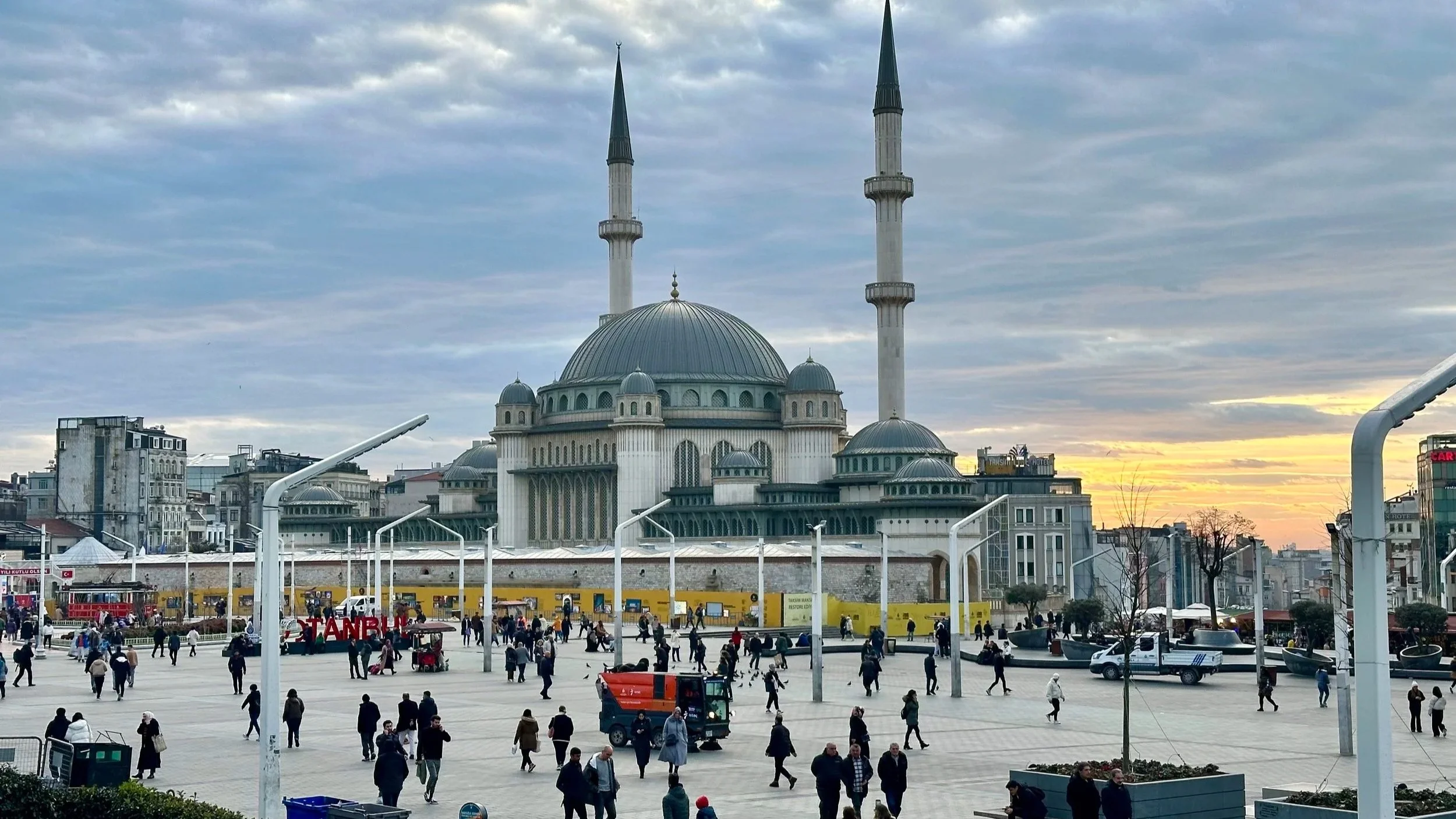
Taksim Mosque, completed in 2021, looking out over the square that gives it its name. A modern build in a city full of older ones, and worth a visit on its own merits.
What Stayed with Us
We stood inside Hagia Sophia as a museum and looked at the mosaics on the walls. Built in 537 AD, the third sacred building on a site that has held a church since approximately 360 AD. When the Western Roman Empire collapsed in 476 AD, Constantinople became what remained of Rome, and this cathedral was the center of that world. The Ottomans plastered over the Byzantine Christian mosaics in 1453 when they converted the building. During the museum period, restorers uncovered them. Two civilizations, sharing the same walls. One era's art covered by another era's faith and then uncovered by a third era's scholarship. That sequence, written on the walls of a building that is still standing and still in use fifteen hundred years after it was built, is the thing we kept coming back to. It is not awe exactly. It is closer to the feeling of standing somewhere that has absorbed more history than you can hold in your head at once, and being inside it anyway.
The Bosphorus did not let us alone for the entire trip. We watched it from the hotel terrace in the morning, from a rooftop bar in the evening, from the deck of the private boat at sunset, from the ferry rail on the crossing to Kadıköy. The fishing rods lined up along the Galata Bridge, the men who stand there every day in every weather, the container ships passing close enough that you feel their scale, the activity on the water that never stops regardless of the hour. There is something about a working strait that a decorative waterfront cannot replicate. Istanbul's relationship with the Bosphorus is not scenic. It is functional. That is what makes it something you keep going back to look at.
Turkish tea arrived everywhere without asking. A tulip glass appeared at the table of every shop we stopped in, and at most restaurants before the menu came. The apple tea that vendors press on visitors is a different thing from the real tea the locals drink, and after a few days you understand the difference. Both of them are part of what Istanbul does. It is a city that feeds you constantly, in small ways, before you even order anything.
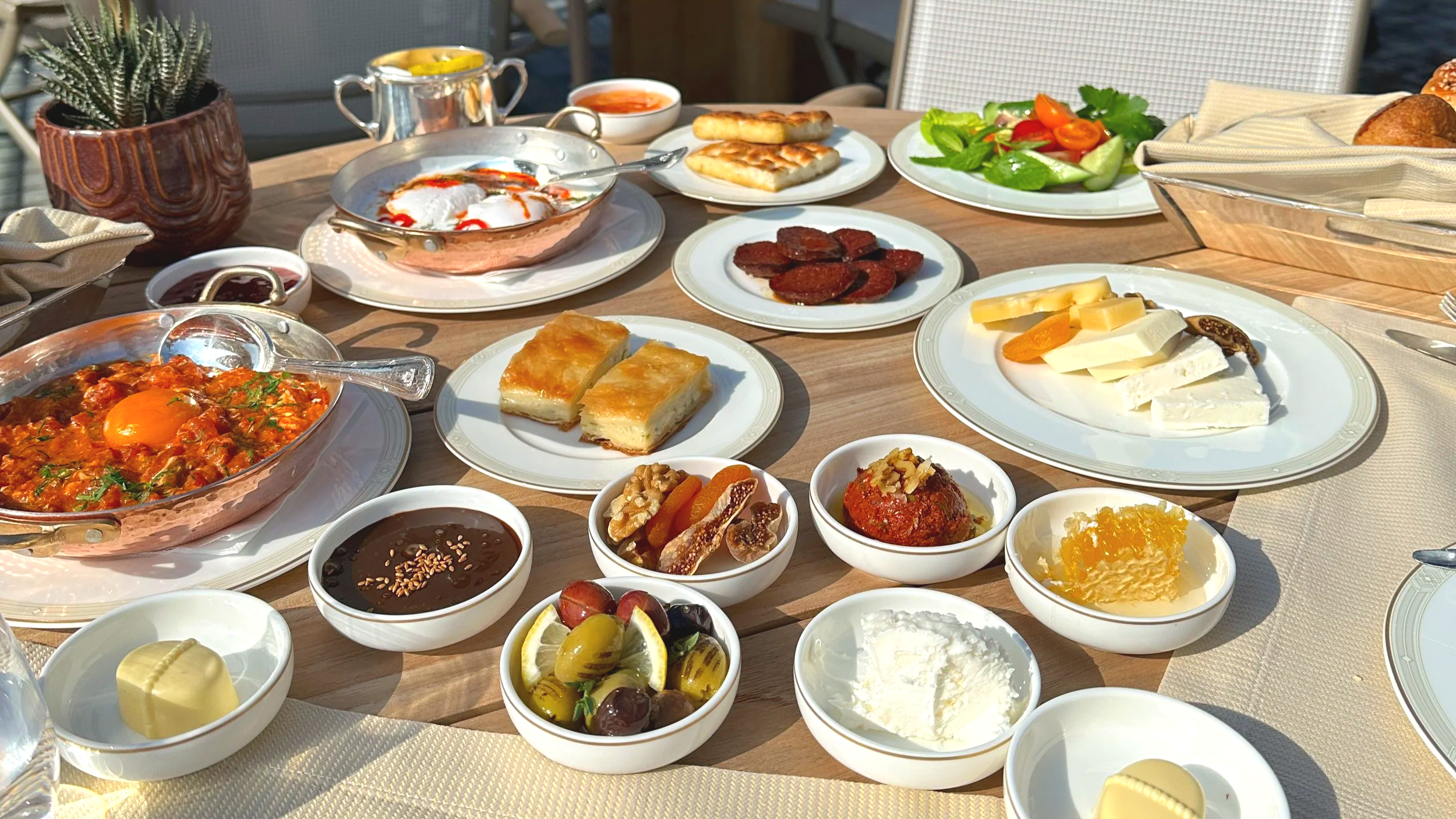
The Turkish breakfast deserves more credit than it gets outside the country. White cheese, olives, tomatoes, cucumbers, eggs several ways, honeycomb, clotted cream, warm bread, pastries, tea that keeps coming and is replenished before you ask. It is not a side note to the morning. It is the morning. It is one of the great meals you can sit down to anywhere, and most people who visit Istanbul don't expect it until it arrives in front of them.
Walking the neighborhoods, we kept encountering things we were not prepared for. A Byzantine column rising out of a traffic roundabout. A 16th-century mosque sitting next to a 19th-century apartment building. The archaeology is present in the streets, not roped off or explained, just there where it landed centuries ago. Istanbul does not organize its history into a dedicated quarter. It leaves it wherever it fell, and you keep finding it without looking.
The food, taken altogether, is some of our favorite we have had anywhere. Not just the restaurants, though Mikla and Karaköy Lokantası both earn their places. The baklava from Güllüoğlu eaten standing on the street. The döner that has nothing in common with what is sold under that name outside Turkey. The simit at seven in the morning. The pomegranate juice by the water in the afternoon. The dondurma that the vendor makes you work for before handing over. Istanbul feeds you at every hour and at every price point, and the quality holds across all of it. Some of our favorite food, anywhere, was found here.
Our Favorite Discovery: The Turkish Breakfast
We had read about it. We were not prepared for it. The full spread arrives and keeps arriving, and the pace of it is entirely intentional. This is not a meal designed to be finished before sightseeing. It is the morning. By the second day we were ordering extra honeycomb. By the fourth day the waiter was bringing it without being asked. Build more time into the first morning than you think you need and let the city come to you for once.
Accessibility
Istanbul requires honest planning for a wheelchair user, and we want to be clear about that before the itinerary looks manageable on paper. The historic peninsula has cobblestones throughout, meaningful elevation changes, and sidewalks that disappear without notice. None of that prevents the trip. It requires a different approach than most European cities.
The wins are real and worth naming. The Basilica Cistern has a new platform lift, installed during the recent renovation, making the underground chambers accessible for the first time. Hagia Sophia has a dedicated accessible entrance on the north side. The accessible route through Topkapi's Harem and Treasury has been improved. Dolmabahçe Palace is reached via the garden entrance, which bypasses the main gate stairs. The Şehir Hatları ferry system has accessible boarding with ramps, and the crew is used to helping.
Kadıköy on the Asian side is notably flatter than the European historic districts and one of the more naturally navigable neighborhoods in the city.
A private driver for the duration of the stay removes most of the daily friction. The historic peninsula's streets do not improve with repetition. Having someone who already knows where the van can get closest to each accessible entrance, and who has managed these logistics before, is the difference between a trip that works and one that exhausts you.
The people in Istanbul, not unlike the Greeks with their philoxenia, have a tradition of hospitality toward guests that fills in where the infrastructure does not. Restaurant staff rearranged seating before we asked. A ferry worker held the boarding ramp for an extra moment without being prompted. The city is not easy, but it is not indifferent either.
The Basilica Cistern. Built by Justinian in the 6th century to supply water to the Great Palace, still standing on 336 marble columns 1,500 years later, and fully accessible by elevator and ramp.
The TudorTravels Perspective
Istanbul suits travelers who want to feel history as a physical thing rather than read about it. The Parthenon is remarkable. The Colosseum is remarkable. Hagia Sophia is something else: a single building that has been at the center of civilization for nearly fifteen hundred years and shows it on the walls. No other city we have visited holds that kind of accumulated weight in one structure, and that structure is in the middle of a functioning modern city you can walk around on foot.
The city also rewards people who eat. The dining scene runs from the high tables of Mikla to the simit cart at the corner, and the quality holds across the whole range. If you are the kind of traveler who builds the day around meals, Istanbul gives you more material than a week can cover.
This is not an easy wheelchair city. It is worth being direct about that. The historic peninsula requires planning that other destinations do not ask for. But the sites that matter most have been made increasingly accessible, and the ones that have not can often be navigated via an alternative route with advance coordination. We went and we were glad we went and we are already thinking about going back.
The practical decisions to make before you arrive: which neighborhood to base yourself in, whether you want the Bosphorus view or the proximity to the old city's monuments, and whether you are adding the Asian side as a day trip or treating this purely as a European city experience. Istanbul does not need to be rushed. A week gives you the major sites and time to slow down. Two days gives you the monuments and almost nothing else. Know which version of the trip you are taking before the plane lands.
Inspired by Istanbul? Contact us to plan your time there, or anywhere else in Europe and the Middle East you want to explore.