
Madrid, Spain
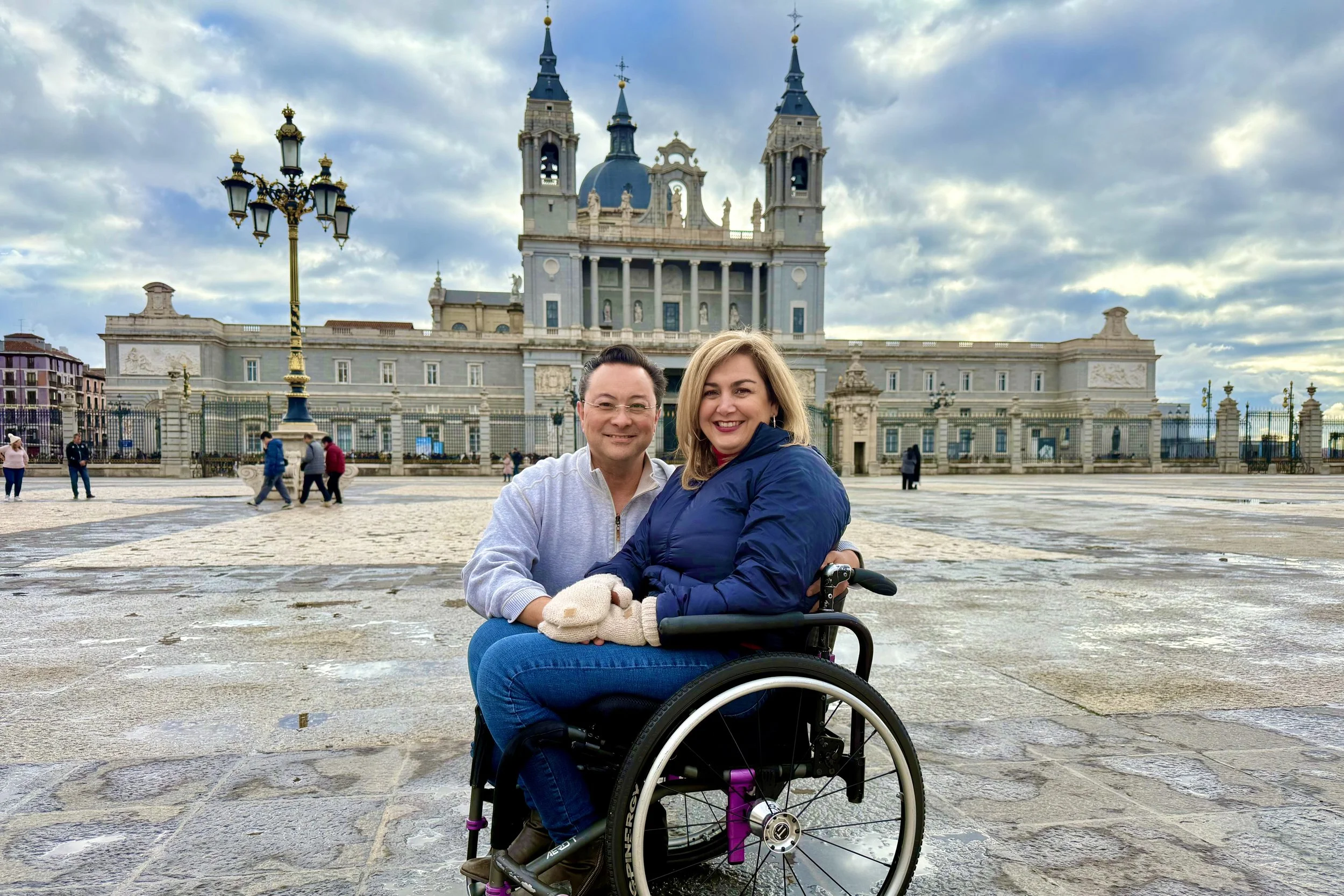
The cathedral and the palace face each other across a plaza. We stayed there way longer than we planned just taking that in.
We had been to Spain before. The food culture, the pace of evenings, the way a meal can stretch well past midnight without anyone suggesting it is time to go. None of that was new to us. What was different about this trip was who was waiting for us.
A teenager from Madrid had spent a year living with us as an exchange student. We watched her adjust to a new country, a new language, a new family. When we came to her city, she returned the gesture. Her parents met us at our hotel, and from there we handed the trip over to them completely. When someone from a place is showing you the place, you see an entirely different version of it.
Madrid is a serious food destination, but that framing undersells it. The architecture rewards slow attention. The Royal Palace is one of the largest in Western Europe and considerably less written about than its size warrants. The museums hold collections that still surprise visitors who think they know what to expect from European art. The flamenco scene is not a production designed for visitors; it is something the city invests in and takes seriously. You can spend a week in Madrid without feeling like you have exhausted it.
The Hotels
Madrid's neighborhoods operate as distinct versions of the same city. The Centro district is the historic and commercial center. Salamanca, to the northeast, is the high-end shopping and residential quarter for those who prefer quiet streets to energy. Retiro borders the park of the same name and is elegant without being formal. Each neighborhood suits a different kind of trip.
Four Seasons Hotel Madrid: The Four Seasons sits at one of the most enviable addresses in Madrid, in the historic center near Puerta del Sol, surrounded by some of the most recognizable architecture in the city. What makes this property exceptional is what it took to create it. Seven historically protected buildings, including the landmark Palacio de La Equitativa originally built in 1887, were painstakingly restored and unified over seven years of work before the hotel finally opened in September 2020. More than 17,000 individual items were rehabilitated and reinstalled throughout the process. Walking through the lobby, with its preserved marble pillars and original stained glass, you feel the weight and care of that effort. Staying here puts you within steps of the Royal Palace, the Prado, and the main plazas of the old city, which means every morning you walk out the door into somewhere worth being.
Book This: Breakfast at Dani Brasserie before the city comes to life. Pan con tomate with rooftop views over the historic center is the right way to start a Madrid morning. The rooftop terrace is fully accessible by elevator.
Accessibility: The accessible rooms are spacious with smart bathroom design. The rooftop terrace and Dani Brasserie are both reached by elevator.
Mandarin Oriental Ritz, Madrid: The building dates to 1910, commissioned by King Alfonso XIII as a royal hotel for the city. The recent restoration brought it back without softening it: Belle Époque architecture, original antiques, the kind of lobby that creates a particular quality of quiet around an afternoon. It sits directly beside the Prado, which makes the logistics of a museum-focused day straightforward. We spent a quiet afternoon beneath the spectacular glass canopy of the Palm Court and were in no hurry to leave.
Book This: An afternoon in the Palm Court, whether or not you are staying here. The natural light through the glass canopy and the calm of the space is the kind of thing you stumble upon once and come back looking for.
Accessibility: The restoration made the historic building considerably more accessible than its age would suggest. Step-free entrances and adapted rooms with roll-in showers throughout.
Rosewood Villa Magna: The Villa Magna is in the Salamanca district, on the site of a 19th-century palace. The current building is modern and holds a collection of over 380 contemporary art pieces throughout the property. It feels less like a hotel than a very private residence that happens to have an excellent bar. For travelers who want proximity to the city's best shopping and the quiet of an upscale residential neighborhood, this is the right address.
Book This: Tarde.O, the hotel bar, before heading out for the evening. The outdoor courtyard removes you from the street noise entirely, and the staff tends to understand what you are looking for before you ask. Good preparation for a late Madrid dinner.
Accessibility: A complete remodel in 2021 made the property fully accessible throughout.
The Madrid EDITION: A contemporary architectural statement in the historic center, with a sculptural spiral staircase in the lobby and a minimalist facade that stands out from its surroundings. The location near Puerta del Sol puts you at the center of the city immediately.
Book This: The Punch Room for a late-night drink. Dark, well-designed, and drawing a local crowd more than a hotel crowd. The rooftop pool in the afternoon has strong views over the terracotta rooftops and is accessible from the lobby by elevator.
Accessibility: Accessible rooms are guaranteed, not simply available on request. Elevator access to the rooftop ensures the city views are not behind any stairs.
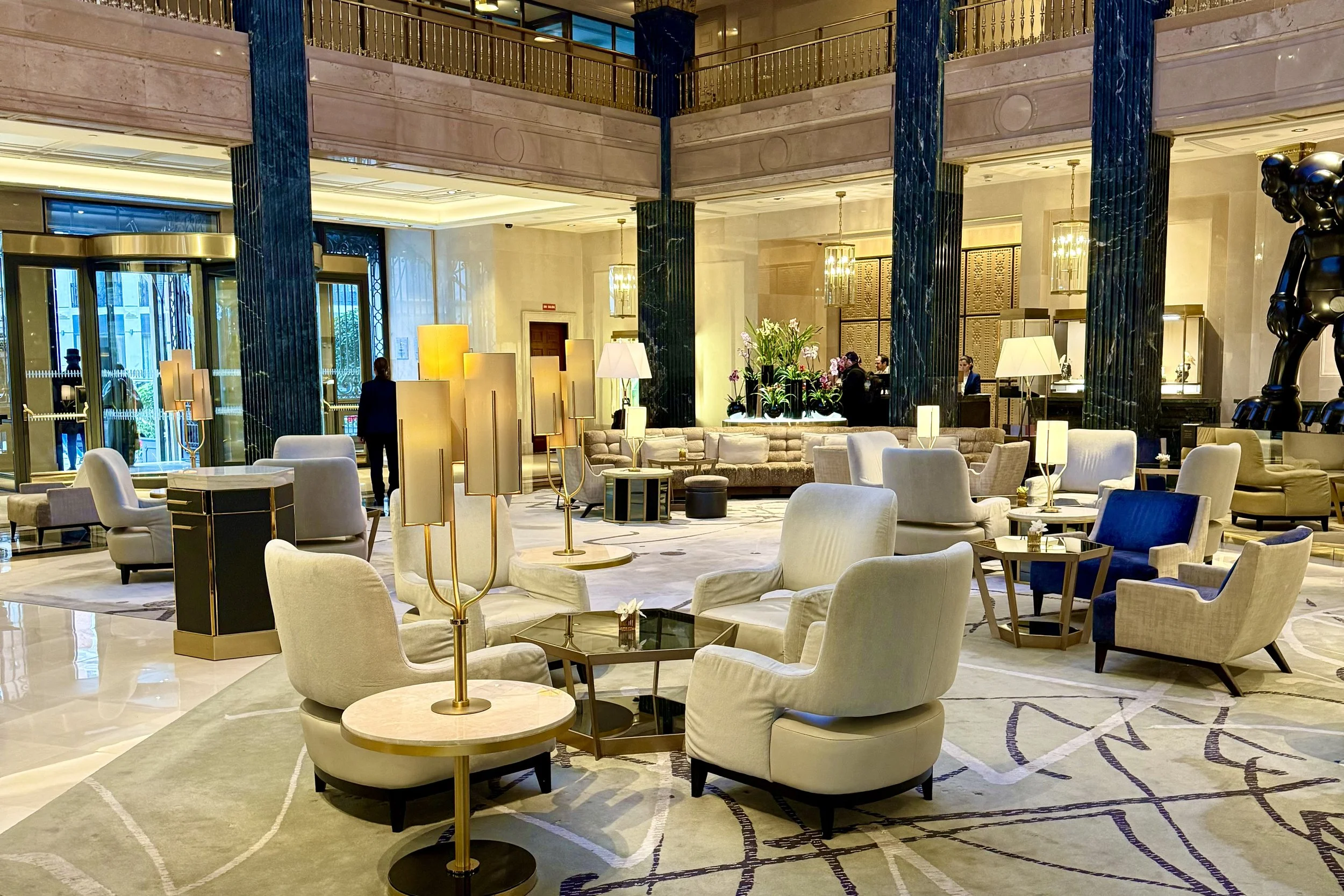
The old Canalejas building in the heart of Madrid. The bones of this place were already extraordinary before anyone put a hotel inside it.
The Dining Scene
Madrid's food culture runs on a schedule that takes a day or two to internalize. Lunch is the main meal and rarely begins before 2:00 PM. Dinner before 8:30 or 9:00 PM finds most restaurants still setting up. The city rewards travelers who adjust to that rhythm rather than fight it. The Menu del Día, offered at lunch at most local restaurants, is a full multi-course meal at a fixed price and is how the city eats well on an ordinary weekday. It is worth knowing about and worth using.
Casa Dani (Mercado de la Paz): Inside the Mercado de la Paz in the Salamanca district, surrounded by locals doing their actual grocery shopping. This is a market stall, not a dining room, and the food is better for it.
Order This: The tortilla española. The most discussed version in the city and the reputation holds up.
Don't Miss: Eating it in the middle of a working market on a weekday morning. The energy of Mercado de la Paz is the context, and the context is the point.
Mesón Rincón de la Cava: What is now a restaurant was originally storage for merchants trading in the Plaza Mayor above, and the bones of that history have not gone anywhere. You descend into low ceilings, stone walls, and a particular quiet that only comes from being that far underground in a city that is very much alive above you. We loved being in this room. The food is good and the service is attentive, but neither is why you come. You come because there is nothing else in Madrid quite like sitting somewhere that has not meaningfully changed in centuries.
Don't Miss: Reserve this for the atmosphere and let everything else follow from that.
Accessibility Note: The subterranean structure makes accessible restrooms impossible. Worth factoring into your evening planning before you book.
El Barril de las Cortes: A central location, an elegant room, and a kitchen focused on high-quality traditional ingredients prepared without complication. The seafood is the focus and the staff knows the menu well enough to be very useful to people who are unfamiliar with the food.
Don't Miss: The wine pairing conversation. The team here takes it seriously and the recommendations are consistently strong.
La Casa del Abuelo: A tapas bar that has been operating for over a century. No design updates, no reinvention. The garlic shrimp have been the reason people come here the entire time.
Order This: The garlic shrimp. They arrive sizzling and announce themselves before they reach the table. Order the sweet red house wine alongside them. The combination sounds wrong until it arrives, and then it makes complete sense.
Madrid 1883 Churrería Chocolatería: We thought we knew what to expect. We had eaten churros before. What arrived here had nothing in common with them. The churros are soft and slightly doughy, nothing like the crispy, sugar-coated version back home, and the hot chocolate served alongside them is so thick it barely moves in the cup. You dip, you do not drink. We sat longer than we had planned, ordered more than we needed, and left quite surprised that something so familiar could be so completely different.
Order This: The churros with hot chocolate. Come with your expectations cleared and this becomes one of the better midday stops of the trip.
Don't Miss: The natural siesta that follows. The city quiets between 2:00 and 5:00 PM, and after a stop like this one, that timing feels perfectly designed.
Saddle: A Michelin-starred restaurant in the Chamberí district, with a spacious modern dining room and a menu that balances classic and contemporary Spanish technique without forcing the combination. The service is formal without being stiff, and the room is well-designed for ease of movement throughout.
Order This: The tasting menu. The kitchen makes its best argument across the full sequence.
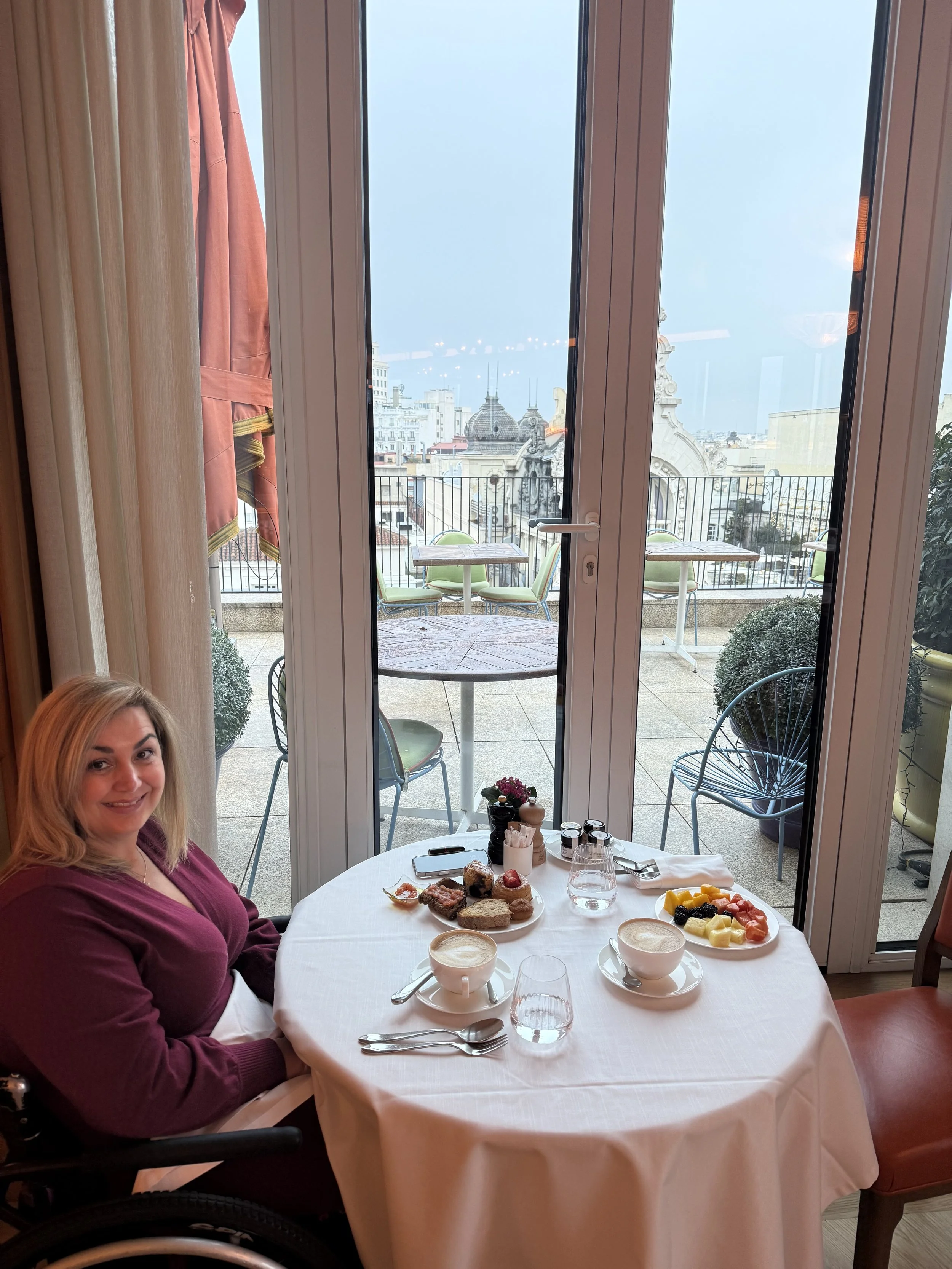
We did not make it outside to the terrace for this one, a bit cold. But the view through the windows was good enough.
What to See
The Royal Palace of Madrid: One of the largest royal palaces in Western Europe and considerably less crowded than its size and significance would suggest. We visited twice and still did not feel we had seen everything. The sheer scale of it is difficult to fully absorb: 3,418 rooms, ornate royal apartments layered with intricate ceiling details, and a depth of historical decoration that keeps revealing new things the longer you look. The Royal Armory is where the history of the Spanish Empire becomes tangible in a way that floor plans and dates cannot convey.
Don't Miss: The armory. The suits of armor at their actual scale, arranged in full parade formation, stop you in a way the paintings do not. Go back a second time if the schedule allows. We did, and we were glad for it.
Accessibility: Dedicated accessible elevators reach the upper floors without interruption. The large courtyards are flat and easy to move around. Staff assistance is available throughout.
Corral de la Morería: The most respected flamenco venue in Madrid and, by most accounts, in the country. The venue is an intimate tablao, a small performance space, not a theater. The distance between audience and performer is close enough that you feel the rhythm of the footwork through the floor. Book the dinner and show combination in advance, as this venue does not have same-day availability at any reasonable hour. The service is timed so there are no interruptions once the performance begins, and the food earns its place in the evening rather than serving as a pretext for the ticket.
Don't Miss: There is no bad seat, but arriving early means a better table. The performance lands differently when you are close.
Accessibility: The venue does not have an accessible restroom. This is worth knowing before you book.
Retiro Park: The park where the city goes to be itself. Families, musicians, locals in the late afternoon sun. An hour here without an agenda gives you a sense of Madrid as a place where people actually live, which the historic sites cannot provide.
Don't Miss: The accessible boats on the central lake. The perspective from the water is a different view of the park and worth the extra time.
Accessibility: The wide, paved paths throughout Retiro make it one of the most navigable green spaces in any major European city.
Plaza Mayor: The grand enclosed square at the center of the old city, surrounded by painted facades and outdoor cafes. It has been the center of Madrid's public life for several centuries and the architecture carries that weight. The cafes directly inside the square cater primarily to visitors, so a coffee or a glass of wine to take in the view is the right relationship with this space. For dinner, move off the plaza and into the La Latina neighborhood that begins just behind it.
Don't Miss: The side streets leading from the plaza into La Latina. The square is the backdrop. The neighborhood behind it is where the evening begins.
Accessibility: The square itself is flat and open, with wide paved surfaces throughout.
Beyond Madrid
A Day at the Marquis Estate: An hour outside the city, the Spanish countryside opens up in a way that resets everything the city has been doing to your senses. We arranged a private day at a historic estate that has been in the same family for many generations, a former castle that once stood as a defensive structure guarding the surrounding town. The grounds stretch further than you can see from the entrance.
What made the day exceptional was the access. The Marquis and his wife spent most of the day with us, walking and driving the property, sharing the long history of the castle, the town it protected, and the generations of family who have lived there. The conversations moved naturally between the past and the present: what the estate looked like centuries ago, what everyday life on a working property of this scale looks like now. It was a rare kind of afternoon, the kind that is hard to find anywhere and nearly impossible to find without the right introduction.
The estate raises bulls, and we drove out through the open land to see them moving freely across the property. We will be honest, bullfighting is not something we are comfortable with. But the tradition is deeply rooted in Spanish culture and we respect that entirely. What we can say without reservation is that these animals seem to live better than almost any cattle we have ever seen, out on open land, wandering at their own pace.
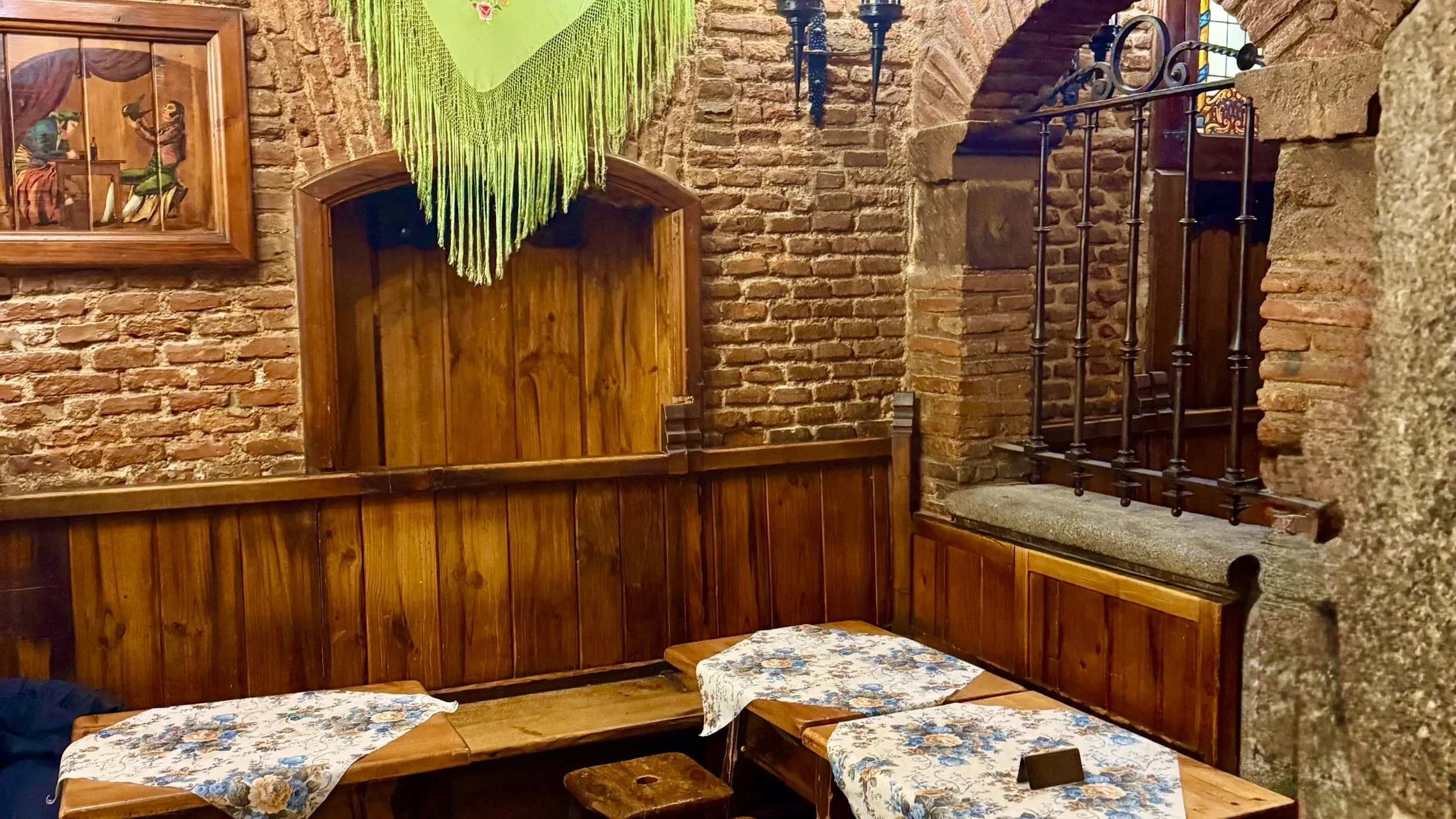
There are places in Madrid that feel like they exist outside of time. This was one of them.
What Stayed with Us
Our exchange student spent the day translating. Not just language, but everything: explaining what her parents were saying, what a dish was, what a neighborhood meant to the family, why a particular restaurant had been the right choice for this meal. Watching her move between two languages and two worlds, with the ease of someone who had quietly become fluent in both, was one of the prouder moments of the trip. Her parents had ordered for the table before we sat down, and the food kept coming without pause. It was an interesting glimpse into how a Madrid family actually eats and spends a dinner, and the warmth of it was something we did not expect to stay with us the way it has.
Tapas is not a menu category. It is a way of spending an evening. The whole idea, moving from place to place, sharing small plates among the group, ordering one thing and deciding together what comes next, turns eating into something social and extended and completely different from sitting down to a full meal. We loved just being part of that rhythm. That is the version of Spain that is hardest to explain to someone who has not been, and the easiest to miss if you spend every night at a reserved table.
One afternoon we simply walked. No museum, no reservation, no destination in particular. We stopped for a coffee when we felt like it, picked up something from a counter we passed, watched the city go about the ordinary business of a Tuesday. There is something specific about that feeling, being somewhere completely removed from your normal routine, watching other people live their lives in a place that is completely different from your own. That is what we travel for, more than any single sight or meal. Madrid gives it to you in abundance if you are willing to slow down enough to notice it.
Our Favorite Discovery: Pan con Tomate
Pan con tomate is on every menu in Madrid and easy to overlook because of how simple it sounds. Bread, tomato, olive oil.
The better places give you a selection of toasted breads first, different crusts and textures, and the choice matters more than you expect. Then the tomato, then the olive oil. In Spain the olive oil is the point of the dish, not a finishing touch.
We had it at every breakfast and more than once as the thing we ordered while deciding what else to have. Delicious.
Accessibility
Madrid exceeded what we expected from a city this old and this dense. The major museums and the Royal Palace have dedicated accessible elevators that reach every floor without difficulty. The grand boulevards through the Centro and Salamanca districts are wide, smooth, and flat in a way that makes extended time outdoors straightforward.
The honest version includes the rest. La Latina has slopes that require some planning. Many of the most historically interesting restaurants and venues operate in buildings that are several centuries old, and accessible restrooms are simply not available in a number of them. We encountered this more than once. It is frustrating, but it is also a reality of traveling in historic European cities and not specific to Madrid. Know this before you go and plan accordingly.
The Madrid Metro app is the most useful logistics tool we found. It maps which stations have working elevators to street level in real time, saving the frustration of discovering mid-trip that a station you planned to use is stairs only. When transit is not an option, accessible taxis are available throughout the city and can be arranged through your hotel concierge quickly.
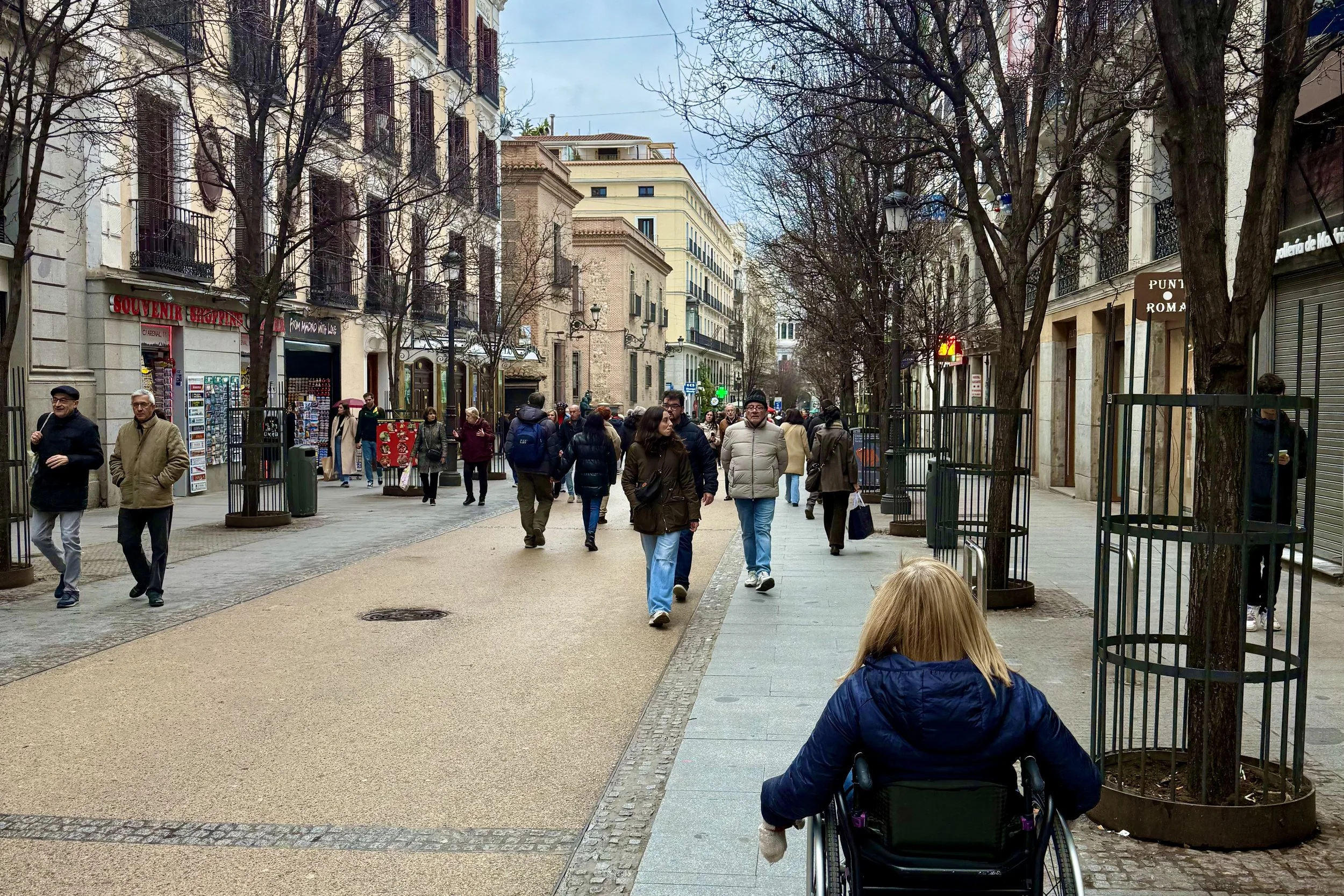
The streets around the historic center are made for this. Flat, wide, and full of life in every direction.
The TudorTravels Perspective
Madrid suits a specific kind of traveler: someone who wants to feel what a European city actually is rather than stand at a distance and observe one. The architecture is everywhere and it is the real thing. The history is not confined to a dedicated quarter separated from the rest of the city; it is the street you are walking on, the building you are eating inside, the square where people have been gathering for several hundred years. For travelers who want that kind of direct contact with a place, Madrid delivers it in a way that few cities can.
The city also does things differently from what most American travelers are used to, and that difference is worth seeking out rather than working around. The schedule, the social structure of the evening, the way food becomes the organizing principle of the day: these are not just customs. They represent a different way of thinking about how time gets spent, and finding yourself adjusting to that rhythm is one of the more worthwhile parts of the trip.
Madrid is also one of the more affordable capital cities in Europe. The quality of what you receive across hotels, restaurants, and experiences at every level compares favorably to any major European capital at considerably lower cost than London, Paris, or Amsterdam. For travelers planning a week in Europe, that gap is real and worth factoring in.
Inspired by Madrid? Contact us to plan your time there, or anywhere else in Europe you want to explore.