
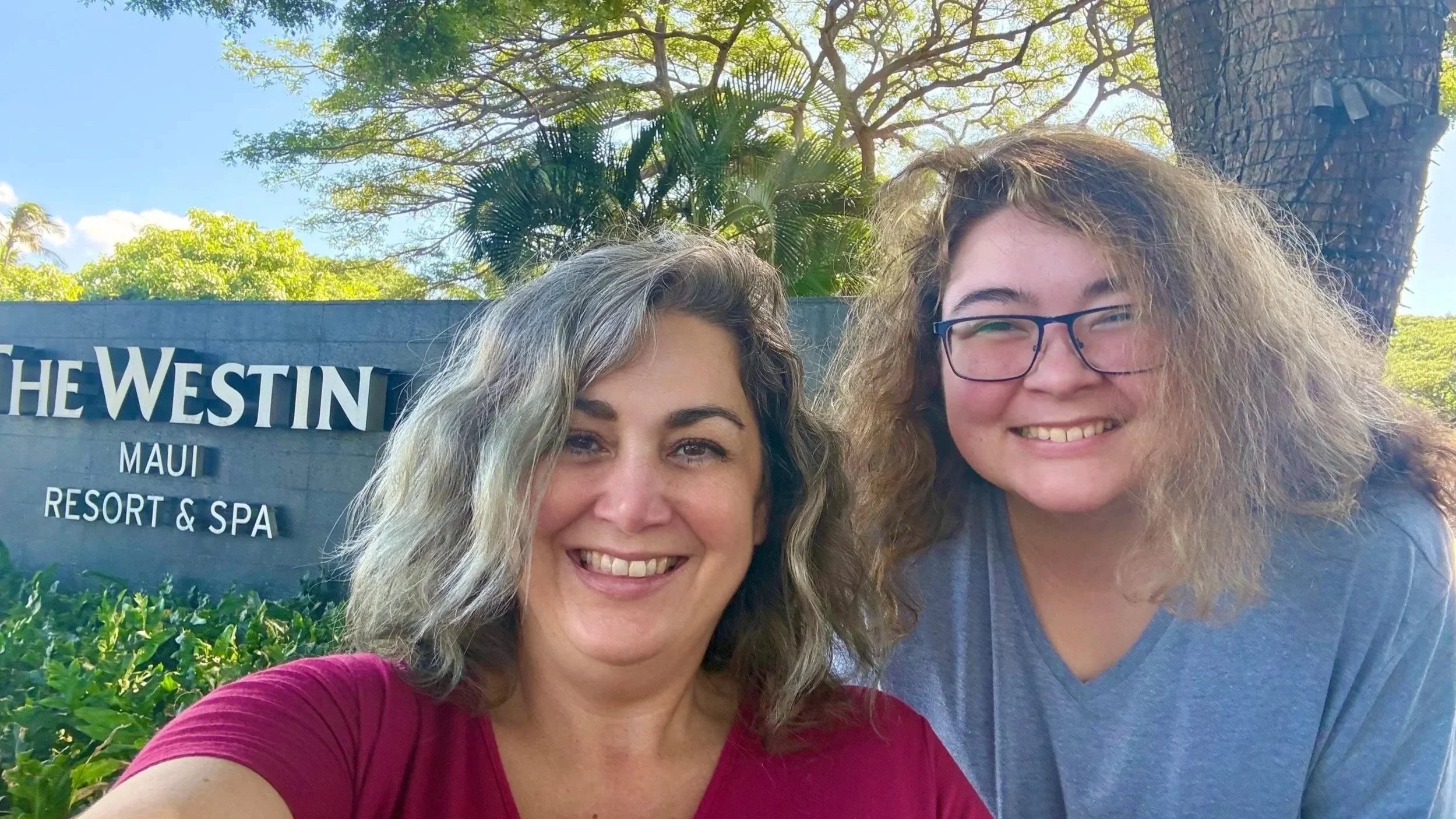
Some trips are better with your people. Kicking off Maui at The Westin with our daughter was one of those.
The plumeria smell hits before you clear the threshold. Then the warm, heavy air. Your shoulders drop two inches. Ours did the first time we landed here together, decades ago, and they still do it now without fail. We did not know on that first trip that we were becoming the kind of people who return to the same island year for 30 years. We thought we were just seeing Hawaii. It took us a while to understand that Maui was not one of the places we had been. It was one of the places you keep going back to.
The fires that tore through Lahaina in August 2023 changed the way we talked about this trip for months before we booked it. We had walked those streets so many times. Had dinner at Fleetwood's on Front Street. Stood at the seawall at sunset with no particular reason to be there other than that it was a good place to be. Lahaina is still not rebuilt, and Fleetwood's is gone. We knew that when we went back in January, and we did not look away from it. What we found, in the middle of all of it, was the banyan tree. It was there during the fires and it is still there now, scorched and coming back at the same time. The people of Lahaina will tell you that means something. We think it does too.
What Maui has is hard to manufacture anywhere else and impossible to explain to anyone who has not felt it. It is something about the scale, small enough to feel knowable, big enough that we have been going for thirty years and still find things. The Road to Hana alone could run 500 words and still not cover it. Any hotel pool, overlooking the ocean, has a particular silence in the early morning that does not appear in any brochure but is one of the things we actually go back for. This article is our attempt to tell you how to have the version of Maui we have. The one that still works, even now.
The Hotels
Maui is unique because the resort areas are distinct neighborhoods with very different personalities. Wailea in the south is serene, sun-drenched, and quiet in the best way. Ka'anapali in the west is energetic and social, and famous across the island for its sunsets.
Four Seasons Resort Maui at Wailea: The Four Seasons Resort Maui at Wailea has no resort fee, which already puts it in rare company on Maui. The detail that keeps us coming back is the Serenity Pool, the adults-only area with an infinity edge looking out toward Lanai. Pool attendants make their rounds with cold towels and frozen grapes, and the swim-up bar means you never need to leave the water for a cocktail. Beyond the Serenity Pool, all three of the resort's pools are saltwater, and 67 cabanas are spread across the property, the vast majority available complimentary on a first-come-first-serve basis. The resort holds both the AAA Five Diamond Award and the Forbes Five-Star Award, making it the only property on the island with both. The resort is currently mid-renovation, with work expected to complete sometime in 2026. They have been transparent about what is affected, so it is worth reaching out before you book to understand the current state of the property.
Book This: One of the six private Missoni-designed cabanas at the Serenity Pool. They include Champagne, robes, and dedicated service and must be reserved at the time of booking.
Accessibility: Pool lifts are available at all three pools. Pathways throughout the property accommodate wheelchairs and mobility devices, and accessible ocean-view suites are available on request.
Montage Kapalua Bay: Staying here does not feel like staying in a hotel. The residences run from one to four bedrooms, every unit has a fully equipped kitchen and in-suite laundry, and the service has the same attentiveness you would find at a classic five-star resort. The Kapalua Coastal Trail runs along the water directly adjacent to the property and is one of the nicest easy walks on Maui. The Cliff House, perched on the sea cliffs above Namalu Bay, is primarily reserved for private events, but it is worth asking the concierge whether anything is happening during your stay, because the sunset views from that perch are as good as it gets on the island.
Book This: A three or four-bedroom Grand Residence. They are the closest to the water and include underground parking, which makes arrival much easier than it sounds.
Accessibility: The fully equipped kitchen and in-suite laundry in every residence make this one of the most practical options on Maui for guests managing dietary restrictions or medical needs. The Kapalua Coastal Trail is flat and easy for most mobility levels.
Grand Wailea, A Waldorf Astoria Resort: This is the multigenerational pick on Maui. The Canyon Activity Pool is nine pools across six levels connected by a lazy river, with waterslides, a Tarzan rope swing, six waterfalls, and caves. At the top sits the world's first water elevator, which carries guests back up to the slide entrance without having to climb any stairs. The Kilolani Spa is the largest spa in the Hawaiian Islands at 50,000 square feet, with open-air hydrothermal gardens that include a hammam, steam rooms, saunas, a vitality pool, and cold plunge. It is well worth building time into your trip to use.
Book This: The Napua Tower. It functions as a private hotel within the resort, with a dedicated concierge, complimentary breakfast, and club lounges, and it insulates you from the parts of the property that can feel crowded in peak season.
Accessibility: The water elevator was originally built by the developer for his physically disabled son, making it one of the most thoughtful accessibility features we have encountered at any resort. Pool lifts are available throughout the Canyon Activity Pool.
Westin Maui Resort & Spa, Ka'anapali: The Westin Maui sits directly on Ka'anapali Beach with the beach walk running right along the front of the property, putting Whalers' Village and the rest of the Ka'anapali strip within an easy stroll. The resort completed a $160 million renovation in 2024, with a full redesign of the Kūkahi Tower's 552 guestrooms and the launch of Ulu Kitchen, a new restaurant from celebrated Hawaii chef Peter Merriman. The Kawaiola Aquatic Playground spans 87,000 square feet across six pools, including a 270-foot waterslide, a family splash zone, and a separate adults-only infinity pool deck. Hana Hou by Westin offers duckpin bowling, Topgolf Swing Suites, virtual reality, and an arcade, which is an honest answer to the question of what to do on a rainy afternoon or when everyone needs a break from the sun. The Wailele Luau runs on the property and is capped at 250 guests, compared to 500 or more at the big commercial venues on the island, making for a meaningfully more intimate evening with live fire knife dance and traditional Hawaiian storytelling.
Book This: A Hōkūpa'a Tower room for access to The Lānai, the exclusive club lounge with private breakfast and afternoon service.
Accessibility: Accessible rooms are available in both towers and pool lifts are on site. The Ka'anapali Beach Walk runs directly in front of the property and is one of the more accessible stretches of beachside path on Maui.
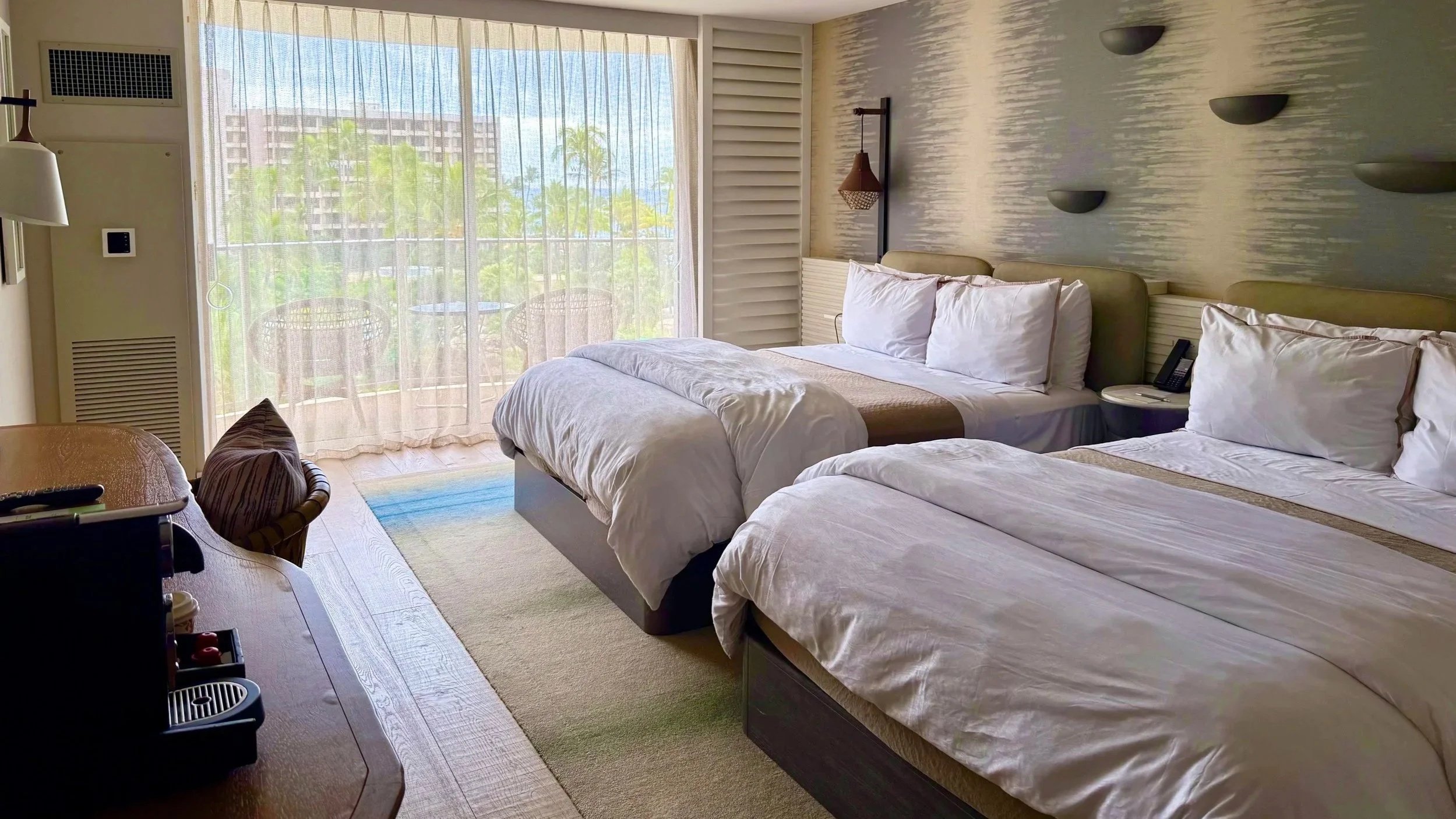
The room after the $160 million renovation: ocean through the windows and beds that were ready for us the moment we walked in.
The Dining Scene
Maui's culinary scene has evolved way beyond tiki drinks and hotel buffets. The island is leading the charge in "Hawaii Regional Cuisine." It focuses on fresh, local ingredients grown in the rich volcanic soil Upcountry. Here are our favorites.
Monkeypod Kitchen: This lively open-air spot by culinary pioneer Peter Merriman is casual, fun, and always packed with a mix of locals and visitors. There is almost always live music, usually a slack-key guitar player, which sets the perfect island tone.
Order This: The mai tai with lilikoi foam, widely considered the best on the island. The foam adds a tart and creamy finish that balances the rum perfectly. Follow it with the pumpkin patch ravioli or the fresh catch fish tacos.
Don't Miss: The live music runs throughout the day. The afternoon session is the sweet spot: early enough that the best seats are still open and the dinner crowd has not arrived yet.
Humuhumunukunukuāpuaʻa: Named after Hawaii's state fish, this floating restaurant at the Grand Wailea is set on a saltwater lagoon filled with tropical fish. It recently underwent a major renovation that took the design from tiki kitsch to modern Polynesian luxury. It is one of the most romantic spots in Wailea for a sunset dinner. Request a table near the edge of the lagoon. Watching the sun dip below the horizon while torches light up around the water is the quintessential Hawaii moment.
Order This: The misoyaki Chilean sea bass or the ahi coconut ceviche, served in a fresh coconut. Either anchors the meal well. If you can manage both, do it.
Don't Miss: The bar top is the only aquarium bar in Hawaii. Sit there for one drink before dinner even if your table is already ready.
Morimoto Maui: Located at the Andaz Maui at Wailea, this is Iron Chef Masaharu Morimoto's beachfront restaurant. The design is modern and sleek, maximizing ocean views with floor-to-ceiling glass. The fish is flown in overnight from Tsukiji Market in Tokyo. Watching the sunset turn the sky purple while eating otoro sashimi is a core memory for us.
Order This: Start with the tuna pizza for the table. Fresh ahi with anchovy aioli, it earns every bit of the reputation. Then the braised black cod.
Don't Miss: The walk from the hotel to the restaurant is a long stairway descent. The Andaz valet runs a complimentary golf cart shuttle. Use it, especially on the way back up after dinner.
Tin Roof: Owned by Top Chef fan-favorite Sheldon Simeon, this is a humble lunch spot in a strip mall near the airport. Do not let the location fool you. This is some of the best food on the island.
Order This: The mochiko chicken or the pork belly kau kau tin. Add the six-minute egg to the kau kau tin. It costs a little extra and it is worth every cent.
Don't Miss: There is no seating. We plan our airport timing around this stop, right after landing or right before the flight home. Closed Sundays and Mondays. Know that before you go.
Ululani's Hawaiian Shave Ice: You cannot come to Hawaii and not have shave ice. Ululani's is widely considered the best because the ice is shaved so fine it feels like fresh snow rather than crunchy ice.
Order This: The Haleakala combo, coconut and leche, with the Snow Cap on top. Sweetened condensed milk poured over shave ice. It is exactly what it sounds like and it is perfect.
Don't Miss: The line is real. Go right when they open at 10:30. We have stood in it for twenty minutes and we would do it again, but you do not have to.
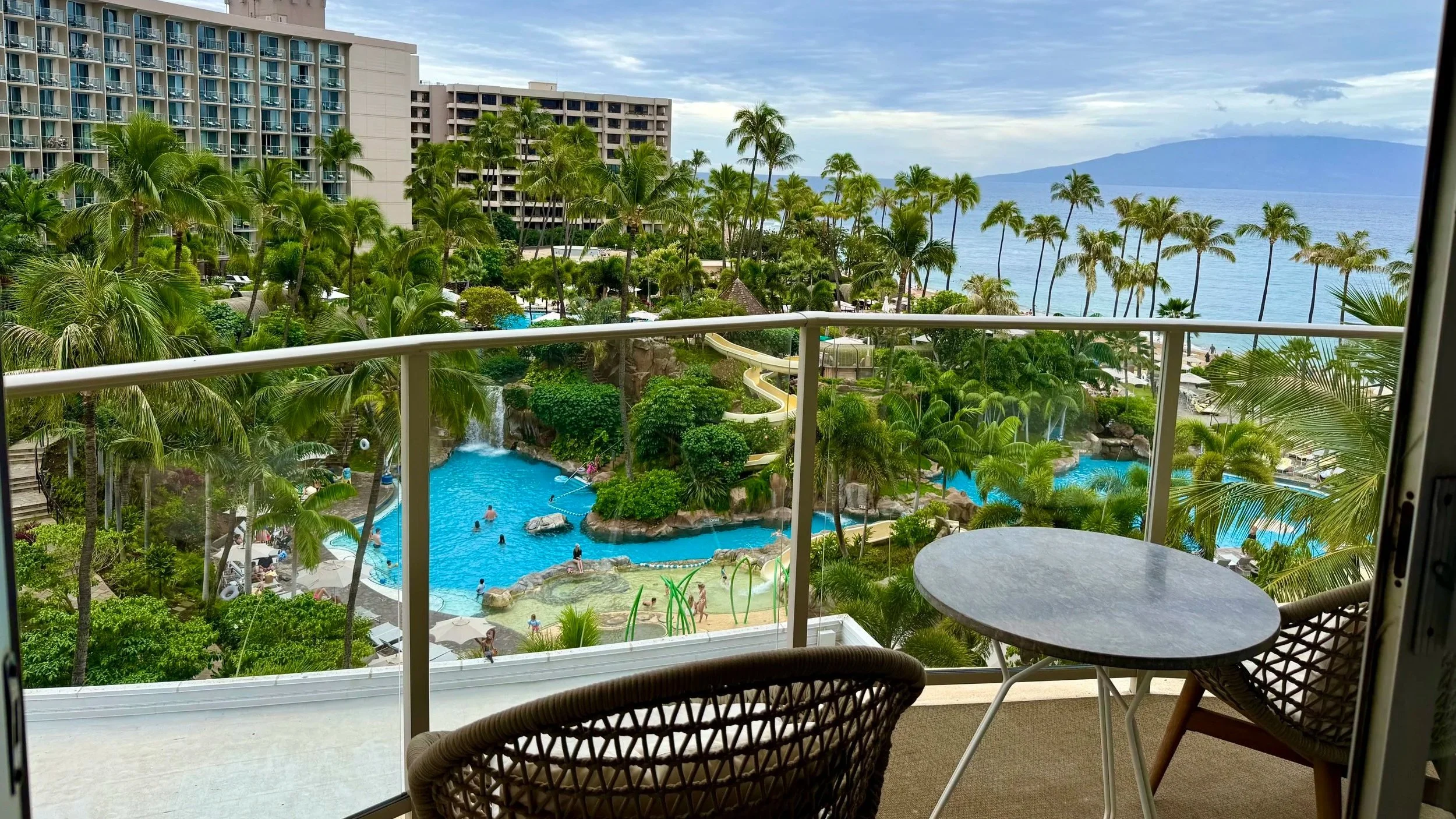
From our balcony you could see the whole resort laid out in front of you: gardens, pools, waterslides, and then the ocean behind all of it.
What to See
The Old Lahaina Luau: This is the most authentic luau experience on Maui and one that carries extra meaning right now. The venue miraculously survived the 2023 Lahaina fire and reopened in March 2024, and by visiting you are directly supporting the local employees and families still rebuilding their lives. The focus here is on genuine Hawaiian history, hula, and storytelling rather than spectacle, and recent programming specifically honors what Lahaina has been through. You sit right by the ocean as the sun goes down and the whole story of Hawaii unfolds around you. We left quieter than we arrived, in the best possible way.
Don't Miss: Book as early as possible. This is the most sought-after luau on the island and sells out well in advance.
Accessibility: Seating is on mats on the ground. If floor seating is difficult, contact them in advance as limited chair seating may be available.
The Feast at Mokapu: If you want something more intimate, the Feast at Mokapu at the Andaz Maui is worth knowing about. It feels less like a production and more like a dinner party thrown on a lawn overlooking Mokapu Beach. The format is sit-down and plated with craft cocktails at the table rather than a buffet line, and the food is excellent. The show features Polynesian fire knife dancing, which makes for a high-energy evening in a setting that doesn't need to try very hard to be beautiful.
Don't Miss: If you are doing both luaus on the same trip, do this one second. The contrast makes each experience land differently.
Accessibility: Seating is at tables on a grassy lawn, making this more accessible than floor-seating formats.
Haleakalā National Park:Driving to the summit of Haleakalā before dawn is one of those things you will remember for a long time. At just over 10,000 feet, the landscape is red and rocky and completely silent in a way that feels more like another planet than any place we have been. The real reward is arriving early enough to catch the stars before the sun comes up. The sky is extraordinarily clear at that altitude, and watching the Milky Way fade as the horizon begins to lighten is something we have never quite seen matched anywhere else.
Don't Miss: Sunrise entry requires advance reservations through Recreation.gov. The summit is often around 40°F with thin air. Bring real layers, move slowly once you are up there, and plan well ahead.
Accessibility: The summit area is paved and reachable by car. The extreme altitude may be difficult for guests with respiratory or cardiac conditions.
The Road to Hana:The Road to Hana is beautiful and demands a full day and real commitment: over 600 curves through lush rainforest, waterfalls, and views that make stopping every ten minutes feel necessary. We will also be honest with you that the curves nearly got the better of us on our last attempt, and we travel constantly. If motion sickness is a concern at all, take something before you go. If you want the experience without the full day, driving as far as Twin Falls or the Garden of Eden Arboretum gives you the rainforest vibe without the hours. Stop for banana bread at one of the roadside stands. It is warm, moist, and one of those small things you look forward to on the drive back.
Don't Miss: The roadside banana bread. It sounds like a minor thing and it isn't.
Accessibility: The road is narrow with relentless curves. Not recommended for anyone prone to motion sickness without medication. Most stops require walking on uneven terrain.
Whale Watching:If you are visiting between December and April, whale watching is not optional. The Auau Channel between Maui and Lanai is one of the most densely populated whale habitats in the world, and seeing a Humpback breach from close range is something a photograph will never do justice to. Book a smaller boat, a catamaran or Zodiac, rather than the large tourist vessels. Being at water level with these animals is a completely different experience. And if you are snorkeling during whale season, put your head underwater and listen. You can often hear them singing. It is a sound that is very difficult to describe and one we still talk about.
Don't Miss: Smaller boats, not the large double-deckers. The proximity to the whales changes everything.
Accessibility: Smaller vessels can be difficult to board for guests with limited mobility. Large tour boats are more accessible but offer a less intimate experience.
Beyond the Beach
Molokini Crater: A short boat trip from shore brings you to Molokini, a crescent-shaped volcanic crater partially submerged off the coast. The water clarity is extraordinary: visibility typically exceeds 150 feet and snorkeling inside the crater feels like floating in an aquarium with open ocean below you. Morning trips are the move before the trade winds pick up in the afternoon.
Upcountry Maui: Take a day away from the beach and head up the slopes to find cooler air, rolling green hills, and a completely different version of the island. The essential stop is Haliimaile General Store, an island institution set in the middle of former pineapple fields. Chef Bev Gannon was one of the original founders of Hawaii Regional Cuisine and the Sashimi Pizza and Crab Dip have become legendary for good reason. It is the perfect stop after time at the Ali'i Kula Lavender Farm or wandering through Makawao town.
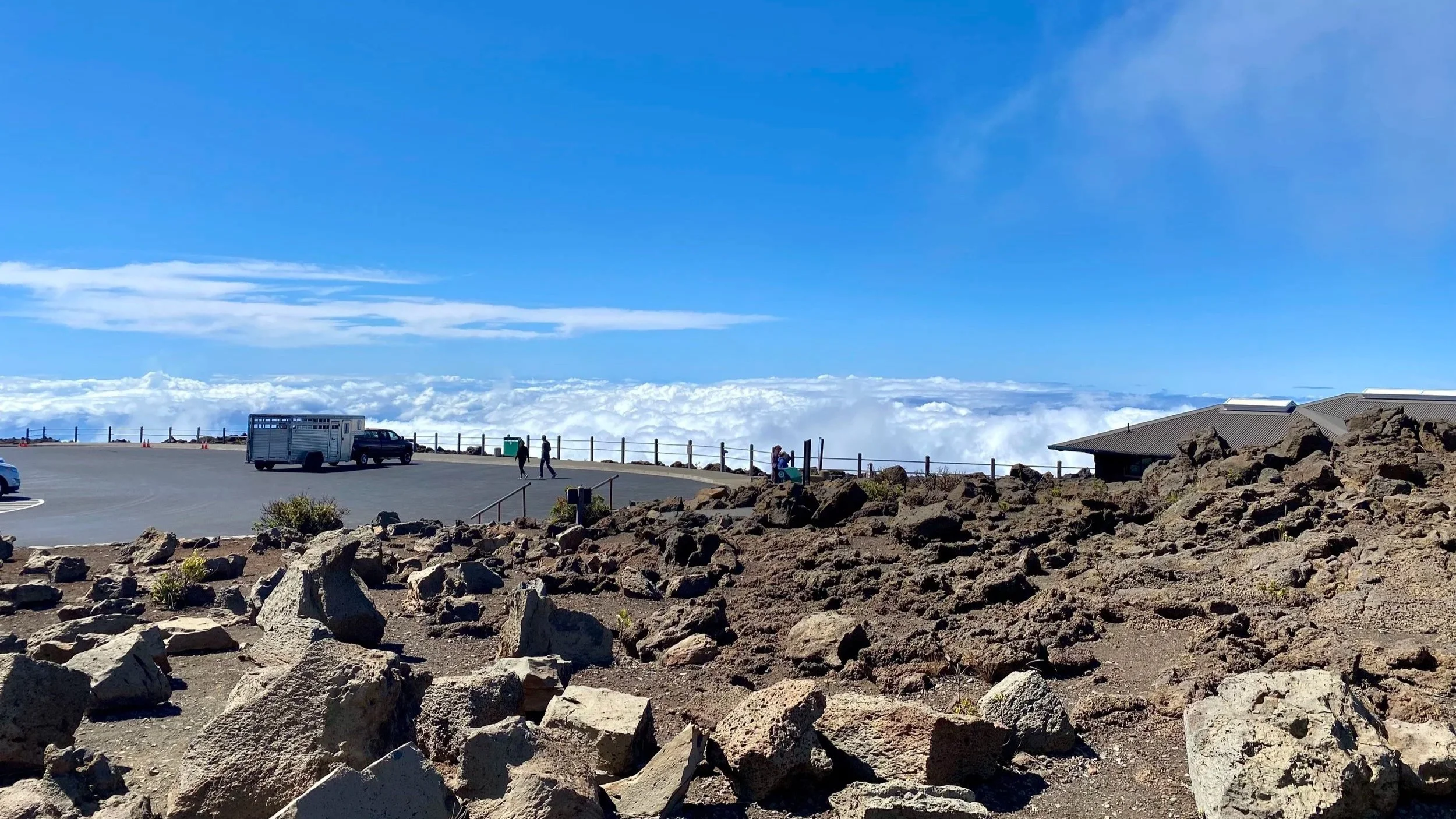
The summit of Haleakalā at 10,000 feet. The clouds are below you, the air is thin, and nothing about this looks like Hawaii anymore.
What Stayed with Us
Maui sunrises are not something you expect to wake up early for twice. The first morning we made it to the beach before the light came up, we understood why people do. The water was quiet, the beach was empty, and the sky moved through colors slowly enough that you actually had time to watch it happen. We didn't talk much. There wasn't much to say.
Some afternoons at the pool we did absolutely nothing productive. We ordered something cold, our daughter settled in next to us, and we sat there for hours. The light in Maui changes in the late afternoon in a way that makes everything feel slower. Sitting poolside with your family and nowhere to be is about as good as it gets.
We drove the Road to Hana in a convertible, which seemed like a perfect idea right up until the rain started. On most roads you would pull over and wait it out. The Road to Hana does not really offer that option. The road is narrow and tight with drops on one side and rock on the other, so we just kept driving. By the time the rain stopped we were completely soaked. It was one of the funniest moments of the trip and probably the one we have told the most people about since.
Our Favorite Discovery: Leoda's Kitchen and Pie Shop
You will drive past the plantation-style building in Olowalu without realizing what you are missing. We did the first time. Leoda's makes personal-sized pies, which matters more than it sounds: one goes back to the hotel lanai with you, and you eat it at your own pace. The Olowalu Lime gets the most mentions on the island and earns them. We kept returning for the Coconut and the Banana Creams, both of which have a crust that stays in the memory. The savory pies are worth knowing about as well. This place operates well above its category and is the kind of stop that earns a permanent place in a Maui itinerary.
Accessibility
The Resorts: Because Hawaii is part of the US, ADA standards apply across the board, and you feel it at the properties. The Four Seasons and the Grand Wailea both have pool lifts, smooth pathways, and accessible rooms that are well executed. Most of the resort areas in both Wailea and Ka'anapali are designed to be navigable without issue.
Getting Around: A car is essential on Maui and there is no good alternative. If adaptive controls are needed, most rental companies at Kahului Airport can accommodate this, but they need to be requested well in advance. Book it when you book the flight.
The Beaches: Sand is sand, and getting to the water's edge is not straightforward for anyone with mobility limitations. The practical solution is the beach paths. The Wailea Beach Path and the Ka'anapali Beach Walk are both paved and flat, running the length of their respective resort areas with the ocean right alongside. Some beaches also have beach wheelchairs available with wide tires built for soft ground. Ask at the hotel concierge desk or the lifeguard station when you arrive. They are not always advertised but they are usually there.
Beyond the Resort: Most of the island's natural terrain is not designed for easy access. Hiking trails on the Road to Hana are rugged, muddy, and rooted. Haleakala is the exception. The road goes all the way to the summit, making the sunrise and the volcanic landscape fully accessible by car. On the cultural side, the Old Lahaina Luau is a traditional mat-on-the-ground experience by the ocean. For anyone who cannot comfortably get up and down from the floor, the Feast at Mokapu at the Andaz is the seated dinner alternative and equally worth your time.
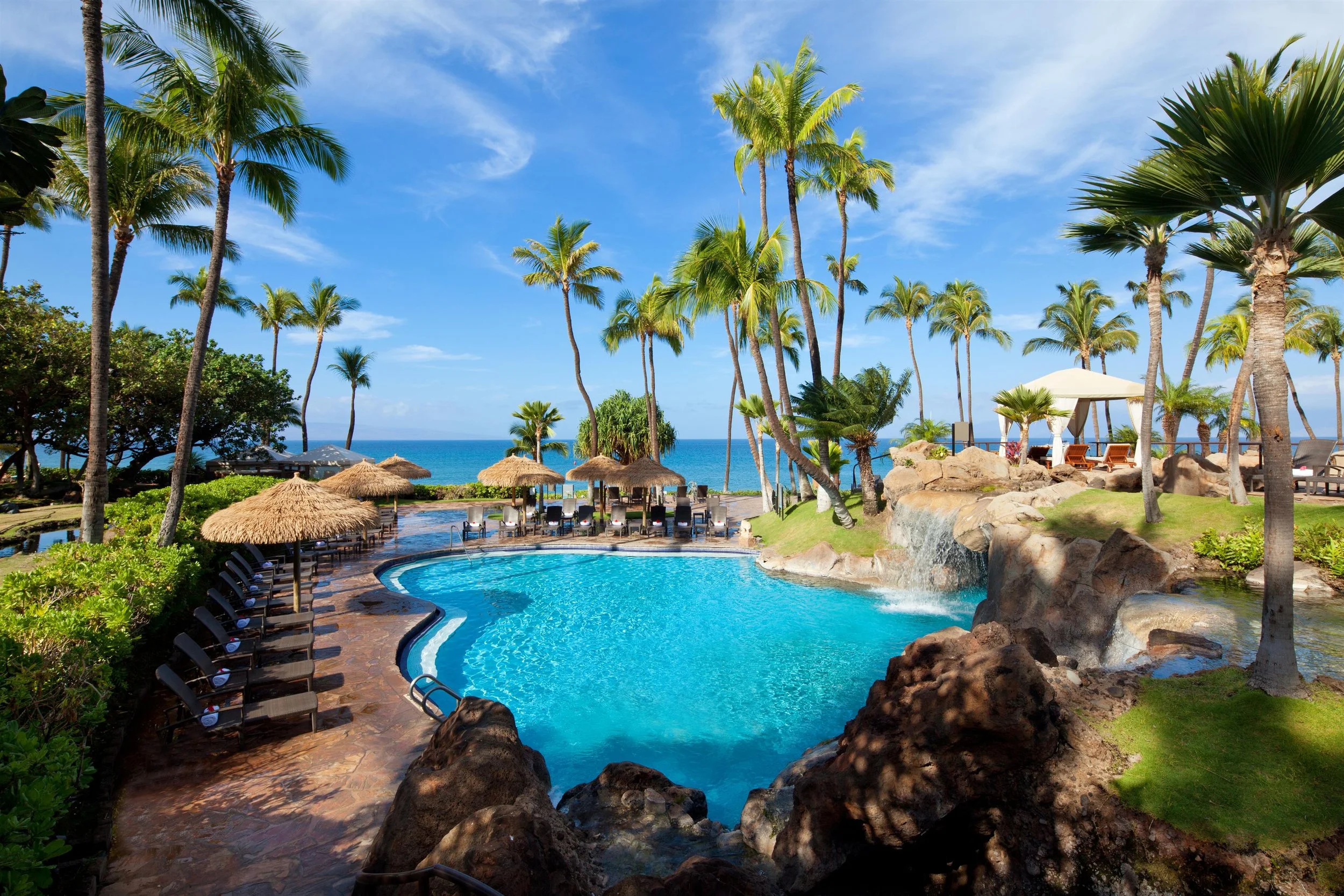
This is what a Maui afternoon looks like. Lava rock, palm trees, a pool going toward the ocean, and no particular reason to move.
The TudorTravels Perspective
Maui works on two different kinds of travelers. The first is here for the beach, the resort, the water, and the sunset. That version of Maui is consistent and well-executed and does not ask much of you. The second wants to understand why people who come here once tend to come back. That version takes more effort, but the island has enough depth to justify it, and the payoff is a trip that does not look like anyone else's.
Where you stay on this island determines more than your hotel experience. It shapes the entire character of your week. Wailea, on the south shore, is the refined version: upscale resorts, calm water, reliably sunny, and a dining corridor that has gotten serious enough to hold its own against most major destinations. If you want a well-executed luxury beach trip without much logistical effort, Wailea delivers it. Kaanapali, on the west side, trades some of that polish for energy. The beach is livelier, the sunsets are better positioned, and you are closer to the historic towns and the drives up the coast. It is the right base if the resort is not the point and you want to move around more. Paia and the north shore put you in a different Maui entirely, closer to the upcountry farms and the road east, and farther from the resort infrastructure most visitors expect. That version of the island rewards guests who already know what they came for.
The practical reality is that both the resort trip and the deeper island trip can coexist in the same week if you plan deliberately. The mistake most visitors make is assuming they can move between both without deciding in advance what they are actually here for. A week spent splitting the difference tends to not fully deliver either version.
The most important thing we can tell you about planning a Maui trip is to do it early. The experiences that tend to define a visit here, the predawn drives, the early morning trails, the reservation-only tables, fill far ahead of time. Arriving with a loose sense of what you want and expecting to sort the details on the ground is a reliable way to miss the things that would have made the trip memorable.
The food available on this island is better than most visitors expect before they arrive. The combination of what the farms here produce and the chefs who have decided to build something serious with it has made Maui a genuine dining destination. That does not happen automatically: it requires knowing where to look and booking ahead. But it is available, and it is worth the effort.
Inspired by Maui? Contact us to plan your time there, or anywhere else in Hawaii you want to experience.