
Hong Kong
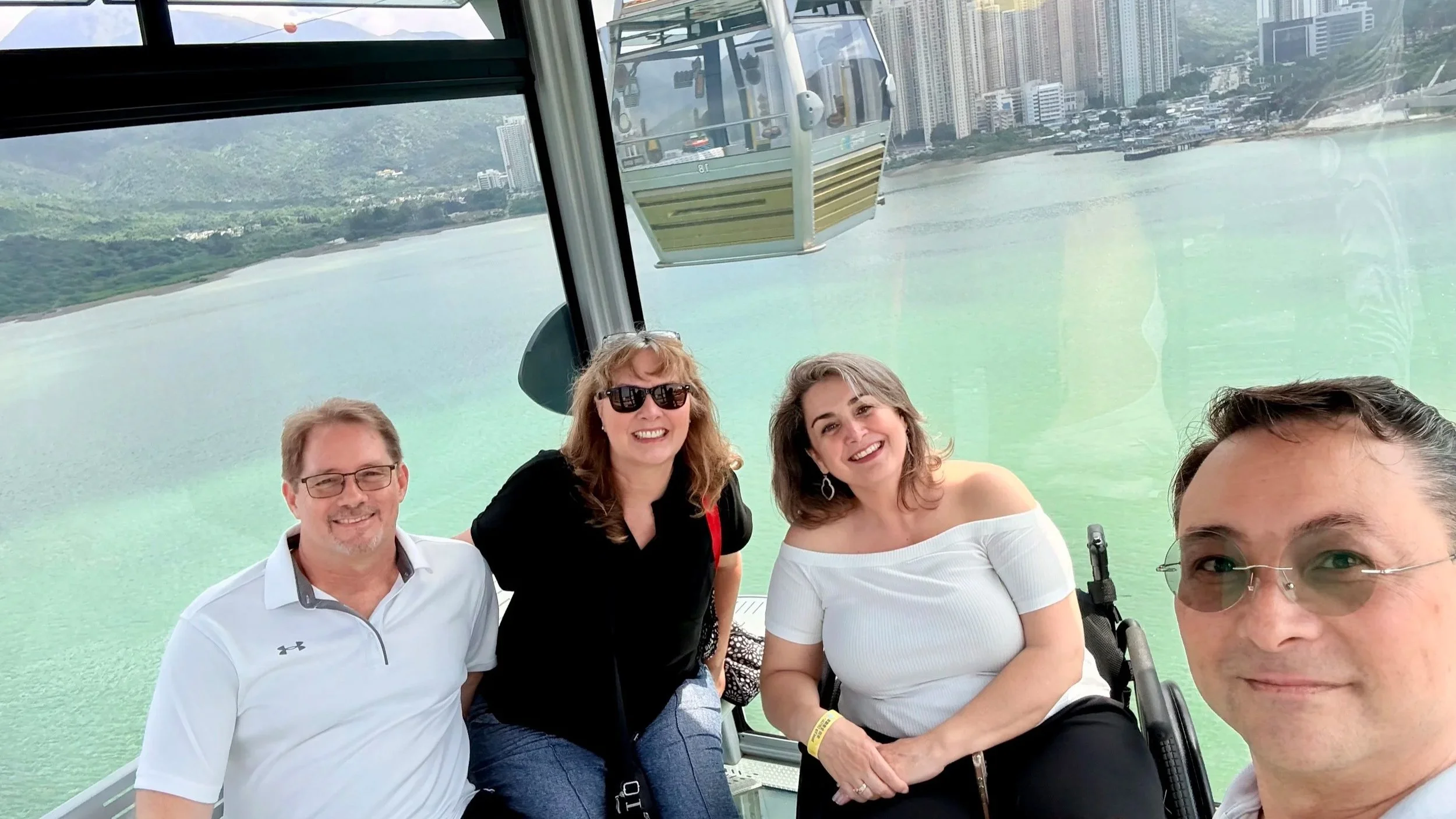
About half an hour gondola ride suspended above the water on the way to the Big Buddha.
This was our fifth visit to Hong Kong, six nights and two hotels, and we had some concerns going in. Everything we had been hearing since covid, and some of it before that, said the same thing: that Beijing's grip had tightened, that the culture that made this city itself was being sanded down, that the Hong Kong we fell for was going away. We wanted to see it for ourselves.
The Hong Kong we remember is still here, still loud and still fast. We walked out of the airport ready to catalog what had been lost and spent six days failing to find it.
Hong Kong's relationship with Beijing has changed since the British left, nobody disputes that, and we are travelers rather than political reporters. What we can speak to is what a visitor encounters, and that is a city with its character intact. The food, the pace, the language on the street, the particular way this place carries itself. If you have been putting off a trip because you assumed the Hong Kong worth seeing had already gone, that assumption is wrong.
What makes the city work is the collision. A century and a half of British institutions layered over Cantonese life, and neither one giving way. You see it most clearly in the afternoon, in how seriously this city still takes tea service, a ritual that arrived by way of London and got rebuilt entirely. Hong Kong afternoon tea is a real event, and there are a dozen versions of it here.
The hospitality scene tells the same story. Two of the great luxury hotel brands in the world were born in this city. The Peninsula opened here in 1928 and gave its name to everything that followed. Mandarin Oriental started as The Mandarin on the Central waterfront in 1963 and grew into the group we know. Rosewood is the newer chapter of the same pattern: founded in Dallas in 1979, bought by a Hong Kong family in 2011, and rebuilt from there into a global brand that runs out of Hong Kong and has roughly doubled in size since. Three global brands, one city.
If you travel for nature, this city will not be your first choice. The hiking and the beaches are better than outsiders expect, but nobody comes here for them. This is a dense vertical place, and the density is the reward.
The Hotels
Few cities in the world offer views like Hong Kong, and the view is the first decision you make. Both sides of Victoria Harbour deliver something different.
Kowloon is more chaotic, and plenty of people will tell you it is the more real Hong Kong. They have a point. The streets are denser and the city presses in on you in a way some travelers come here specifically to feel. The Island is more business oriented and more ordered, and it is our preference when we book, which says as much about us as about the neighborhood.
The difference that matters most is what you see out the window. From the Island you look across at the Kowloon skyline. From Kowloon you look back at the Island and get Victoria Peak rising green behind all of it, and that is the better photograph. If you have the nights to split between both sides, do it.
Rosewood Hong Kong: Named the number one hotel in the world by The World's 50 Best in 2025. That is why we made a point of staying. It sits on the Kowloon waterfront with an interior connection to the MTR, so you cross the city without going outside. The design is fashion forward in a way that suits the address, and the service lived up to the ranking. At breakfast one morning we ordered a wonton noodle soup and ate the noodles faster than we should have. Our server came over to ask whether we wanted more, because the bowl was empty of noodles and she assumed the kitchen had shorted us. It had not. We were just fast. We had her several times across breakfast and lunch over the stay, and her proactive attention to detail was the thing we kept remarking on. The full review is coming in Where We Stay.
Four Seasons Hong Kong: On the Hong Kong Island waterfront, connected directly to the IFC mall and to the MTR. For getting around this city, that is close to a perfect address. The hotel completed a full renovation of all its rooms and public spaces in 2022, and it still feels fresh. One moment explains why we keep booking this brand. We were standing near the escalators up to the mall, not going anywhere, just stopped and deciding what to do with the afternoon. A woman walking past noticed the wheelchair, stopped, and asked if we were looking for the elevators. She turned out to be back-of-house staff at the hotel, on her lunch break. Hotels can train a front desk. They cannot train that. Breakfast can be had in either of two restaurants, one of them with a buffet. Four Seasons is famous for its beds and this one was no different. The infinity pool looks out over the harbor and deserves real time.
Grand Hyatt Hong Kong: Sits on the water in Wan Chai, connected to the Convention Centre, so you can guess who fills it most weeks. Check the calendar when you book, because a big conference changes the whole feel of the hotel. What brings us back is the lounge. The view out of it is one of the best in the city and the staff running it match it. One gentleman in particular remembered us from our first stay and welcomed us back every time. What actually makes the room is how they run it, less like a hotel amenity you are permitted to use and more like a space that belongs to you while you are there. Rooms are comfortable without being remarkable. The position is the real product: it gives you the central Kowloon view that people cross the harbor for.
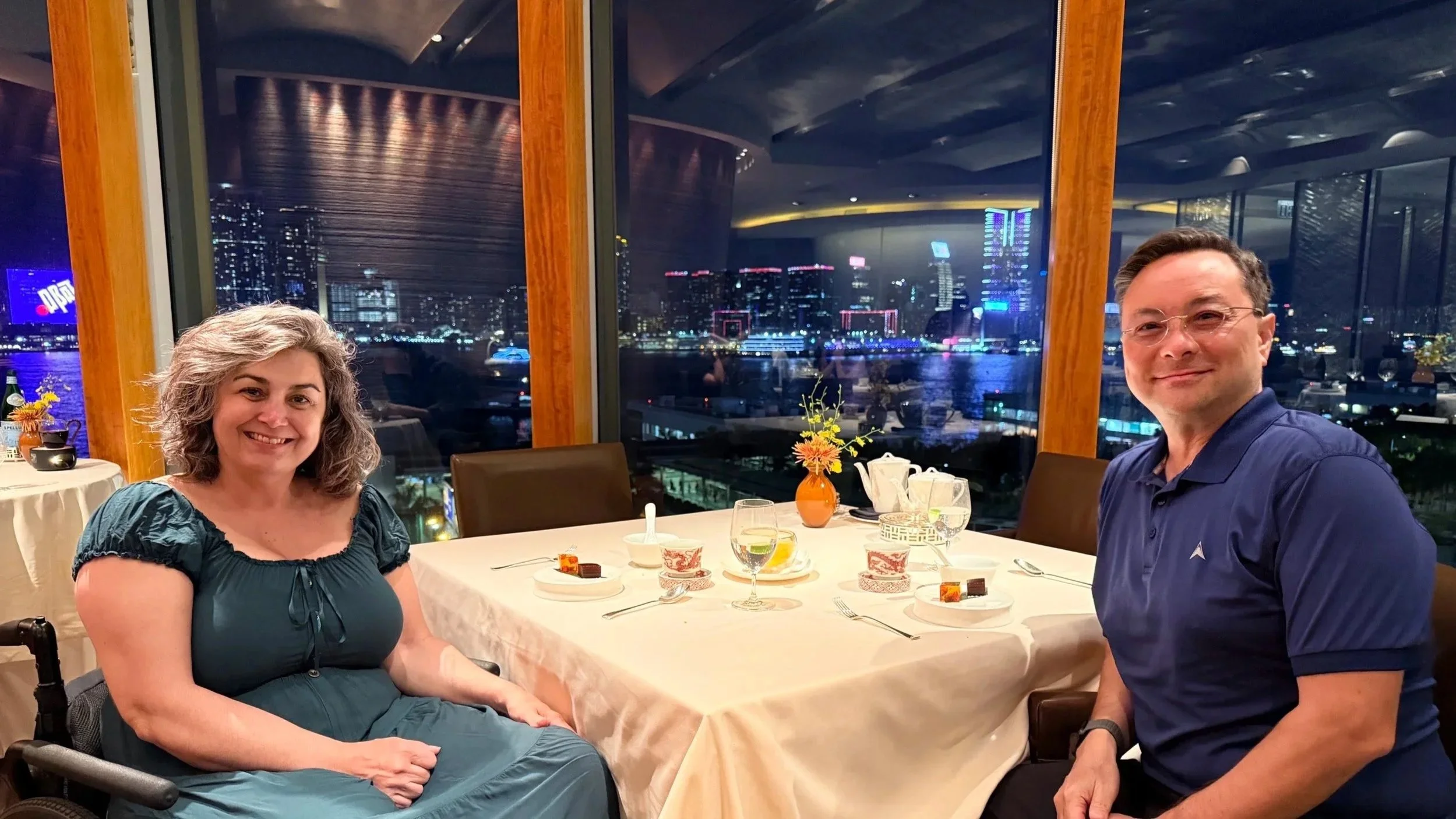
The first Chinese restaurant anywhere to earn three Michelin stars, with the harbor lit up outside.
The Dining Scene
This is a foodie city in the literal sense. The range runs from three Michelin stars down to a plastic stool on a side street, and both ends are taken seriously by people who know the difference.
Lung King Heen: In the Four Seasons, and it holds a place in culinary history. This was the first Chinese restaurant anywhere to earn three Michelin stars, which it kept for fourteen straight years. It currently holds two. Whatever the guide says this year, the cooking is outstanding and the service is something apart, the kind where the room reads you before you ask for anything. The sautéed shredded potato with spicy poplar mushrooms was our favorite thing on the table. Nobody tells you to order it. We are telling you now. Ask for a window table for the harbor.
Bayfare Social: Spanish tapas inside the Rosewood, and the room hums without tipping into noise. They keep a standalone vegetarian menu rather than a token dish or two, which we always appreciate and rarely find at this level. We also over-ordered, which is what tapas does to people whose eyes outrun their appetites, and our server watched it happen. When the paella was due to come out she came over and asked whether we still wanted it, reading correctly that we were finished and knowing it is a heavy rice dish to put in front of people who are already done. She offered to cancel it, already ordered, at no charge. We cannot remember that happening anywhere else.
Chesa: Inside the Peninsula, and the space alone justifies the reservation. The service is noticeable here even when you are only a visitor rather than a guest. The room is small, built out as a Swiss chalet down to the last detail, and the effect is more charming than kitsch. Cheese fondue and a proper run of Swiss dishes. One disappointment worth flagging: the raclette does not come the traditional way, where the wheel melts in front of you and the cheese gets scraped onto your plate. It arrives already melted. The pleasure of raclette is scraping the cheese yourself, fresh and hot off the wheel, and losing that is a real loss.
Afternoon Tea: Not one restaurant but a citywide institution, and the clearest place to see the British layer of Hong Kong still functioning. The Peninsula's is the famous one and it earns the reputation. Build a day around it at least once.
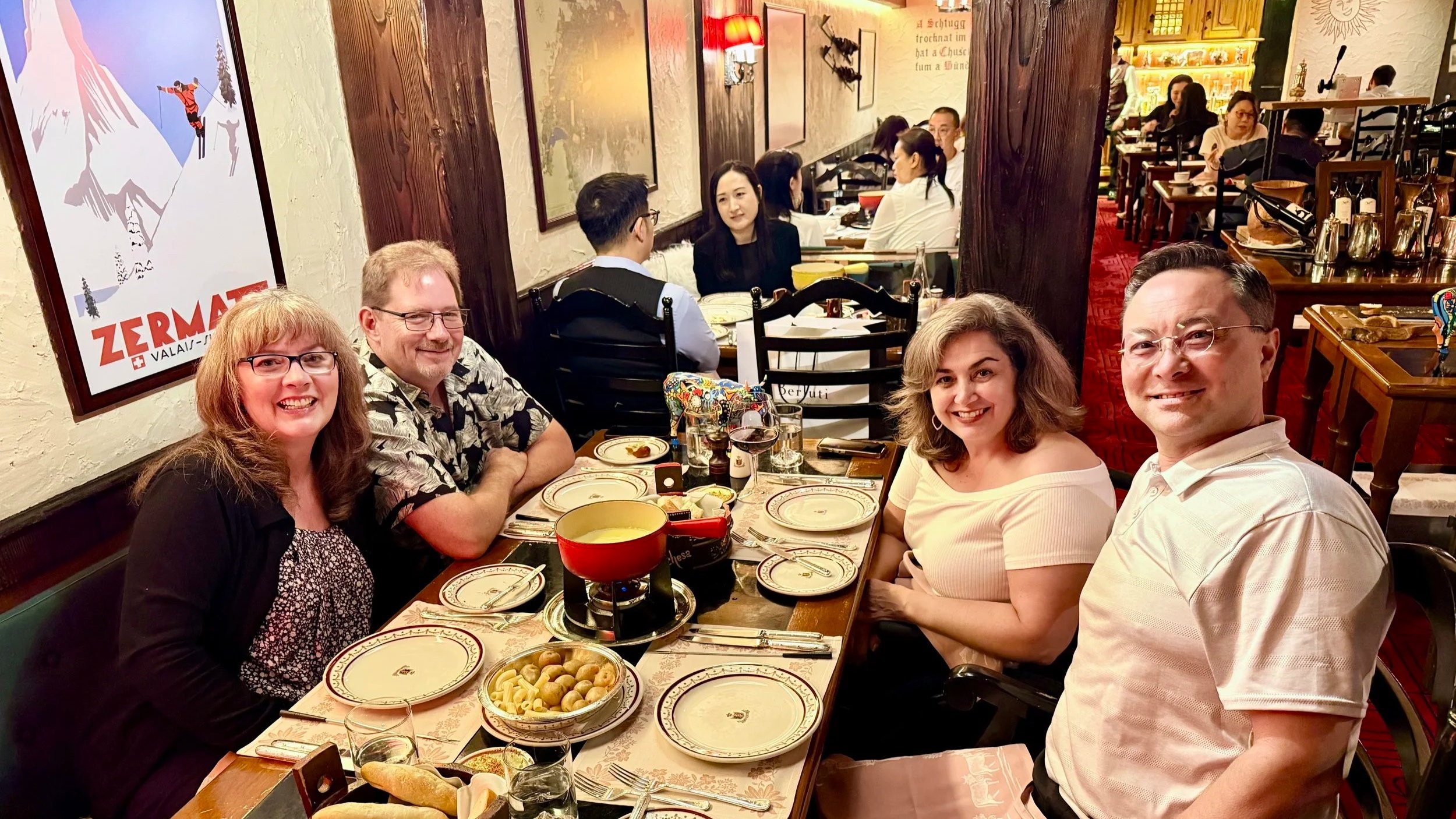
Cheese fondue in a Swiss chalet in the middle of Hong Kong, which makes more sense once you are sitting in the room.
What to See
Ngong Ping and the Big Buddha: The one thing we tell everyone to do. The cable car runs from Tung Chung up over the mountains, and the ride out gives you the airport and the water around it laid out below. It is also unexpectedly peaceful, about half an hour suspended above everything. Look straight down while you ride. There is a walking path that shadows the cable route the whole way up, and every time we have made this trip we have seen people hiking it. That is a serious climb. At the top there is a themed village of shops and restaurants before you reach the Buddha, built for tourists and still a pleasant approach. What most people do not realize is that the Buddha is modern, finished in 1993. The monastery that sits beyond it is almost a century older, founded in 1906, and quieter than everything below it.
Victoria Peak: The funicular up is half the appeal, a diagonal climb steep enough that the buildings outside the window tilt past at an angle your eyes refuse to accept. From the top you get both sides of the harbor in a single frame, which no other vantage in the city gives you. Go up in late afternoon if you can time it, stay through dusk, and watch the towers switch on underneath you.
The South Side and Stanley Market: Over on the far side of Hong Kong Island, and worth an afternoon for the contrast alone. We spent ours at Stanley Market, down at the water's edge, wandering the stalls and watching the boats come and go. Twenty minutes from the densest urban core in Asia the pace drops away entirely, and seeing that side changes your sense of the place.
The Night Markets: Famous for good reason, and we would go out of our way for them. Temple Street is the best known, running after dark near Jordan, with food stalls set up down the middle of the street and tanks of live seafood out front. Ladies' Market up in Mong Kok is the other one people name. Between them you can buy just about anything and eat very well for very little. Be aware that the night markets are not very accessible if that is a concern. The lanes are tight and packed, and this was the least accessible thing we did in Hong Kong. We still think it is worth seeing.
The Avenue of Stars: Hong Kong's version of the Hollywood Walk of Fame, honoring the local film industry, laid out along the Tsim Sha Tsui promenade a short walk from the Rosewood. The handprints are the excuse. The reason to go is the walk itself, right along the promenade, and the people watching, which is as good as anything across the harbor.
Hong Kong Disneyland: One of only six Disney resorts on the planet, which some travelers will treat as reason enough by itself. It is also well run and well designed for access, more on which below.
Beyond Delhi
A Day in Macau: Over an hour by ferry across the delta, and it is the obvious add-on if gambling is any part of your interest. It is the only place in China where casinos are legal, and it now out-earns our hometown of Las Vegas. The Portuguese colonial layer gives it a different texture than Hong Kong, a different European empire leaving a different impression. For most people, a day visit will be enough and then be back in Hong Kong for dinner.
There is a second option most visitors never consider. The high-speed train from West Kowloon reaches Shenzhen in about fifteen minutes. Fifteen minutes, and you are in mainland China. Guangzhou is under an hour. Sort the visa in advance and the logistics are simpler than the idea sounds.
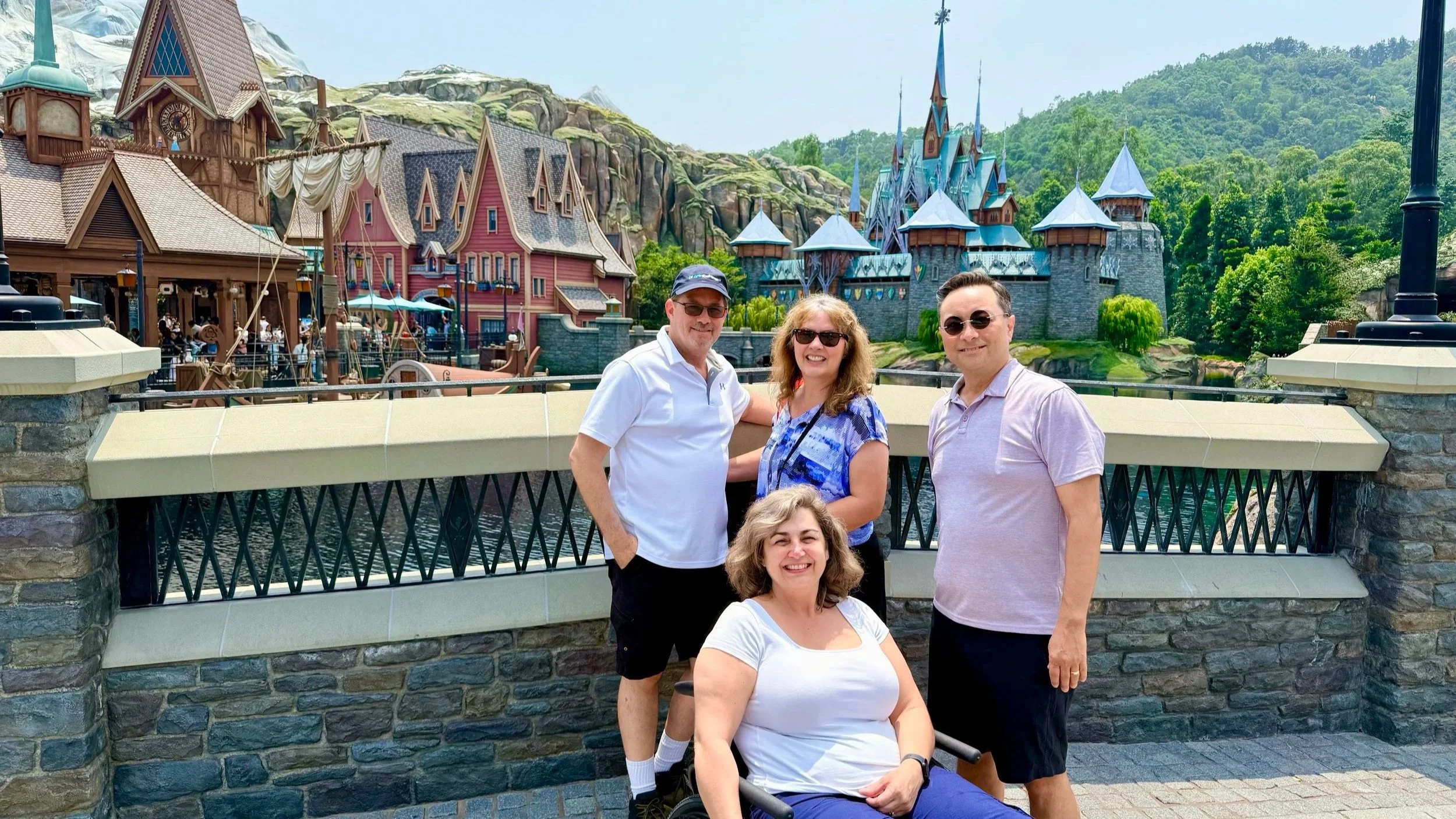
Hong Kong Disneyland handled accessibility better than the American parks, and the staff were the reason.
What Stayed with Us
The views. We have been to a lot of cities and none of them do this.
The city is built on a harbor with mountains behind it and towers stacked up both banks, so there is almost nowhere to stand without something worth looking at. During the day it is the water traffic, ferries and barges and junks crossing constantly, a working harbor that never pauses. At night the whole thing lights up, tower by tower, and the reflection doubles it.
This is the argument for spending money on a room with a view here, and we do not say that about most cities. Usually it is a nice extra you pay a premium for and stop noticing by the second day. In Hong Kong we kept the curtains open. Whatever else we forget about this trip, we will remember what it looked like from the window.
Our Favorite Discovery
Hong Kong Milk Tea: The single best expression of what this city actually is. Strong black tea, brewed hard and then strained through a cloth sieve over and over until it runs completely smooth, then cut with evaporated milk. The sieve stains tea-brown over time, which is why the drink is called silk stocking milk tea.
The British brought tea. Cantonese kitchens rebuilt it into something else entirely, richer and stronger than anything served in London, and now it belongs to Hong Kong so completely that the city has it listed as intangible cultural heritage. You can get it anywhere, in any diner, for almost nothing. Order the coffee version too if you want the full picture: yuenyeung is milk tea mixed with coffee, invented here, and available almost nowhere else on earth.
Accessibility
This is one of the more accessible cities we have traveled, and the infrastructure is the reason.
The MTR is the heart of it and the best way to move through the city. Every station we used was accessible, with elevators placed centrally instead of hidden at the far end of a platform, and the signage is clear enough that we never had to hunt. The trains are clean and they go everywhere. It has also improved since our last visit: the gates now take a tap from a credit card, so there is no fare card to buy or top up. The other thing worth naming is the people. Passengers consistently made room as we boarded, without being asked and without making a production of it.
Roughly a quarter of Hong Kong's taxis are wheelchair accessible, which is a remarkable number in a world where most cities struggle to field any. We cover that fleet in detail in Travel Without Limits below. One practical warning: bring cash. Many drivers have a card reader and would still rather not use it, and it is not a fight worth having.
The ferries are accessible too, and they are one of the easiest ways to get across the bay.
Hong Kong Disneyland deserves specific mention. We found it more accessible than the American parks, and the difference was the staff. The training and the knowledge were noticeably better, and the ride access was handled without the negotiation we are used to.
Infrastructure gets you most of the way and courtesy closes the gap, and Hong Kong has both. A city with ramps and impatient people is harder to get around than one with a few gaps and residents who notice you.
The detail we appreciated most is one we wish more countries would copy. Accessible restrooms here are standalone rooms, separate from the gendered restrooms, not an oversized stall inside one. We have found the same across Singapore, Japan, and Taiwan. It makes the restroom actually available when you need it, because people do not treat it as the roomy option.
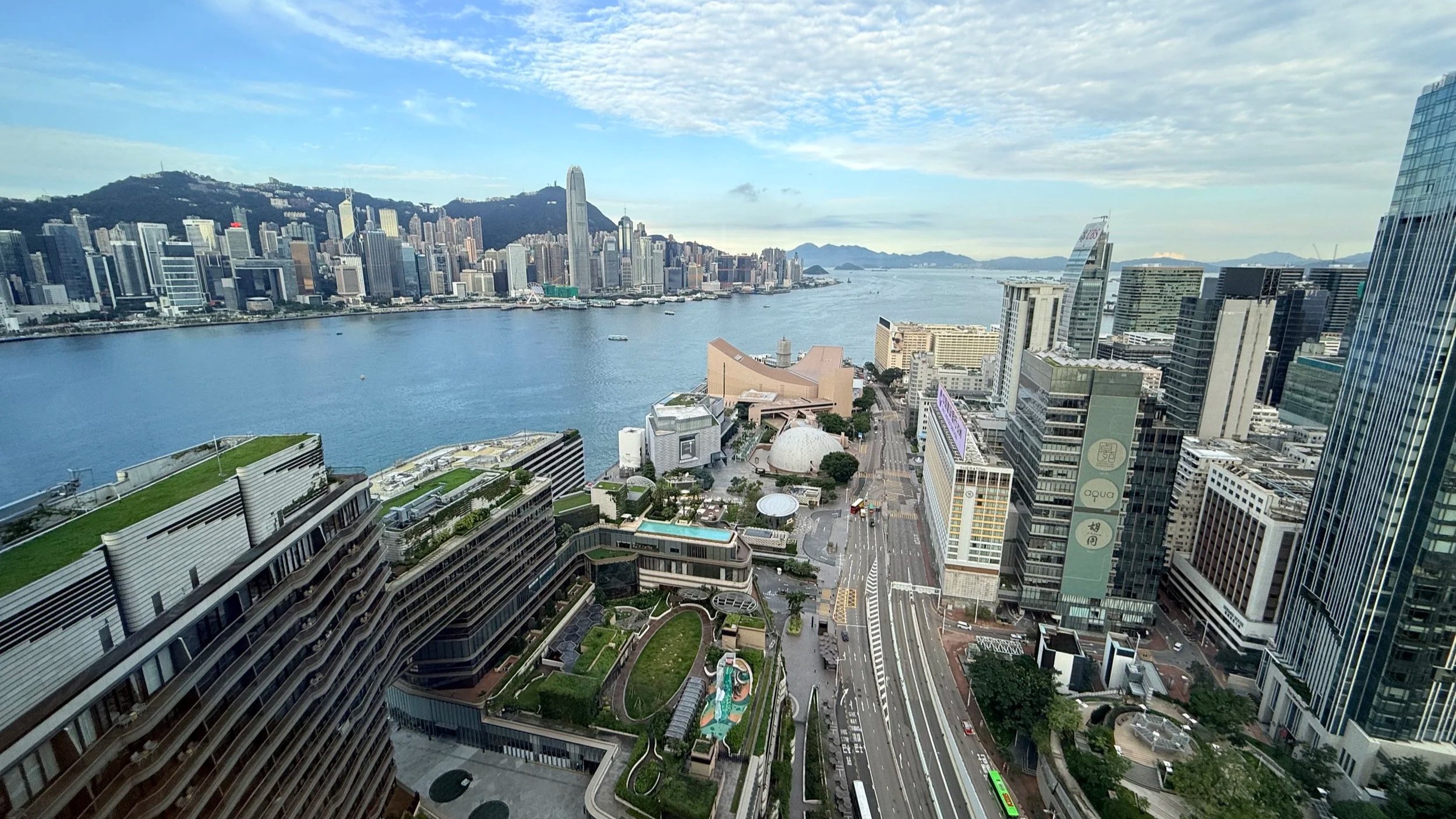
This is the view from the Kowloon side, and it is the reason we tell people to book a room facing the water.
The TudorTravels Perspective
Hong Kong is for travelers who want a city to be a city. If you want energy and food and a skyline that rearranges itself while you watch, few places compete. If you want quiet and open space, you already know this is not it.
Getting here is part of the case. Hong Kong International is one of the best airports in the world, and Cathay Pacific is one of the best airlines, so the trip in and out is a pleasure rather than a tax on the vacation.
Give it more nights than you think. On a five-night stay you will eat well and see the landmarks and still leave with a list of what you missed, which is how we have felt walking out of this city all five times. Split your nights between the two sides of the harbor if the budget allows. That is what we did this time, Kowloon first and then the Island, and it was the right call. They are different cities with a strip of water between them, and staying on both is the cheapest way to double the trip.
It also earns a place on a shorter list, the one of cities we recommend without hesitation to travelers who use a wheelchair. That list is not long. Hong Kong is on it.
We came in expecting to write about what Hong Kong had lost. Five visits in, we are still here for the same reasons we came the first time, and we are already thinking about the sixth.
Inspired by Hong Kong? Contact us to plan your time there, or anywhere else in Asia you want to explore.